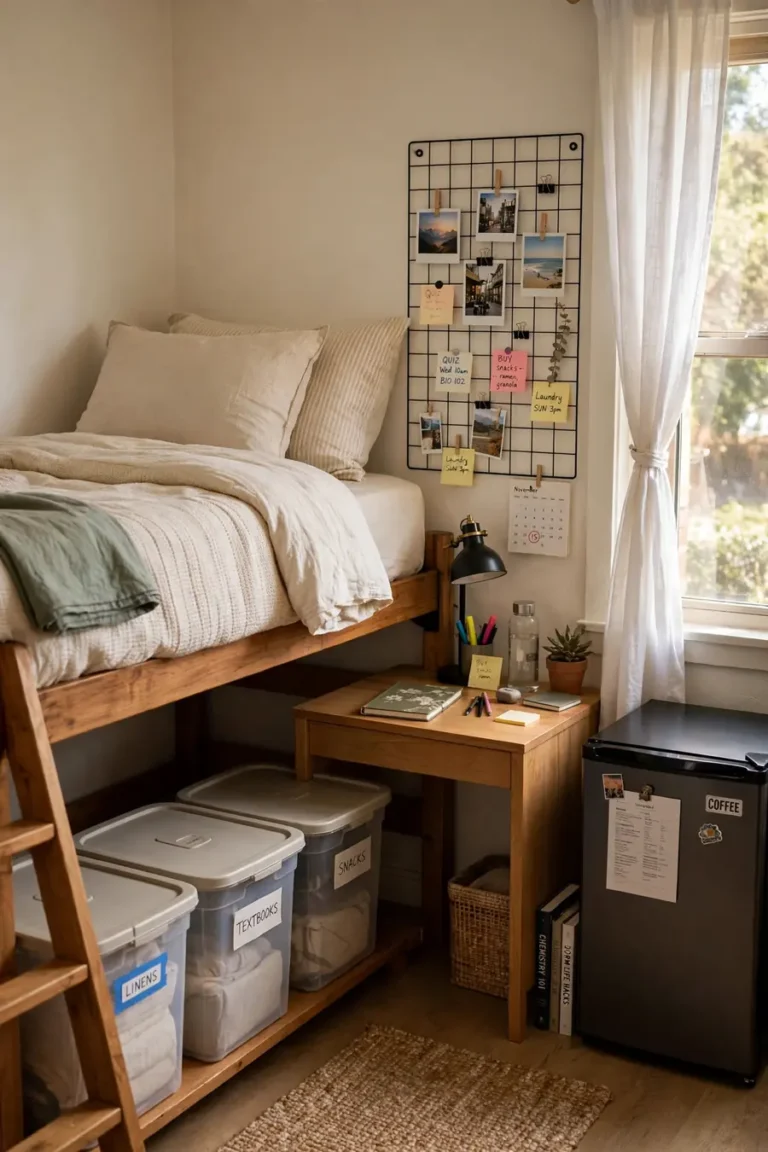
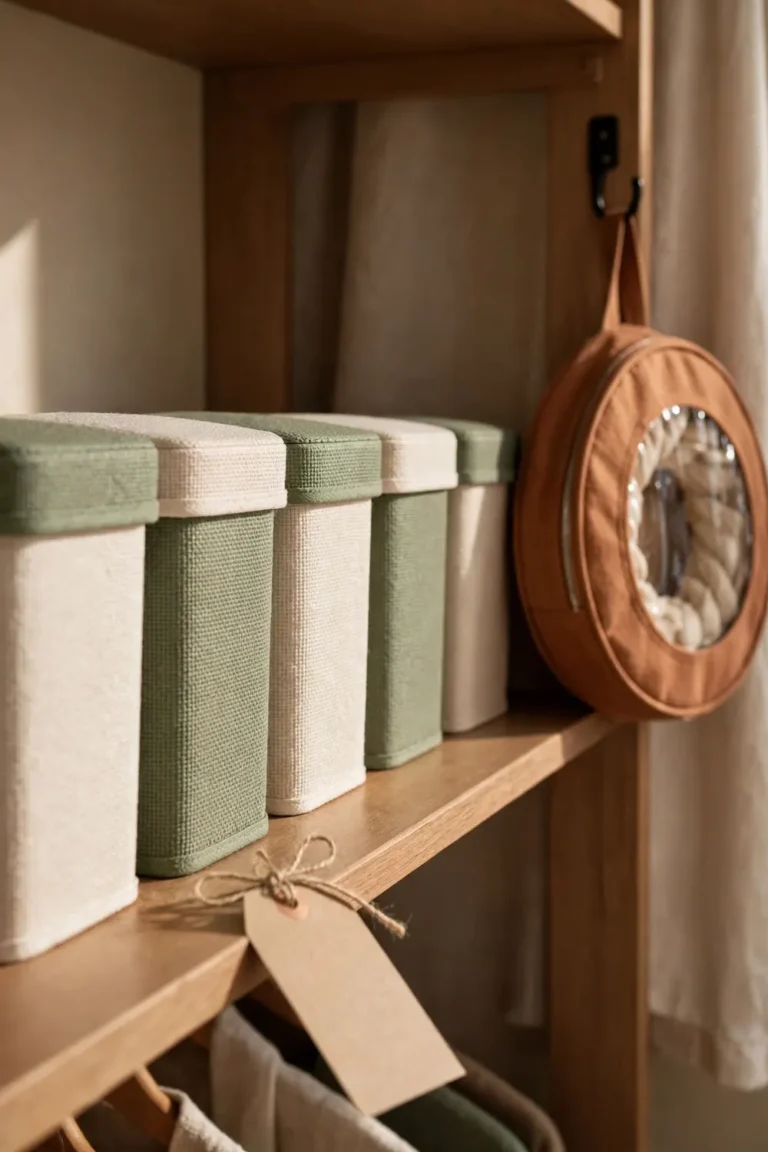
Toy Storage for Small Spaces, Sorted Into One Low Shelf and a Few Bins
If you have ever stepped on a toy car in the dark, in a living room that is also the playroom and everything else, you already know the real problem. It is not that your home is messy. It is that every toy your child owns is out at the same time, in a space that was never going to hold all of it. The room feels loud even when nobody is playing.
Toy storage for small spaces works differently than storage in a big playroom. You do not start by buying furniture. You start by cutting the number of toys in the room, then you set up a simple toy rotation system so the few toys that stay out are the ones your kids can see, reach and put back without you. The rest wait in closed bins, and when they come back out, they feel new again.
Key Takeaways
- Rotation is the system. Storage furniture only supports it. Fewer toys out at once means less mess and deeper play.
- Sort first into four piles: keep and play, keep but rotate, donate, and toss. Never buy storage for toys nobody touches.
- The active set lives on one low shelf or in a few open bins, at child height, with a picture label on every spot.
- Stored toys go in closed, labeled bins in one place only, like a closet or under a bed, out of sight until swap day.
- A five minute reset with a timer each night keeps the system alive, and one in, one out protects it at birthdays.
How Do I Store Toys in a Small Living Room?
Store toys in a small living room by keeping only a small active set out, on one low shelf or in a few open bins your child can reach, and keeping the rest in closed bins in a closet or under a bed, as a toy rotation system. Swap a category or two when the current toys stop being played with. Hide the active set in furniture like a storage ottoman or lidded baskets in shared rooms, put a picture label on every bin so cleanup becomes a matching game, and anchor any tall shelf to the wall for safety.
Step 1: Cut the Volume Before You Store Anything
Every storage problem in a small home starts as a volume problem. Sorting is not the fun part, nobody frames photos of a donate pile, but it decides whether the system fits your room or fights it. Work in broad categories as you sort: building, pretend play, puzzles and games, art, vehicles, books, and active or sensory toys. Broad categories keep the sort fast, and they matter again when you build each rotation.
Make four piles:
- Keep and play. Current favorites and the toys in daily use. These become the first active set.
- Keep but rotate. Good toys that are simply not being played with right now. These go into the stored bins.
- Donate. Outgrown toys and anything untouched for months, with the child’s say where they are old enough to have one.
- Toss. Broken toys, puzzles with missing key pieces, and the little plastic extras that arrive with fast food meals and party bags.
Two rules protect this step. First, a few well loved comfort items never rotate out, ever. Rotation is a system, not a punishment, and it should never feel like one. Second, be honest about sets with missing pieces. A puzzle that can never be finished is not waiting for its moment. It is clutter with a hopeful story attached to it.
Step 2: Set Up the Toy Rotation System
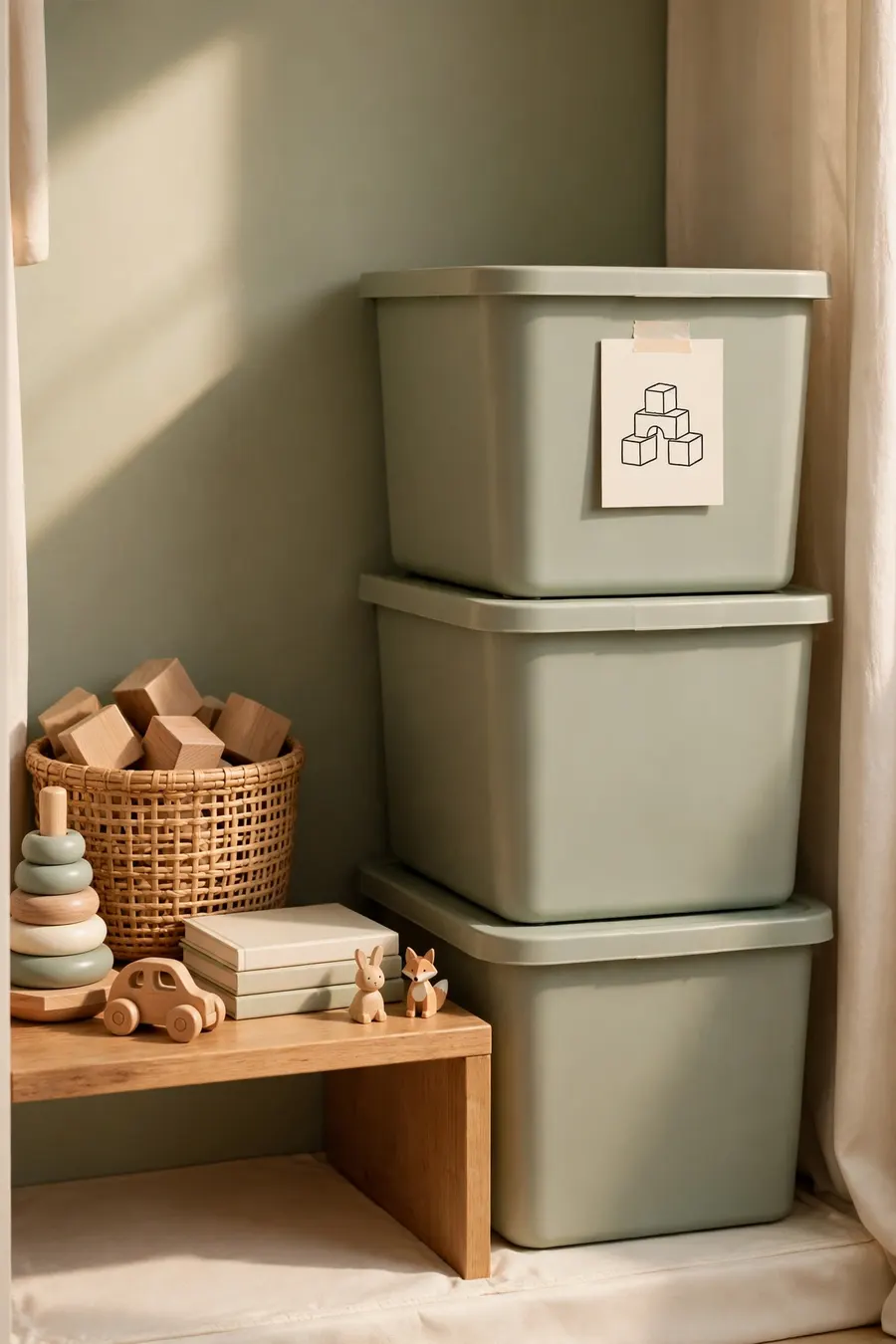
The active set
Choose a balanced mix, roughly one option from most categories, and put only that out. For a small room that usually means one low shelf or a few open bins, nothing more. Every toy in the active set should pass one test: a child can see it in a single glance, reach it without climbing or asking, and put it back without help. If a toy fails that test, it does not belong out, no matter how nice it is.
The stored set
Everything else goes into closed bins with labels, in a closet, under a bed, or on a high shelf. Closed and out of sight is the whole point: a toy a child sees every day never gets the chance to feel new again. Keep the stored bins in one home, a single toy library spot, so they do not quietly colonize every closet in the apartment.
Swap by signal, not by calendar
There is no magic rotation day. Watch the toys instead. When a category has been ignored for days, swap it for a resting one. Keep whatever is still being played with, and keep swaps small, one or two categories at a time, so the room never turns into a full redesign on a tired evening. A short phone note, what is stored, what is out, what got ignored, takes two lines per swap and stops the system drifting.
Picture labels and the small parts rule
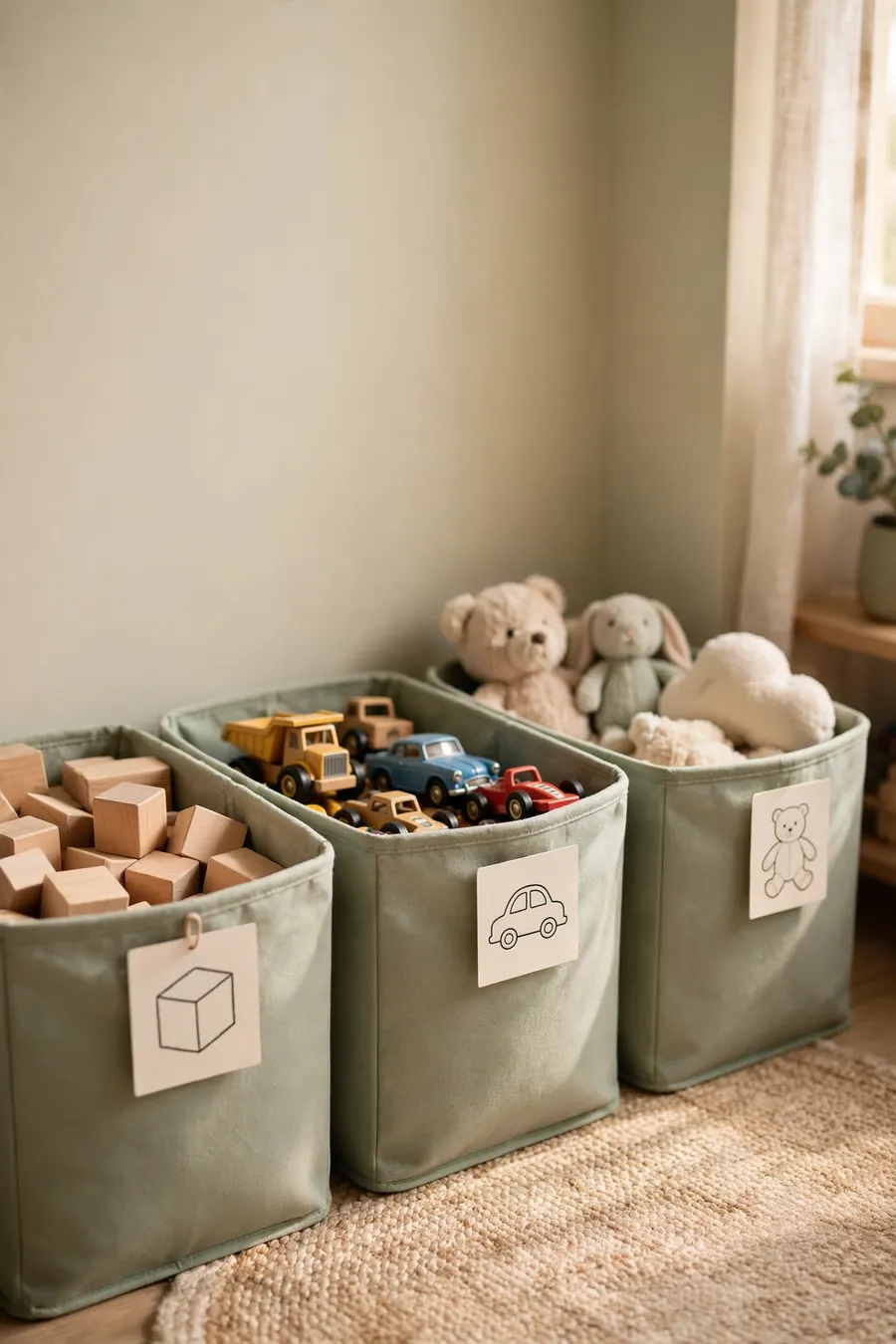
Put a picture label on every bin and shelf spot: a simple photo or drawing of what belongs there. Pre-readers cannot read a word label, but they can match a picture of blocks to the block bin, which turns cleanup into a matching game instead of a judgment call. Readers get word labels, or words under the picture.
Sets with many pieces need protection too. Games and building sets live in zip pouches or small lidded boxes inside their bin. A set that loses its pieces ends up in the toss pile, and pouches are how you stop that.
Where Everything Lives: Storage Spots That Earn Their Floor Space
Once the volume is down, the furniture part gets easy, because almost every workable spot for playroom storage in a small apartment is freestanding or hangs on a door. Nothing here needs drilling, which makes it renter friendly by design.

- A low open shelf or cube unit at child height. This is the display and return station, the heart of toy storage small spaces actually depend on. If a child cannot reach a shelf, they cannot maintain it, and you become the cleanup crew again.
- Under-bed bins for the stored rotation. Flat, lidded and labeled, sliding into the biggest unused space in most kids’ rooms. The same dead space logic shows up in almost every small bedroom plan too.
- Closed storage for shared rooms. A storage ottoman or lidded baskets hold the current rotation when the play area is also the living room. Guests arrive, lids go on, and the room reads as a living room again.
- An over-door pocket organizer. Clear pockets on a closet or bedroom door hold dolls, cars and art supplies at zero floor cost. Check the door still closes cleanly with the hooks in place before loading it up.
- Face-out book storage. A sling shelf or a shallow bin with covers facing out. Children choose books they can see, so a small face-out set, rotated like everything else, gets read far more than a deep stack.
Safety Notes That Come Before Pretty
Small space toy storage has three safety rules that outrank every styling idea. Anchor any tall shelf or cube unit to the wall if a child could climb it. Yes, that means a screw in the wall, and it is worth an honest conversation with your landlord, because a tip-over is not a decor problem. This is the one deliberate exception to the no-drill habit in a renter home.
Keep toys with small parts in the stored set, out of reach of younger siblings. And never park heavy bins on high shelves above play areas. Heavy bins live low, in the closet or under the bed.
The Habits That Make It Stick
A system like this survives on two small habits, not on willpower. The first is the five minute reset. Timer on each night, and the active set goes back into its picture labeled spots with the kids helping. Five minutes feels like a game. Forty minutes on a Sunday feels like a punishment, for everyone.
The second habit is one in, one out, decided before gift seasons rather than after them. A new toy comes in, and one toy moves to the donate pile. Agreeing on it in a calm moment is far easier than negotiating over a pile of wrapping paper. Then, as seasons and ages change, do a quick re-sort: promote harder puzzles and games into the active set, and retire what has been outgrown while it still has life left for another family.
Common Mistakes
- Buying storage before sorting. Bins sized for toys nobody plays with just give the clutter a tidier container.
- Putting everything out at once. A full room of toys looks generous and plays badly. Most of it gets ignored, and all of it lands on the floor.
- Using bins a child cannot open or reach. If cleanup needs an adult, cleanup needs an adult every single night.
- Labels with words only. A three year old cannot read the word blocks. A picture of blocks works on day one.
- Rotating on a strict calendar. Swapping toys that are still loved, because it is Saturday, teaches kids the system takes things away. Swap by signal.
- Skipping the anchor on a tall cube unit. The one unglamorous step in this article, and the one that matters most.
Frequently Asked Questions
Conclusion
Toy storage for small spaces is not a furniture problem, so it does not need a furniture budget. Sort first, keep one low shelf of favorites and open bins out, park the rest in closed bins, and let a five minute nightly reset do the quiet daily work. Pick one category this week, the one currently colonizing your floor, sort it into the four piles, and set up its picture label. That single shelf, done properly, is the whole system in miniature, and it is the version of the room your kids can actually keep tidy.