
Your Small Bedroom Has More Storage Than You Think: Small Bedroom Storage Ideas on a Budget
Every small bedroom has a chair nobody sits on anymore, because it disappeared under clothes weeks ago. The floor collects the overflow, the one small closet gave up long ago, and getting dressed starts with a dig. The room is not short on space. It is short on places. Most small bedrooms hide storage they never use: the whole footprint of the bed, the wall behind it, the strip above the door. The best small bedroom storage ideas on a budget are mostly about claiming those dead spots, and a good share of them cost nothing at all.
Key Takeaways
- The bed footprint is the biggest free storage in the room: lidded bins under it, bed risers for taller bins, vacuum bags for the bulky layer.
- Swap furniture for storage versions of the same footprint: a drawer unit instead of a pedestal nightstand, a lidded bench at the foot of the bed, one tall narrow dresser.
- Walls and the strip above the doorway hold more than the floor ever will, and shallow ledges keep the room feeling open.
- Shop secondhand first and dollar store second. Treat $60 as the ceiling for the whole project, not a per item allowance.
- Renters can do nearly all of it with no drill at all: freestanding pieces first, then tension, over-door hooks, and adhesive only within its limits.
Where Do I Put Storage in a Small Bedroom With No Closet Space?
Start under the bed, because that footprint is already paid for and usually holds nothing but dust. Put off-season clothes and spare linens in lidded bins, add bed risers if the gap is too low for real bins, and flatten duvets and winter coats in vacuum bags inside those bins. Move up the headboard wall next, with a shelf holding the nightly things a wide nightstand used to hold. Then claim the vertical space: a shelf above the doorway, shallow ledges up high, hooks on the back of the door. One tall, narrow dresser replaces a low chest and a table at once. None of it needs a closet, and most of it needs no new furniture.
Under the Bed: The Biggest Free Storage in the Room

Lidded bins and rolling drawers
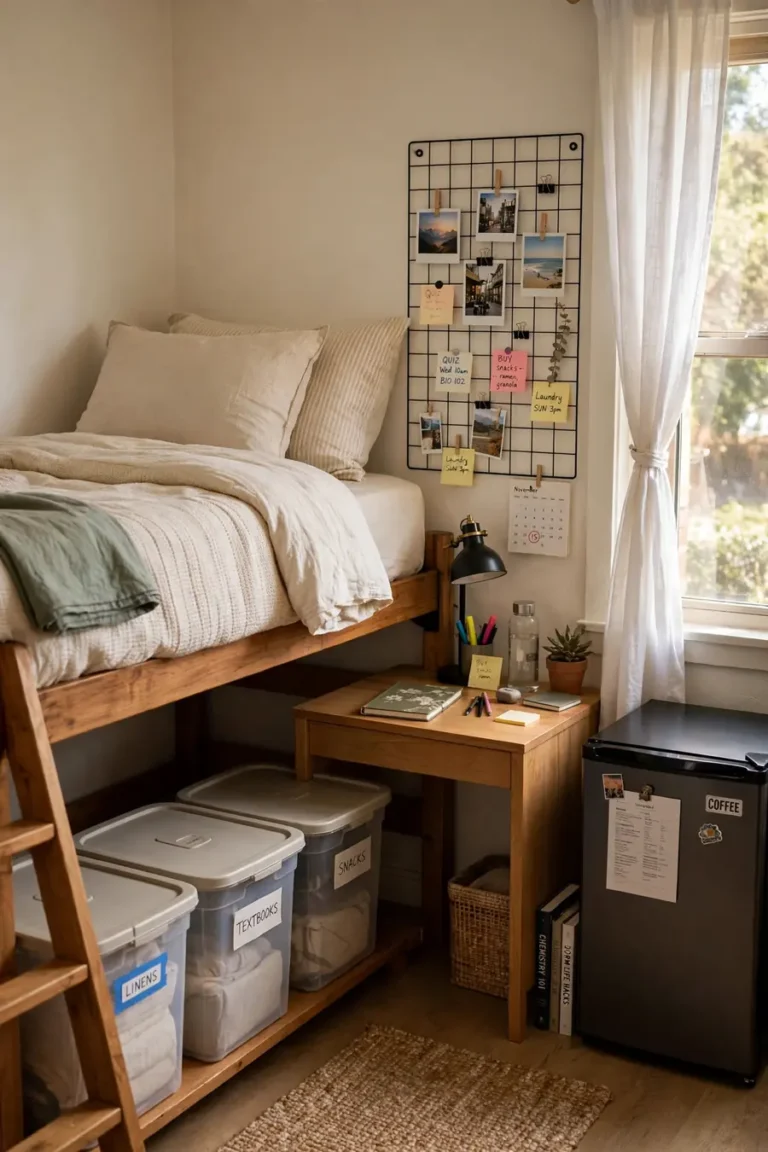
The space under a bed is roughly the size of a closet lying down. Lidded bins or low rolling drawers turn it into real under-bed storage for off-season clothes, spare linens, and shoes. The lid matters more than the bin. It keeps the dust off, and dust is the whole reason people abandon under-bed storage after one try. Label each bin on the end that faces out. An unlabeled bin becomes a mystery layer you have to drag out and open every single time.
Bed risers buy the height first
A lot of beds sit too low for anything but the flattest boxes. Bed risers lift the frame a few inches, and those few inches are the difference between a frustrating slot and honest bin clearance. Measure after you lift, not before, and match the bin height to the new gap. Buy the risers first, the bins second. Doing it the other way around is how people end up with four nice bins that fit nowhere.

Vacuum bags for the bulky layer only
Duvets, winter coats, and spare pillows eat most of the air in a small home. Vacuum bags compress that bulky layer flat enough to live inside the under-bed bins, and for sturdy, puffy things they are brilliant. Be honest about the limits, though. Vacuum bags wrinkle clothes hard, and the compression stresses delicate fabrics, so a good dress or a fragile knit does not belong in one. Bulky and tough only; folded bins handle what you wear often.
The Headboard Wall and the Nightstand Swap
Headboard shelves hold the nightly things
Books, glasses, a phone, a glass of water, a lamp. That small nightly pile is the only reason most nightstands exist, and a storage headboard or a shelf ledge on the headboard wall holds all of it on the wall line instead of a wide table. The floor space beside the bed opens right up. If the shelf screws into the wall, that is owner territory. Renters get the same idea from a bookcase headboard that stands behind the bed, or from the swap below.
Nightstand alternatives with actual drawers
A pedestal nightstand is a table pretending to be storage. Swap it for a small dresser or any unit with two or three drawers and the same square footage suddenly holds the chargers, the books, the lotion, the tangle of small things that used to live on top. While you are at it, give charging its own tiny home: a small tray on the drawer unit, or a wall ledge, so cords and phones stop owning the surface.
Furniture That Earns Its Footprint
A lidded bench at the foot of the bed
A storage ottoman or lidded bench at the foot of the bed holds blankets and spare bedding, and it quietly solves the chair problem. The clothes that are not dirty and not clean, the ones everyone owns, go inside the bench instead of building a fabric mountain on the nearest seat. A closed lid makes the whole room feel calmer even on a lazy week.
One tall, narrow dresser
When something has to be bought, the tall, narrow dresser is the buy. It replaces the most floor furniture per inch, it can double as a TV stand or even a room divider in a studio, and it adds the drawers small bedrooms actually lack. One piece of safety honesty: tall dressers can tip, and anchoring one to the wall is the standard advice. If you rent, that anchor is a landlord permission conversation, not a detail to skip past. Ask first.
The secondhand first rule
Bedroom storage furniture is the easiest category in the house to buy used. Dressers, benches, shelves, and drawer units show up constantly at thrift stores and on marketplace listings, usually sturdier than the flat-pack versions at the same money. Set the whole project ceiling at $60, spend it secondhand first, and let dollar store bins fill the small gaps. New and matching is the expensive way to get the same drawers.
Walls, Doors, and the Strip Nobody Uses
Shallow ledges up high
Picture ledges and shallow shelves above dresser height hold books, frames, and small baskets without eating floor or eye line. Keep them shallow on purpose. Deep shelves up high make a small room feel like it is closing in, while a shallow ledge reads as a display line and keeps the walls feeling tall.

The shelf above the doorway
That strip of wall above the bedroom door is the classic forgotten spot. A shelf there, with rarely used things in matching bins, adds a whole storage row that nobody ever looks at. Guest linens, keepsakes, the out-of-season odds and ends. Up high and out of the way is exactly right for things you touch twice a year.
Over-door hooks and the leaning ladder
Hooks on the back of the bedroom or closet door hold the robe, tomorrow’s outfit, and the bags, all on space that was doing nothing. Check the door clearance before you hang anything, and keep the load honest. A door organizer stuffed with heavy shoes strains hinges and makes the door bang and scrape. Hooks are for light, daily things. For throws and quilts, a leaning ladder leans against the wall with a few inches of floor and holds a whole stack of textiles vertically, no fixing, no holes, easy to move on cleaning day.
The Closet Edge and the Daily Clutter
If your room does have one small closet, keep it from colonizing the rest of the space. Labeled bins on the top shelf, the closet floor cleared down to shoes only, and the full closet system can wait for its own project day. Stop the overflow instead: one laundry basket with a lid, and one hook for the repeat-wear clothes. Laundry is bedroom storage too, and an open pile is what makes a small room feel half its size. The same logic applies to small things. A tray or organizer inside a drawer gives jewelry and bits one shallow home, and the dresser top stops being a scatter zone.
Small Bedroom Storage Ideas on a Budget for Renters
Work down this order and most people never reach the drill. Freestanding first: drawer units, bookcases, benches, the leaning ladder. Then tension: a rod or a pressure fit shelf. Then over-door, which needs nothing but the door itself. Then adhesive hooks and strips, used honestly: they hold less than the packet suggests, steam and heat weaken them, and they can lift paint on the way off. Weight limits are real, so adhesive is for light things only. Drilling comes last or never. Fixed floating shelves and screwed-in headboard shelves belong to owners. The one exception worth a conversation is anchoring a tall dresser, because that one is about safety, not storage.
What Not to Store Here
- Delicate clothes in vacuum bags. The wrinkles and the stress on the fabric are not worth the space saved. Bulky and sturdy only.
- Heavy loads on the door. Shoes by the dozen and hardback stacks will strain the hinges and wreck the door swing. Keep door hooks for light, daily things.
- Anything unlabeled under the bed. If you cannot tell what is in a bin without opening it, that bin is a junk drawer lying down. Two minutes with a label saves every future dig.
Frequently Asked Questions
Where do I start in a small bedroom with no budget?
Under the bed and at the nightstand. Use bins you already own somewhere else in the house for the under-bed layer, and swap the nightstand for any small drawer unit you already have. Both are zero-spend rearrangements, and together they change how the room works more than any single purchase.
How do I store off-season clothes without a spare closet?
Flatten the bulky pieces in vacuum bags inside under-bed bins, or put labeled bins on the closet top shelf if you have one. The rule that keeps it working: the current season is the only one that earns rod and drawer space. Everything else lives flat, labeled, and out of the way.
What furniture should I buy first, secondhand?
A tall, narrow dresser. It replaces the most floor furniture per inch and adds the drawers a small bedroom is actually missing. Check thrift stores and marketplace listings before retail, and measure your wall space and your doorway before you fall for one.
Conclusion
A small bedroom rarely needs more furniture. It needs the furniture and the walls it already has to work harder. Claim the bed footprint, put the nightly things on the headboard wall, trade tables for drawers, and let the strip above the door hold the things you barely touch. Start with the free moves this weekend, keep the whole project under $60, and the chair can go back to being a chair. Those are small bedroom storage ideas on a budget that a real room, and a real landlord, can live with.