
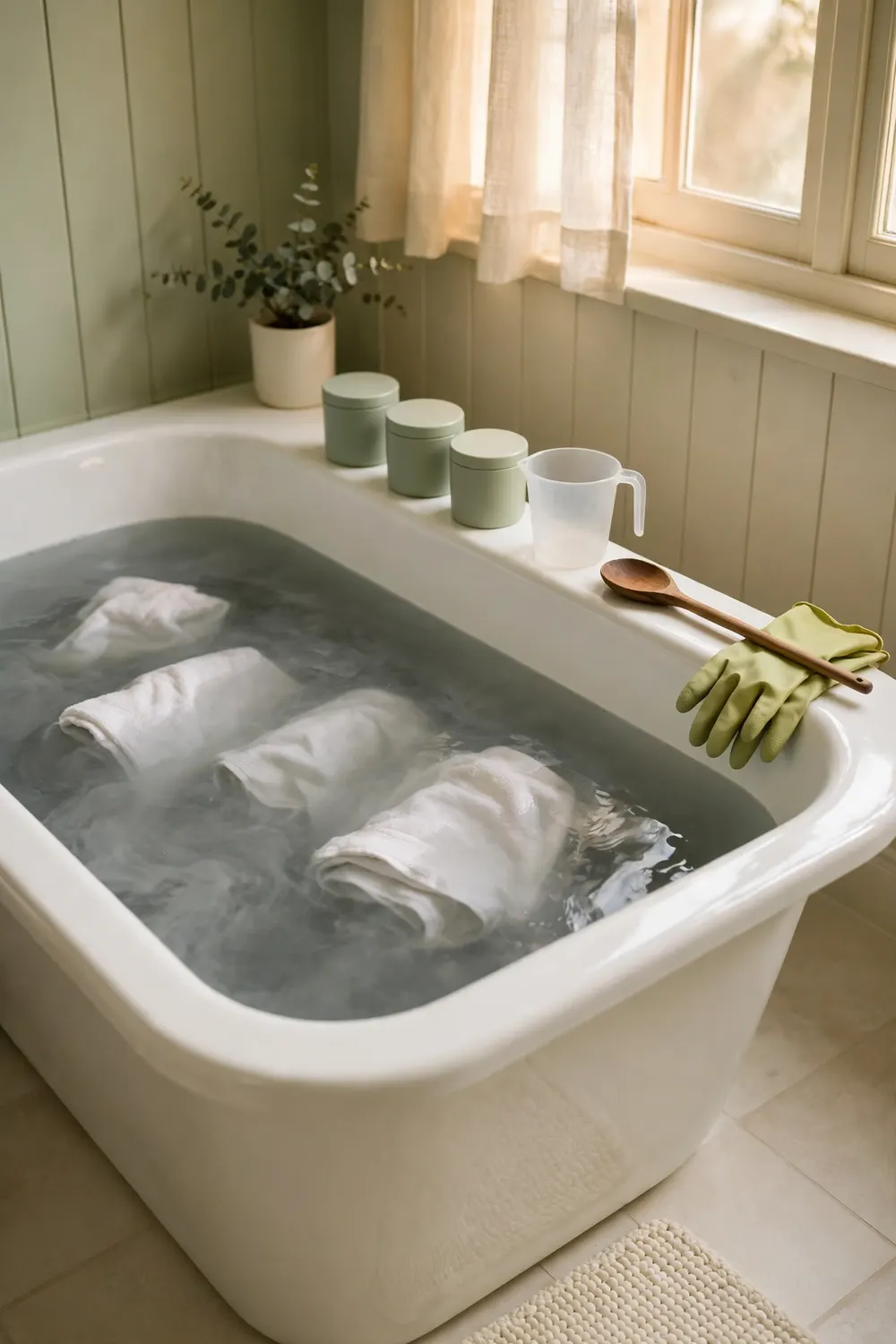
Dingy, Stiff Towels? This Laundry Stripping Recipe Soaks the Buildup Right Out
You know the moment. A towel smells fine out of the wash, then that sour, musty smell creeps back the second it gets damp. Or you step out of the shower and it just pushes water around your skin instead of soaking it up. It is frustrating, because you are washing these things. They should be clean.
Most of the time, the towel itself is not the problem. Months of detergent, fabric softener, body oils and hard water minerals slowly coat the fibers until the towel cannot absorb much of anything. A laundry stripping recipe is the reset button for that buildup. The water will honestly look a bit horrifying, but watching a stiff, dingy towel come out soft again is deeply satisfying.
Key Takeaways
- The recipe is 1/4 cup borax, 1/4 cup washing soda and 1/2 cup powdered laundry detergent in a bathtub filled about halfway with the hottest tap water.
- Stripping starts with laundry that has already been washed and dried. It removes residue, not dirt.
- Soak for 4 to 6 hours, until the water has cooled completely, stirring about once an hour.
- Strip sturdy cottons like towels and sheets. Skip wool, silk, lace, rayon, delicates, elastic heavy athletic wear and anything that is not colorfast.
- This is a reset, not a routine. Every 3 to 6 months at most, or the harsh soak speeds up fabric wear.
What Is Laundry Stripping and How Do You Do It?
Laundry stripping is soaking already clean laundry in a bathtub of the hottest tap water with 1/4 cup borax, 1/4 cup washing soda and 1/2 cup powdered laundry detergent for 4 to 6 hours, until the water cools completely. The long alkaline soak loosens the buildup of detergent, fabric softener, body oils and hard water minerals that regular washing leaves behind. Afterward, the items go through a full machine cycle with no detergent and no softener, then dry without dryer sheets.
What Is Actually Hiding in Your Towels
Every wash leaves a little something behind. Detergent that never fully rinsed out. A film of fabric softener, which is designed to coat fibers, and that coating is exactly what kills absorbency over time. Body oils worked deep into the loops. Minerals from hard water, settling in wash after wash.
It builds quietly, which is why towels seem to go bad all at once. Stripping unloads everything the washes left behind.
One honest note about the famous grey water, because it gets oversold online. A lot of that color is loosened buildup and soil, but some of it is dye from the fabric itself. Treat it as a good sign, not laboratory proof. The real test comes later, in the rinse.
What You Need
- A bathtub (a sink or bucket works for a small load, amounts scaled down in the same ratio)
- The hottest tap water
- 1/4 cup borax
- 1/4 cup washing soda
- 1/2 cup powdered laundry detergent
- A long spoon for stirring
- Gloves
Two things in that list cause most of the confusion. Washing soda is sodium carbonate, and it is NOT the same thing as baking soda. Washing soda is the stronger degreaser this recipe depends on, and swapping in baking soda gives you a much weaker soak.
And the detergent has to be powdered. Liquid detergent formulas are built differently and do not behave the same way in a long alkaline soak.
The working ratio, if you need to scale it, is 2 : 1 : 1, detergent : borax : washing soda. A sink load gets proportionally less, a very full tub a little more.
The Laundry Stripping Recipe, Step by Step
Step 1: Wash and Dry the Items First
This feels backwards, but it matters. Stripping removes residue, not dirt, so the load going into the tub should already be clean. Pre washing also removes loose lint that would otherwise redeposit on everything else in the soak.
Step 2: Fill the Tub
Fill the tub about halfway with the hottest tap water. Some guides add a pot of hot water from the stove as a boost. Keep it hot, not boiling.
Step 3: Add the Powders and Stir Until Dissolved
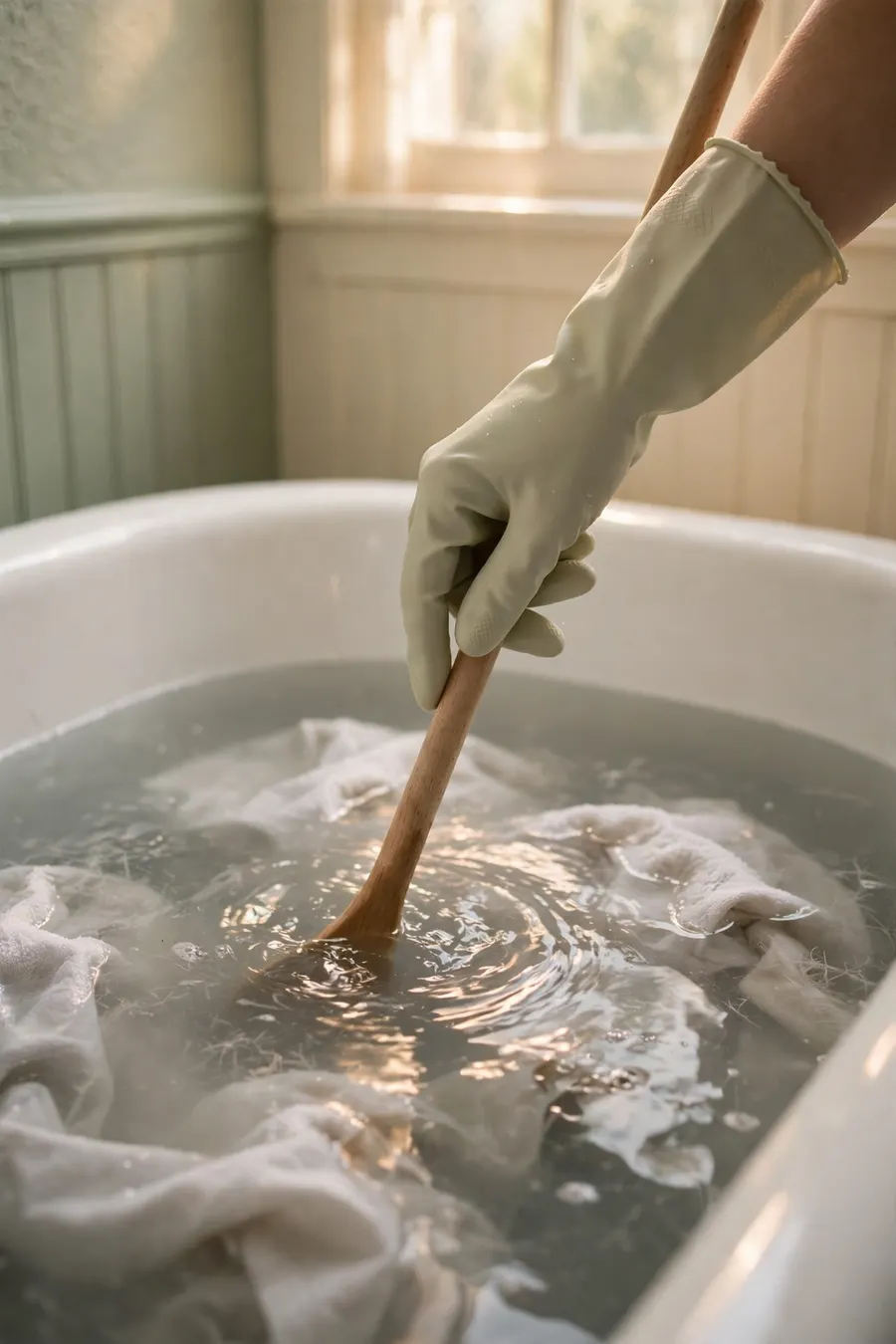
Add the 1/4 cup borax, 1/4 cup washing soda and 1/2 cup powdered detergent. Stir with the long spoon until everything has fully dissolved and no grit is left on the floor of the tub.
Step 4: Submerge the Laundry, Loosely
Push the items down until they are completely under the water, but keep the load loose. Do not pack the tub tight, or the water cannot move through the fibers.
Step 5: Soak for 4 to 6 Hours
Leave the load for 4 to 6 hours, until the water has cooled completely, and stir it roughly once an hour. Close the bathroom door while it soaks. An open tub of hot, chemical water and a curious toddler or pet is a bad combination.
Step 6: Drain, Wring, and Do Not Rinse

Drain the tub and squeeze the water out of each item well. Do not rinse them. Then wipe the tub right away, because dye residue left sitting can stain it.
Step 7: Run a Plain Machine Cycle
Move everything to the washer and run a full cycle with no detergent and no fabric softener. Cold water is fine. Now the real check: if suds are still visible after the cycle, residue is still coming out, so run an extra rinse. Suds, not water color, tell you whether you are done.
Step 8: Dry Without Dryer Sheets
Tumble dry the load without dryer sheets, which would start laying a fresh coating onto fibers you just spent hours clearing.
The Washing Machine Option, and Its Honest Limits
People ask about laundry stripping in washing machine drums a lot, and the answer depends on the machine. A top loader with a soak or pause function can hold the soak in the drum. Most front loaders cannot hold enough water for a true strip, so for front load owners the bathtub is the real method, and the longest hot cycle with the mix is only a lesser substitute.
Either way, check the manual before putting borax and washing soda in the drum. Machines vary, and the manual wins any argument with a blog post.
What to Strip, and What to Skip
Good candidates: cotton bath towels that have gone stiff and stopped absorbing, cotton sheets, washcloths, cloth diapers, and sturdy everyday cottons. Laundry stripping towels is the classic use, and a laundry stripping recipe for whites is the least risky place to start.
Skip these, every time: wool, silk, lace, rayon and anything delicate. Anything that is not colorfast, because hot water plus hours of soaking can bleed unstable dyes. Elastic heavy athletic wear. And anything whose care label says no hot water.
If you strip colors, work in like color batches and test bright pieces first. Do not throw red towels in with pale ones and hope for the best. Hope is not a laundry strategy.
Read This Before You Fill the Tub
Stripping day is a gloves on job. The mix is strongly alkaline and drying to skin, so wear gloves for the stirring and the wringing, and open a window or run the bathroom fan.
More safety points, and none of them are optional:
- Close the bathroom door while the load soaks. A tub of hot, chemical water is a hazard for small children and pets.
- Borax must never be ingested. Keep it away from children and pets, and never use the soaking tub for anything food related.
- If anyone in the house has eczema prone or reactive skin, or you are stripping baby items, add an extra rinse cycle. Alkaline residue can aggravate sensitive skin, and skipping those items entirely is also a perfectly good call.
- Keep stripping occasional, every 3 to 6 months at most. If towels dull again within weeks, the fix is less detergent and no fabric softener in normal washes, not stripping more often.
Common Mistakes That Ruin the Result
- Reaching for liquid detergent. The recipe needs powdered detergent. Liquid formulas underperform in this soak, full stop.
- Skipping the pre wash. Stripping dirty laundry just marinates the dirt. Clean first, then strip.
- Packing the tub. A tight load blocks circulation, and the water has to move through the fibers to carry the buildup out.
- Judging by the water color alone. Dark water looks dramatic, but some of it is dye. Judge by the suds in the final rinse instead.
- Stripping every month. Done too often, this harsh process wears fabric out faster. It is a reset you reach for a few times a year.
- Going right back to heavy detergent and softener. That is how the buildup got there. Lighter habits keep the result around much longer.
Frequently Asked Questions
Can I use liquid detergent instead of powdered?
No. The standard recipe needs powdered detergent. Liquid formulas are made differently and underperform in a long alkaline soak, so the load comes out less stripped than it should.
Is the dark water proof that it worked?
Not exactly. Some of that color is dye and loosened soil, not pure buildup. The reliable check is the final rinse: if suds are still showing, residue is still coming out and the load needs another rinse.
Can I strip colored towels?
Yes, if they are colorfast cotton, worked in like color batches. Hot water and hours of soaking can bleed unstable dyes, so test bright pieces first and never mix brights with whites.
How long do you soak laundry stripping, and how often can you do it?
Soak for 4 to 6 hours, until the water has cooled completely. As for how often, every 3 to 6 months at most for towels and sheets. Doing it more often speeds up fabric wear instead of helping.
Can I strip delicates or baby clothes?
Delicates, no. Wool, silk, lace, rayon and anything fragile should never go into a hot alkaline soak. Baby items carry a warning: alkaline residue can aggravate newborn and eczema prone skin, so either add an extra rinse cycle or skip those items entirely.
Conclusion

A good laundry stripping recipe is really just three pantry powders, hot water and patience. It will pull the softener film, detergent residue and mineral buildup out of towels and sheets that regular washing has given up on, and that part genuinely works. What it will not do is repair fibers that are already worn thin, and it was never meant to be a weekly habit. Strip a load on a slow afternoon, fix the detergent habit that caused the buildup, and the softness should stick around much longer this time.


