Natural Cleaning Recipes: 8 DIY Cleaners That Replace a Cabinet of Bottles
Open the cabinet under your kitchen sink and you will find the same sad collection. A bottle for the counters, a bottle for the glass, a bottle for the bathroom, a spray can nobody remembers buying, and at least two that are three quarters empty and faintly sticky. Most of us did not plan that cabinet. It just grew, one problem at a time.
The good news is that a short shelf of plain pantry staples covers nearly all of it. These natural cleaning recipes use five or six basic ingredients, mixed in different ratios, to handle counters, glass, tubs, ovens, toilets, drains and floors. No specialty products, no cabinet full of plastic, and nothing mixed that should never be mixed, because the safety rules come first here, before a single recipe.
Key Takeaways
- Eight homemade cleaners, made from baking soda, vinegar, castile soap, citric acid and a few basics, cover almost every everyday cleaning job in the house.
- Exact ratios matter. The castile all-purpose spray is 2 tablespoons of soap in 2 cups of water, and the glass cleaner is vinegar and water at 1 to 1.
- Never mix vinegar or any acid with bleach, and never mix hydrogen peroxide with bleach. Rinse with plain water between products, every time.
- Vinegar stays off marble, granite, natural stone and waxed hardwood. It etches stone and dulls wood finishes.
- These mixes clean and deodorize. They do not disinfect, so when someone in the house has been ill, a registered disinfectant is the right tool.
What Natural Cleaners Can I Make at Home That Actually Work?
You can make eight cleaners that genuinely work from a small set of staples: a castile soap all-purpose spray for counters, a 1 to 1 vinegar and water glass cleaner, a baking soda soft scrub paste, an oven paste, a toilet bowl clean, a drain refresher, a vinegar mop solution for hard floors, and a citric acid spray for limescale. Each one below has its exact ratio, the surfaces it suits, and the surfaces it must never touch.
Read This First: The Safety Rules
This part is short, and it is not fine print. It is the section that keeps homemade cleaners safe instead of sorry.
- Never mix vinegar, or any acid such as lemon juice or citric acid, with bleach. The mix makes chlorine gas, which can seriously injure lungs. That includes wiping a bleach product over a surface that still has vinegar on it. Rinse thoroughly with plain water between products.
- Never mix hydrogen peroxide with bleach. Keep peroxide and vinegar apart too, in separate bottles and on separate jobs, because together they form peracetic acid, an irritant to eyes, skin and lungs.
- Never store baking soda and vinegar mixed in a closed bottle. The reaction makes carbon dioxide gas, and pressure can build until the container bursts.
- Keep vinegar off marble, granite, travertine, limestone and all natural stone, even sealed stone, because acid etches it. Keep it off hardwood floors and any waxed or oiled wood finish as well.
- Label every spray bottle with what is inside, the ratio and the date. Never put a cleaning mix in a drink bottle, and keep all mixes out of reach of children and pets.
- Test on a hidden spot first, every recipe, every new surface. A few minutes in an inconspicuous corner tells you whether a finish will dull or change colour.
- Put gloves on for borax, washing soda, hydrogen peroxide and any long scrubbing session, and open a window or run the fan when you work in the bathroom or wipe out an oven.
One more thing, because plenty of sites get it wrong. Baking soda and vinegar mixed together neutralize each other into mostly water. The fizz looks busy, but it is not extra cleaning power. Used one after the other, with a rinse or a wipe in between, each ingredient does real work. Used together in one bottle, they mostly cancel out.
The 8 Natural Cleaning Recipes
1. Castile Soap All-Purpose Spray
The mix: 2 cups of water plus 2 tablespoons of liquid castile soap in a spray bottle. A few drops of essential oil are optional, for scent only.
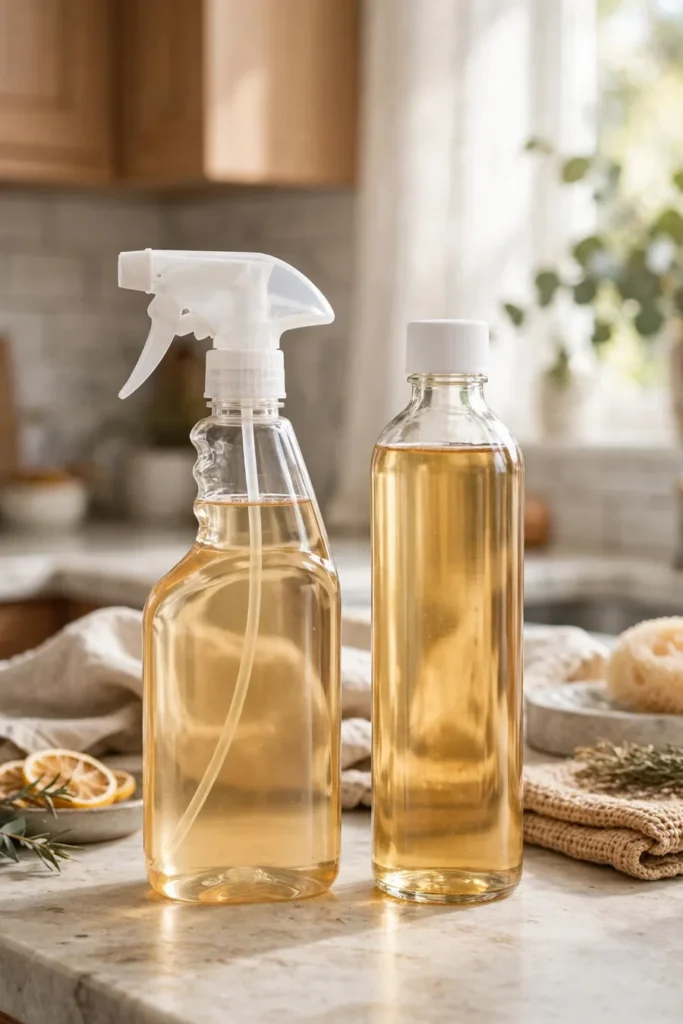
What it cleans: This is the everyday counter spray. It works on sealed countertops, including stone, plus sinks, the stovetop and tile. Because it has no acid in it, this is the bottle to reach for on marble and granite.
How to use it: Spray, wipe with a cloth, and rinse or wipe again with a plain damp cloth so no soapy film stays behind.
Limits: Never add vinegar to this bottle. The acid turns the soap back into white oily curds and leaves a film on everything. It is not the best choice for glass, where it can streak. A batch keeps for a few weeks at room temperature; label it with the date.
2. Vinegar Glass and Mirror Cleaner
The mix: 1 cup of water plus 1 cup of distilled white vinegar, a 1 to 1 ratio, in a spray bottle. A classic variation is ¼ cup of vinegar plus 1 tablespoon of cornstarch in 2 cups of warm water; the cornstarch helps cut streaking.

What it cleans: Windows, mirrors and glass doors.
How to use it: Spray lightly, wipe with a microfiber cloth rather than paper towel, since paper leaves lint, then buff dry with a second dry cloth.
Limits: Aim carefully near stone counters and marble or granite window sills, because overspray can etch them. Open a window if the vinegar smell bothers you; it fades as it dries. Vinegar sprays keep for a few weeks, labelled.
3. Baking Soda Soft Scrub Paste
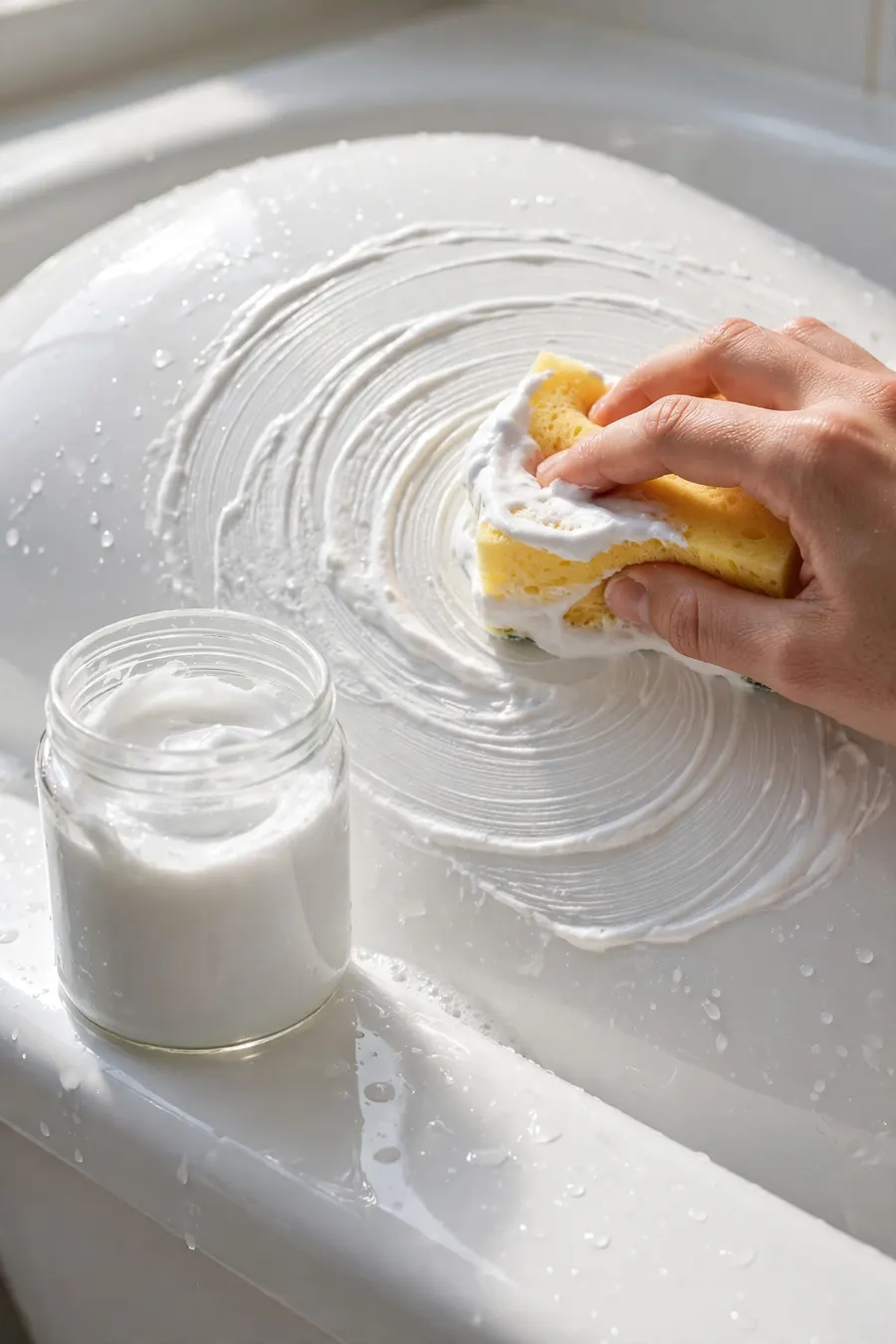
The mix: 1 cup of baking soda plus ¼ cup of liquid castile soap, or plain dish soap, stirred into a thick paste like frosting. Mix it in a jar, not a sealed bottle, and make small batches because it dries out over time.
What it cleans: Tubs, sinks, the stovetop and oven door glass. The baking soda gives gentle grit, and the soap lifts the grease.
How to use it: Spread it on with a sponge, work in small circles, then rinse well. Baking soda left sitting on a surface dries into a pale haze, so the rinse matters.
Limits: Test first on fiberglass and acrylic tubs, and skip it on brushed or dark metals that show every scratch.
4. Oven Paste
The mix: ½ cup of baking soda plus 2 to 3 tablespoons of water, stirred to a spreadable paste.
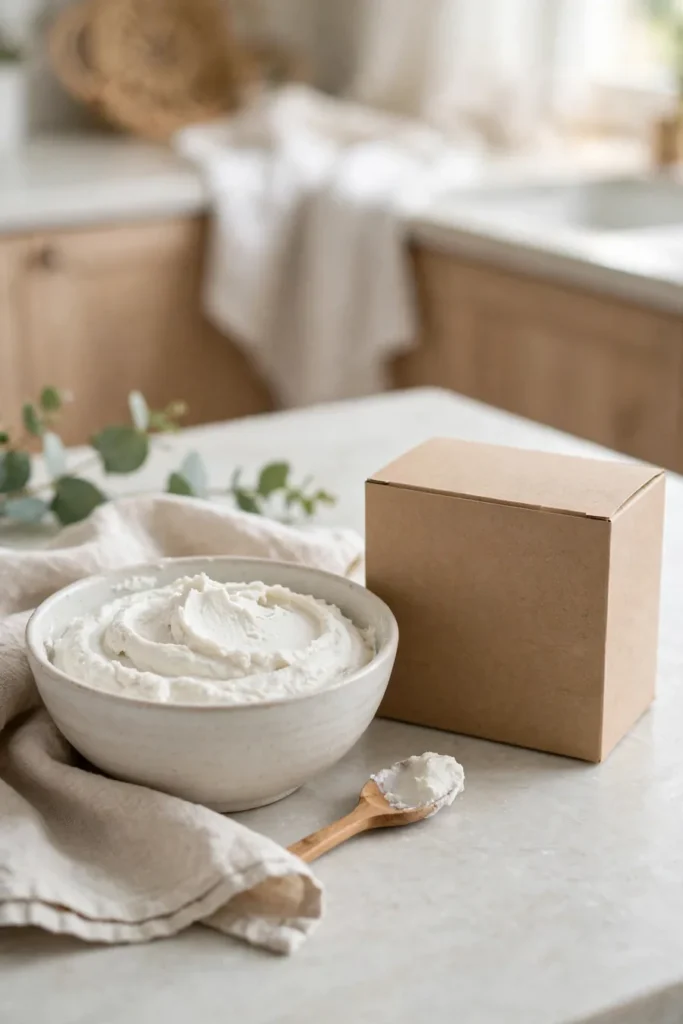
What it cleans: Baked-on oven grease, without the harsh fumes of a commercial oven cleaner.
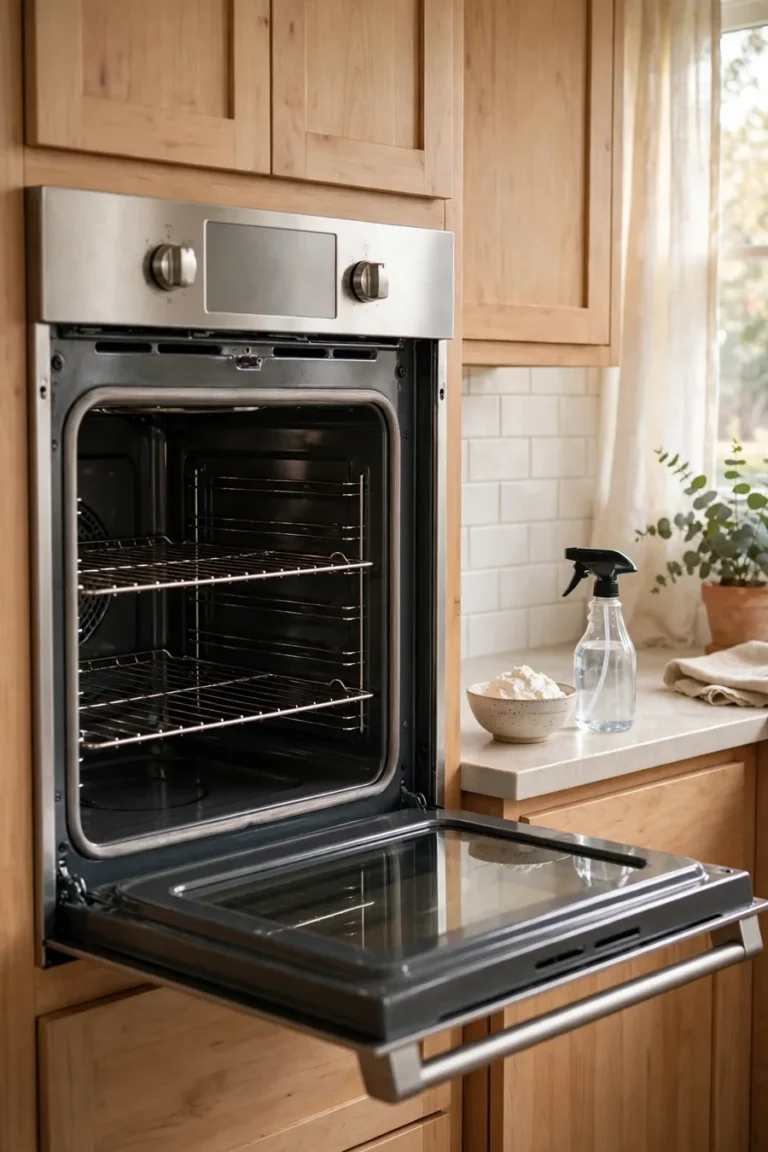
How to use it: Spread the paste over the cool oven interior, leave it for 8 to 12 hours (overnight is the easy way), then wipe it out with a damp cloth. A spray of plain vinegar at the end fizzes away the last of the soda residue, which is the sequential method working the way it should.
Limits: Keep the paste off the heating elements. Ventilate the room while you wipe it out. For racks, the glass door and the fiddly corners, the full step-by-step method lives in our natural oven cleaning guide.
5. Toilet Bowl Clean
The mix: 1 cup of vinegar, then ½ cup of baking soda, used one after the other in the bowl.
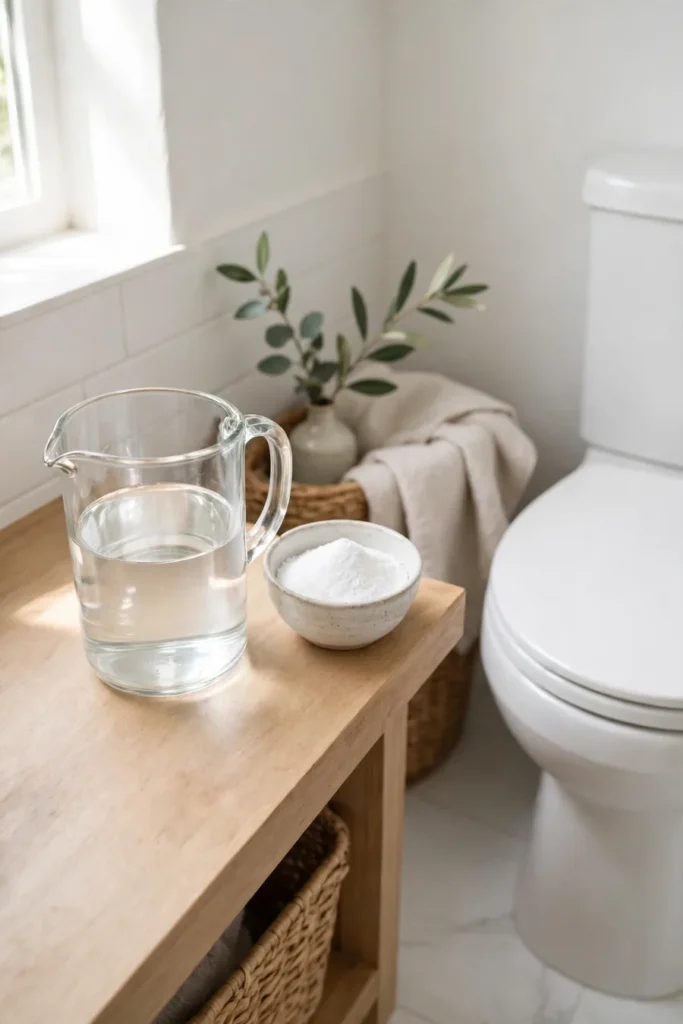
What it cleans: This is a weekly maintenance clean and deodorizer for the bowl, not a heavy stain remover.
How to use it: Pour the vinegar into the bowl and let it sit for 10 minutes. Then sprinkle the baking soda around the bowl, let the fizz settle, about 15 to 30 minutes in total, scrub with the bowl brush and flush.
Limits: Bowl only. Never pour vinegar into the toilet tank, because acid can degrade the rubber flapper and seals. And never use this if a bleach-based bowl cleaner is already in the bowl.
6. Drain Refresher
The mix: ½ cup of baking soda down the drain, followed by ½ to 1 cup of vinegar.
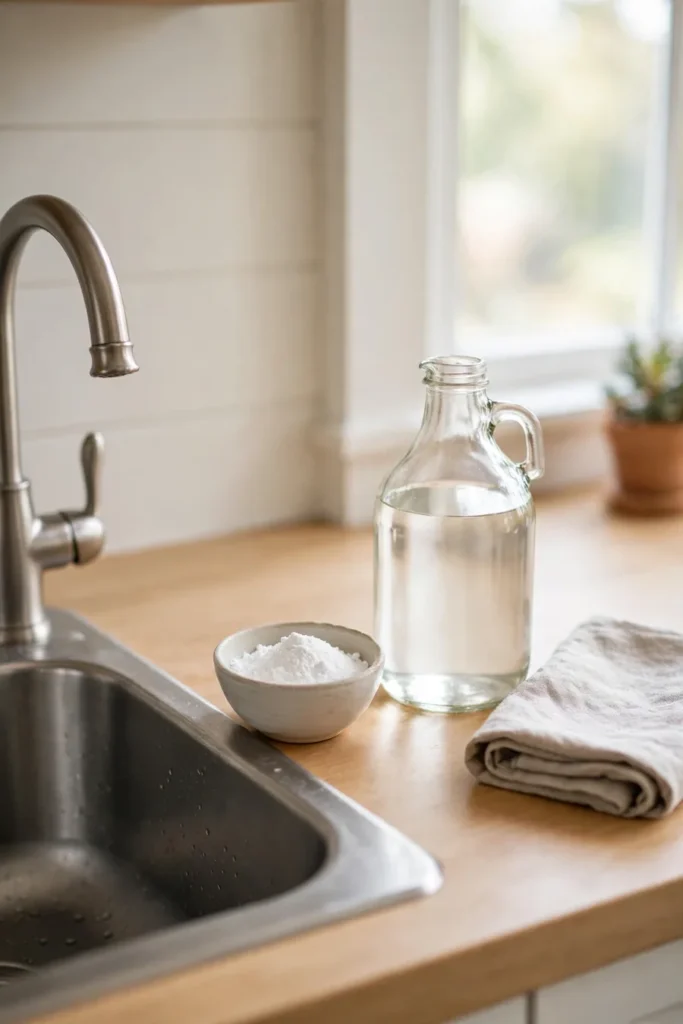
What it cleans: Drain odours in a slow but still running drain.
How to use it: Pour in the soda, then the vinegar, cover the drain opening, and wait 15 minutes. Flush with a kettle of hot water, and repeat once if the smell hangs on. For older plumbing or PVC you are unsure about, very hot tap water is the safer flush than boiling.
Limits: Be honest with yourself here: this is odour maintenance only. It will not open a real clog. And never, ever use it in a drain that has commercial drain opener in it.
7. Vinegar Mop Solution for Hard Floors

The mix: ½ cup of vinegar in 1 gallon of warm water.
What it cleans: Ceramic tile, porcelain, and sealed vinyl or laminate floors. Check the laminate maker’s guidance if your floor is new.
How to use it: Mop as usual, wringing well. Floors dry faster and cleaner when the mop is damp rather than soaking.
Limits: This mix is banned on hardwood and on any waxed or oiled finish, no exceptions. For wood, use the alternative: a few drops of castile soap in a bucket of warm water, mop nearly dry, and rinse the mop often so you are not spreading dirty water around.
8. Citric Acid Limescale Spray
The mix: 1 teaspoon of citric acid powder dissolved in 1 cup of warm water, in a spray bottle. Mix it fresh and use it within a few days.
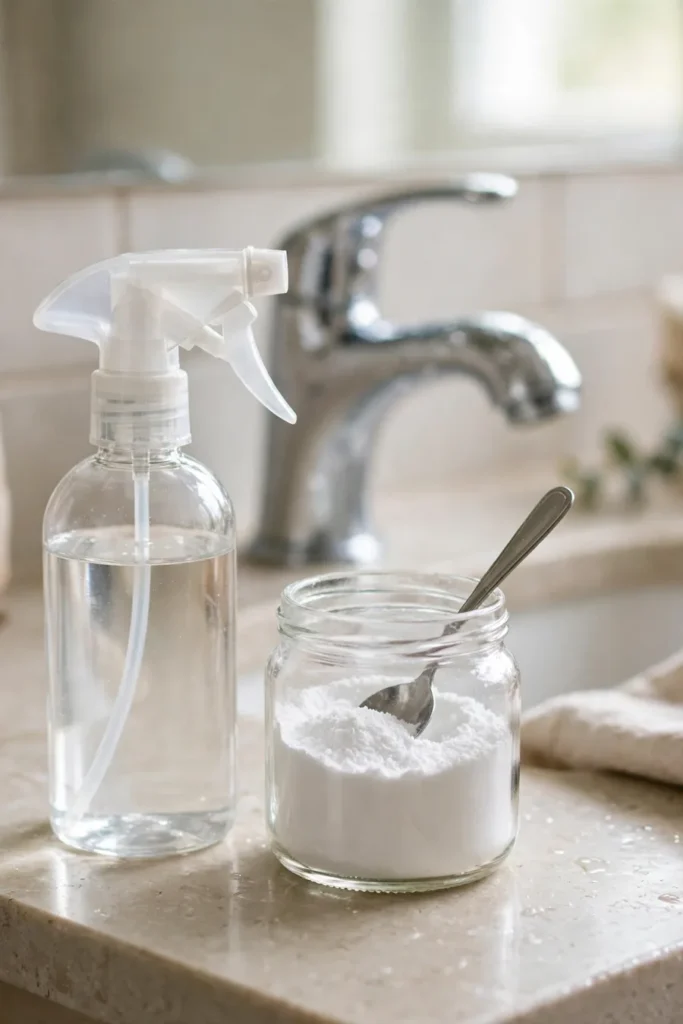
What it cleans: Limescale and hard water spots on faucets, shower glass, the splashback behind the kettle and drip trays. It does the descaling job of vinegar with far less smell.
How to use it: Spray, wait 5 to 10 minutes, rinse, and buff dry.
Limits: Citric acid is still an acid. The stone ban and the never-mix-with-bleach rule apply to it exactly as they do to vinegar.

Bonus: Microwave Steam Clean. Put 1 cup of water plus 2 tablespoons of vinegar in a microwave-safe bowl, run it for 3 to 5 minutes until the window steams up, then leave the door closed for 2 minutes. The steam loosens dried splatters so most of them wipe off with one pass of a cloth.
The Small Shelf: What to Keep on Hand
Every recipe above comes from the same short list, which is really the point.
- Baking soda: the gentle scrubber and odour absorber, best used as a paste.
- Distilled white vinegar (5%): the mineral dissolver for limescale, light grease and glass. Cleaning vinegar at 6% is slightly stronger; these ratios assume the standard 5%.
- Liquid castile soap: the plant-oil degreaser, and the base of the stone-safe spray.
- Citric acid powder: the low-smell alternative to vinegar for scale.
- Washing soda and borax: the stronger alkaline helpers for laundry and heavy jobs. They are not the same as baking soda, and both need gloves. Borax must never be ingested and belongs well away from children and pets.
- Hydrogen peroxide (3%): the standard brown-bottle strength, useful on organic stains. Keep it in its original bottle, since light breaks it down.
- Plus the hardware: a few plain spray bottles, a jar for pastes, microfiber cloths and a marker for labels. Dollar-store spray bottles are honestly fine for this job.
Frequently Asked Questions
Do homemade cleaners disinfect?
No. They clean and deodorize, and that covers most everyday jobs. Vinegar is not an EPA-registered disinfectant, so when someone has been sick, use a registered disinfectant according to its label instead.
Why can’t I just mix baking soda and vinegar for everything?
Because they neutralize each other into mostly water. The fizz looks busy but cleans less than each ingredient does on its own. Used in sequence, soda first as a scrub, then a rinse, then vinegar where a surface needs it, both earn their place. Mixed together, they mostly cancel out.
How long do DIY sprays keep?
Soap and vinegar sprays keep for a few weeks at room temperature. The citric acid spray should be mixed fresh and used within a few days, and pastes dry out, so make those in small batches. Label everything with the contents and the date so nobody, including future you, has to guess.
What can I clean marble and granite with?
The Castile Soap Spray from Recipe 1. It has no acid in it, so it is the bottle to reach for on stone, where vinegar and other acids do damage.
A Shorter Cabinet, a Calmer Kitchen
One limit worth stating plainly: these homemade mixes clean and deodorize, but they do not disinfect. Keep that line in mind and every recipe here still
There is a small, real satisfaction in this swap. The under-sink cabinet stops being a graveyard of half-used bottles, mixing a fresh spray takes about a minute, and you know exactly what is in every bottle because you put it there. Start with the two bottles you will use daily, the castile spray and the glass cleaner, and add the rest as jobs come up. The recipes are forgiving, the ingredients are cheap and easy to find, and the only real rules are the safety ones: never mix acids with bleach, keep vinegar off stone and wood finishes, and label what you make. Do that, and a small shelf of staples will carry the whole house.