Natural Cleaning Recipes for Mold and Mildew in a Small Bathroom
If the inspection date is circled on your calendar and your shower grout is turning black a little further every week, you know the tiny windowless bathroom problem. The fan hums, the steam stays, and mildew creeps through the grout and seals all winter. Bleach would blast it, but bleach fumes in the small room you shower in every morning is its own problem. Two cheap drugstore staples handle most surface growth, once you know which jobs they can do and which were never a cleaning job at all.
Key Takeaways
- 3 percent hydrogen peroxide and a baking soda paste are the real workers here, covering grout, caulk, tile and glass.
- Vinegar helps with light surface mildew on hard surfaces, but it is weak on grout and not a full fix by itself.
- Some cleaners only bleach the color out of a stain and leave the growth in the grout. Looks clean, is not clean.
- Black staining inside caulk usually means the caulk is finished, and replacing it is a landlord conversation for a renter.
- Mold over about 10 square feet, mold inside a wall, or breathing trouble at home means stop and call the landlord or a professional.
- Mildew returns on moisture, not dirt. Fan time, a squeegee and a fixed drip matter more than any recipe.
The honest short version: homemade cleaning solutions for mold can clear surface mildew on grout, caulk, tile and shower glass in a small bathroom, and the recipes below use exact amounts. They cannot fix mold inside a wall, under a floor, or across a large area. That is a repair problem, and in a rental it belongs to your landlord, not to your deposit.
What Actually Works, and What Only Bleaches the Color
Start with the trap. Some cleaners, bleach included, strip the color out of mildew faster than they deal with the growth itself, so grout looks white and the lines are dark again in two weeks. Grout and caulk are porous, which is why a cleaner needs contact time and scrubbing, not a spray and a wipe.
The main worker is 3 percent hydrogen peroxide, the brown drugstore bottle. It fizzes on contact with mildew, works on grout, tile and glass, and leaves no fumes hanging in a small room. Baking soda paste holds it against vertical grout lines instead of letting it run off, and the gentle grit does the scrubbing.

Vinegar gets an honest mention rather than a headline. Undiluted white vinegar can help with light surface mildew on glass and glazed tile. On grout it is weak, so do not treat it as the whole fix.
Tea tree oil is the optional extra: 1 teaspoon in 1 cup of water as a spray for corners and seals. It works, but the small bottle costs more than the other three cleaners combined. One rule for all of them: never combine them in one bottle, and never mix any with bleach. The safety section below is not fine print.
Grout Lines
The mix: half a cup of baking soda in a small bowl, with 3 percent hydrogen peroxide stirred in a tablespoon at a time, roughly 3 tablespoons, until it holds like cake frosting.

Spread the paste along the lines with an old toothbrush or grout brush, pressing it in rather than skimming the top. Leave it 20 to 30 minutes. Scrub each line, rinse with warm water, and wipe dry.
For light mildew just starting, skip the paste: spray peroxide straight on, wait 10 to 15 minutes, scrub, rinse and dry. A stubborn line usually needs a second round of paste rather than a harder scrub, which can chew up old grout.
Caulk and Seals
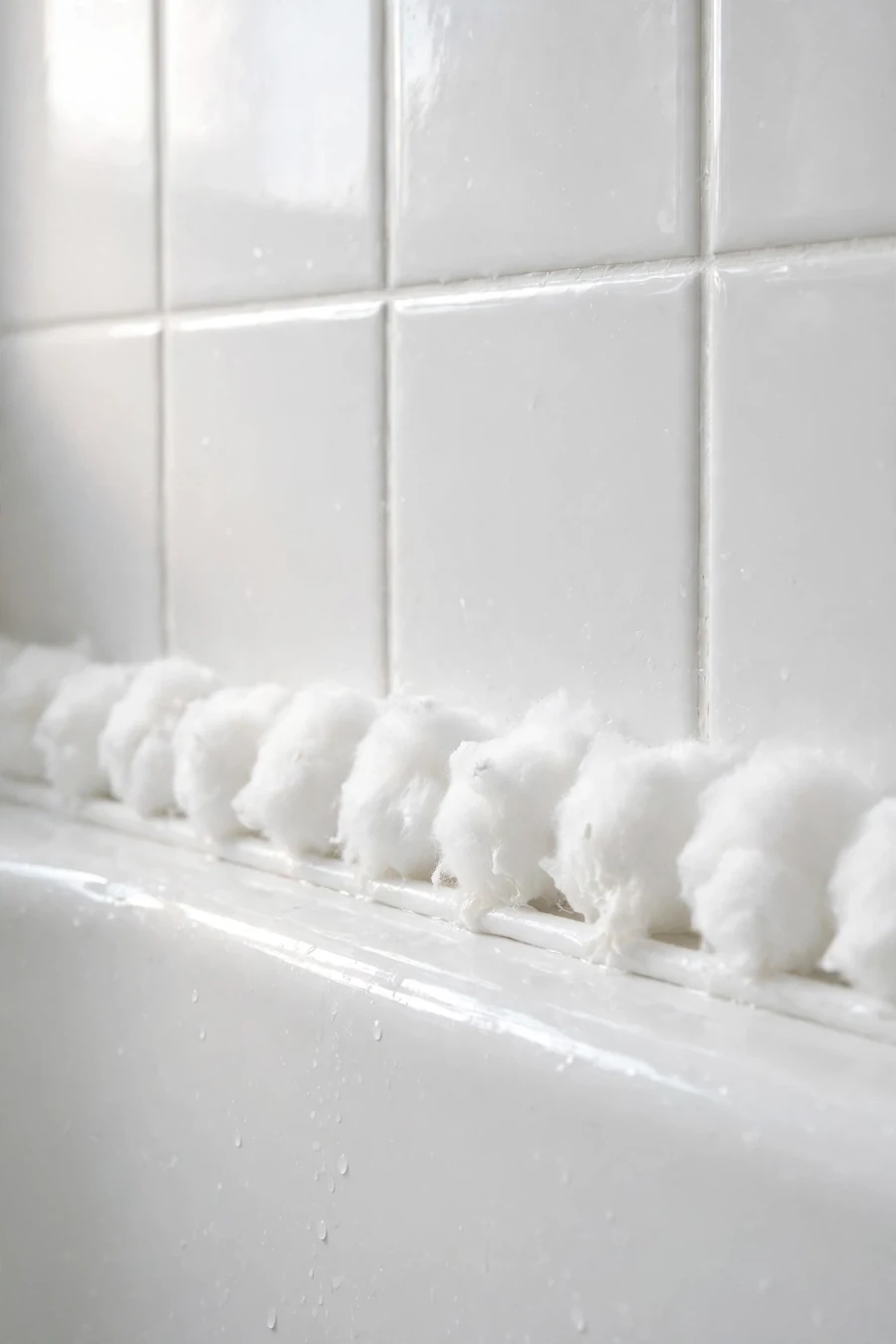
Caulk and silicone seals are softer than grout, so go gently. Soak cotton balls in 3 percent hydrogen peroxide, press them along the stained line, and leave them at least 30 minutes, up to a couple of hours on heavy staining. Remove, scrub very lightly with a dab of baking soda paste on a soft cloth, rinse, and dry.
Mildew can root into caulk and grow underneath it. If the stain survives two rounds, or the caulk is peeling or lifting at the edges, no recipe will fix it. That caulk needs replacing. If you rent, do not cut it out yourself without asking first: send your landlord a photo and a short message. Caulk replacement is a normal landlord repair, and a badly done DIY recaulk can cost you more deposit than the stain would.
Tile and Shower Doors
Tile and glass are the easy surfaces, because mildew sits on top instead of moving in. Spray 3 percent hydrogen peroxide or undiluted white vinegar over the area, wait 10 minutes, and wipe with a cloth. For cloudy film on shower doors, rub a little baking soda on a damp sponge, rinse, and dry the glass.
Run a soft brush with a dab of grout paste along the door seal and bottom track, where water sits longest. One caution: keep vinegar and other acids off natural stone, because acid etches it. On stone, stick to peroxide and baking soda.
Painted Walls and Ceiling Spots
Small spots on painted walls and ceilings can be cleaned if the area stays small and you test first: peroxide can lighten paint, so dab a little on a hidden spot and check the color once it dries.
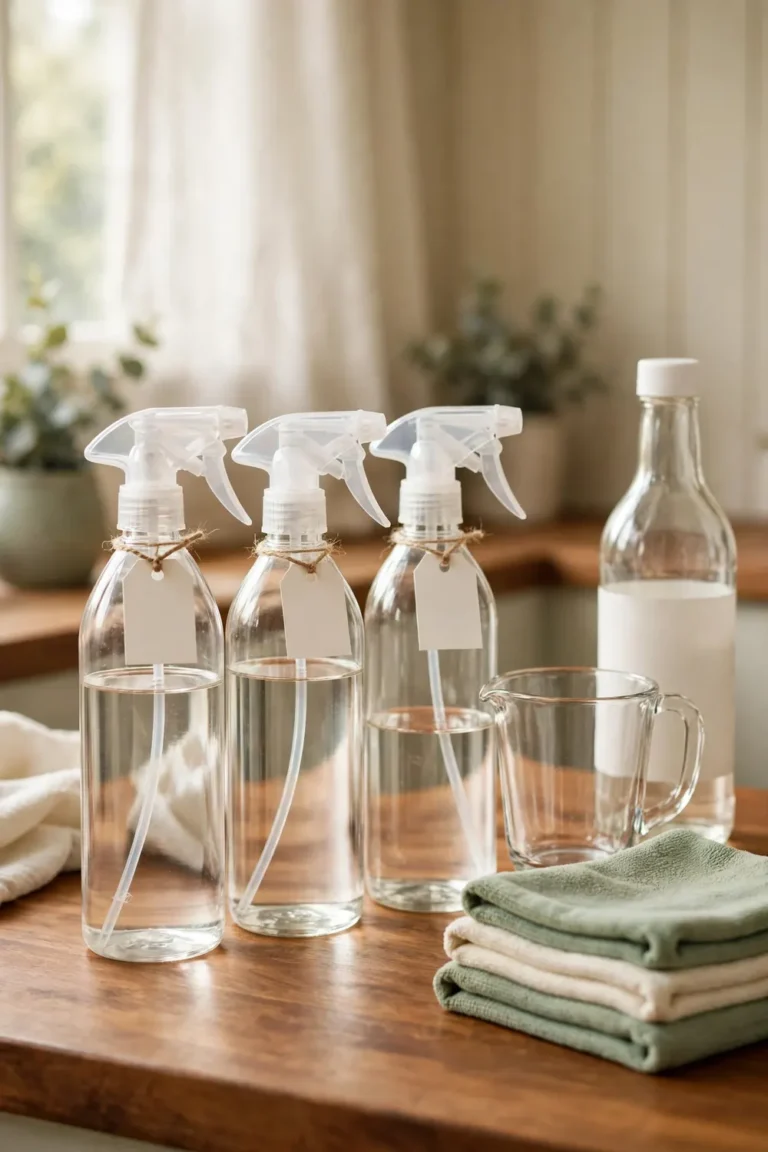
The mix: 1 tablespoon of baking soda stirred into 2 cups of warm water in a spray bottle, shaken until dissolved. Spray a cloth until damp, not dripping, and wipe the spots gently. Spraying the wall itself soaks the plaster and feeds the next round, so let the cloth do the carrying. Rinse by wiping with a cloth dampened with plain water, then dry the wall well.
If a spot is bigger than a dinner plate, the paint is bubbling or soft, or spots return within days, water is getting in behind the surface. Photograph it and send it to your landlord.
Safety: The Rules That Are Not Optional
- Never mix vinegar, or any acid cleaner, with bleach. Together they release a gas that burns eyes and lungs, and in a bathroom this small there is nowhere for it to thin out. If bleach is used in your home, save these recipes for another day, and rinse surfaces well between products.
- Never mix hydrogen peroxide and vinegar in the same bottle. Combined, they form an irritating acid that is rough on skin, eyes and airways. One after the other on a surface, with a rinse in between, is fine. Mixing them is not.
- Ventilate as much as the room allows: fan on before you start and after, door open while you work, and step out for air if you feel lightheaded.
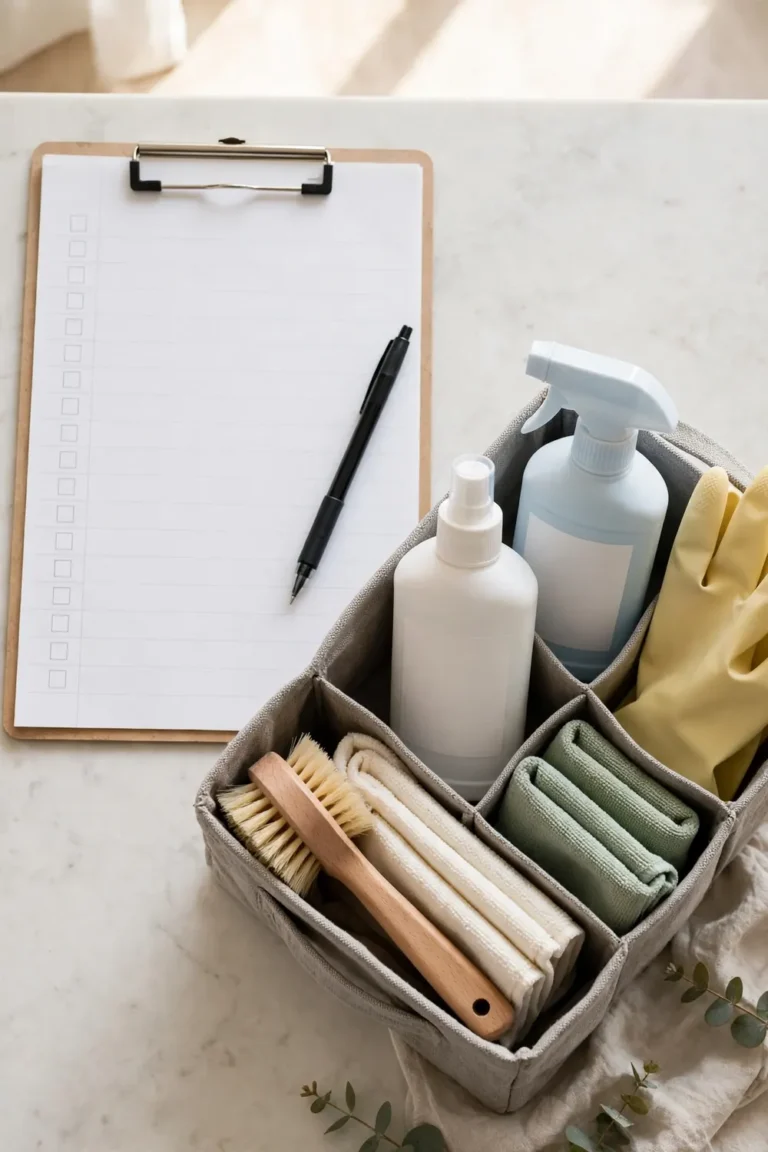
- Wear gloves: half an hour of scrubbing leaves hands sore, and gloves keep mildew out from under your nails.
- Know the stopping line. Mold over more than about 10 square feet, mold you can smell but cannot see, mold inside a wall or ceiling, or anyone at home with asthma or breathing problems means stop. That is a landlord or professional job.
Keeping It From Coming Back
Mildew is a moisture problem with a cleaning symptom, so the habits matter as much as the recipes.

- Run the fan during your shower and for at least 20 to 30 minutes after. If the mirror stays fogged long afterwards, tell your landlord in writing, because a fan that cannot clear steam cannot protect the room.
- Keep a cheap squeegee in the shower and run it down the walls and glass when you finish. It takes under a minute.
- Leave the bathroom door open after showers, and the shower door or curtain open too, so the room and the folds dry out.
- Report a dripping tap or showerhead early. A drip keeps one patch wet around the clock, and that patch is where mildew starts again.
Questions People Ask About Cleaning Mold Naturally
Does vinegar kill mold, or does it just clean the stain?
A bit of both, on the right surface. Vinegar can clear light surface mildew on glass and glazed tile. On porous grout it mostly lightens the surface, which is why the stain comes back. Grout needs the peroxide and baking soda paste.
Can I mix hydrogen peroxide and vinegar to make a stronger cleaner?
No. In one bottle they form an irritating acid, and mixing either with bleach is worse. Use them one at a time, with a rinse in between.
The black stain in my caulk will not scrub out. What now?
It has likely rooted into or under the caulk, where no surface cleaner can reach, so the caulk needs replacing. If you rent, send your landlord a photo instead of cutting it out yourself, so the repair and cost sit where they belong.
How much mold is too much to clean myself?
About 10 square feet, or sooner if the mold is inside a wall, spreading fast, or anyone at home has asthma or breathing problems. Past that line, it is a repair job for a landlord or a professional.
The Bottom Line
One free hour, a brown bottle of peroxide and a box of baking soda will clear most of what winter condensation grows in a small bathroom. Work the grout first, be honest about the caulk, and put anything bigger than a dinner plate in writing to your landlord. The black lines can stay gone, and so can the deposit they were threatening.