
The Vinegar Cleaning Solution Ratio Chart: One Right Mix for Every Job
There is a special kind of relief in replacing a rattling cabinet of single-job sprays with one plain bottle of white vinegar. Then comes the question that sends everyone to a search bar: how much water goes in with it? Too weak and the glass stays smeary. Too strong and you are one careless spray away from a dull patch on a surface vinegar should never have touched. The honest answer is that there is no single vinegar cleaning solution ratio. There is a right strength for each job, and this page puts all of them in one chart.
Key Takeaways
- One recipe, several strengths: the standard vinegar cleaning solution recipe is vinegar and water at 1:1, and it covers glass, mirrors and everyday all-purpose cleaning.
- Start weak and step up only on proof: 1:3 handles daily spray jobs, 1:1 does the regular work, and undiluted vinegar is for mineral crust and descaling only.
- Let the mix sit. A 5 to 10 minute dwell on soap scum or limescale cleans far better than spraying and wiping straight away.
- Never mix vinegar with bleach, and never pair hydrogen peroxide with bleach. Rinse any surface with plain water between different products.
- Vinegar permanently damages marble, granite and every natural stone, and it dulls hardwood and waxed wood finishes. Keep it off electronics screens too.
- Vinegar cleans and deodorizes. It does not disinfect, so illness in the house calls for a registered disinfectant used by its label.
What Is the Correct Ratio of Vinegar to Water for Cleaning?
The correct ratio of vinegar to water for most cleaning is 1:1: equal parts distilled white vinegar and water in a spray bottle. That 50/50 dilution is the standard vinegar and water cleaning solution for glass, mirrors, sinks, sealed non-stone counters and general bathroom cleaning. Lighter jobs do fine at 1:3, one part vinegar to three parts water, and heavy mineral deposits are the one job where undiluted vinegar earns its place. Every ratio on this page assumes standard 5% distilled white vinegar. Cleaning vinegar runs about 6% acid, so if that is what you have, treat each mix as one notch stronger than the chart says.
Read This First: The Rules That Keep Vinegar Safe
Before anything gets mixed, these are the lines that do not move. They are short, and they matter more than any ratio on this page.
- Never mix vinegar, or any acid such as lemon juice or citric acid, with bleach. The combination makes chlorine gas, which can seriously injure lungs. This includes using a bleach product on a surface that still has vinegar on it. Rinse thoroughly with plain water between products, every time.
- Never mix hydrogen peroxide with bleach. Keep peroxide and vinegar apart too, in separate bottles and on separate jobs: together they form peracetic acid, an irritant that is corrosive to eyes, skin and lungs.
- Never mix or store baking soda and vinegar in a closed bottle. The reaction makes carbon dioxide gas, and the pressure can build until the container bursts.
- Label every bottle with the contents, the ratio and the date. Use plastic spray heads, because vinegar corrodes metal trigger springs over time, and never put a cleaning mix in a drink bottle.
- Test a hidden spot first on any new surface. Give it a few minutes and check for dulling or discoloration before you spray the whole thing.
The Vinegar Cleaning Solution Ratio Chart
The chart below holds every ratio in this article, one row per job. All ratios are vinegar to water, mixed with standard 5% distilled white vinegar. Start with the weakest mix that could do the job, and step up only if it falls short. Stronger is not automatically better, and every step up raises the risk to the surface underneath.

| Job | Vinegar to Water Ratio | How to Use It |
|---|---|---|
| Daily light spray, for glass touch-ups and appliance fronts | 1:3 to 1:4 | Spray and wipe with a microfiber cloth. The gentlest mix, with the least smell. |
| Glass and mirrors | 1:1 | Spray, wipe, then buff dry with a second dry microfiber cloth. A cornstarch version for streaky glass is in the natural cleaning recipes. |
| All-purpose cleaning on sealed non-stone counters, sinks, tile and the stovetop | 1:1 | Spray, let it sit briefly on grime, then wipe. Rinse food-contact surfaces with plain water afterwards. |
| Bathroom soap scum and light limescale | 1:1 | Spray, wait 5 to 10 minutes, scrub lightly, rinse and dry. |
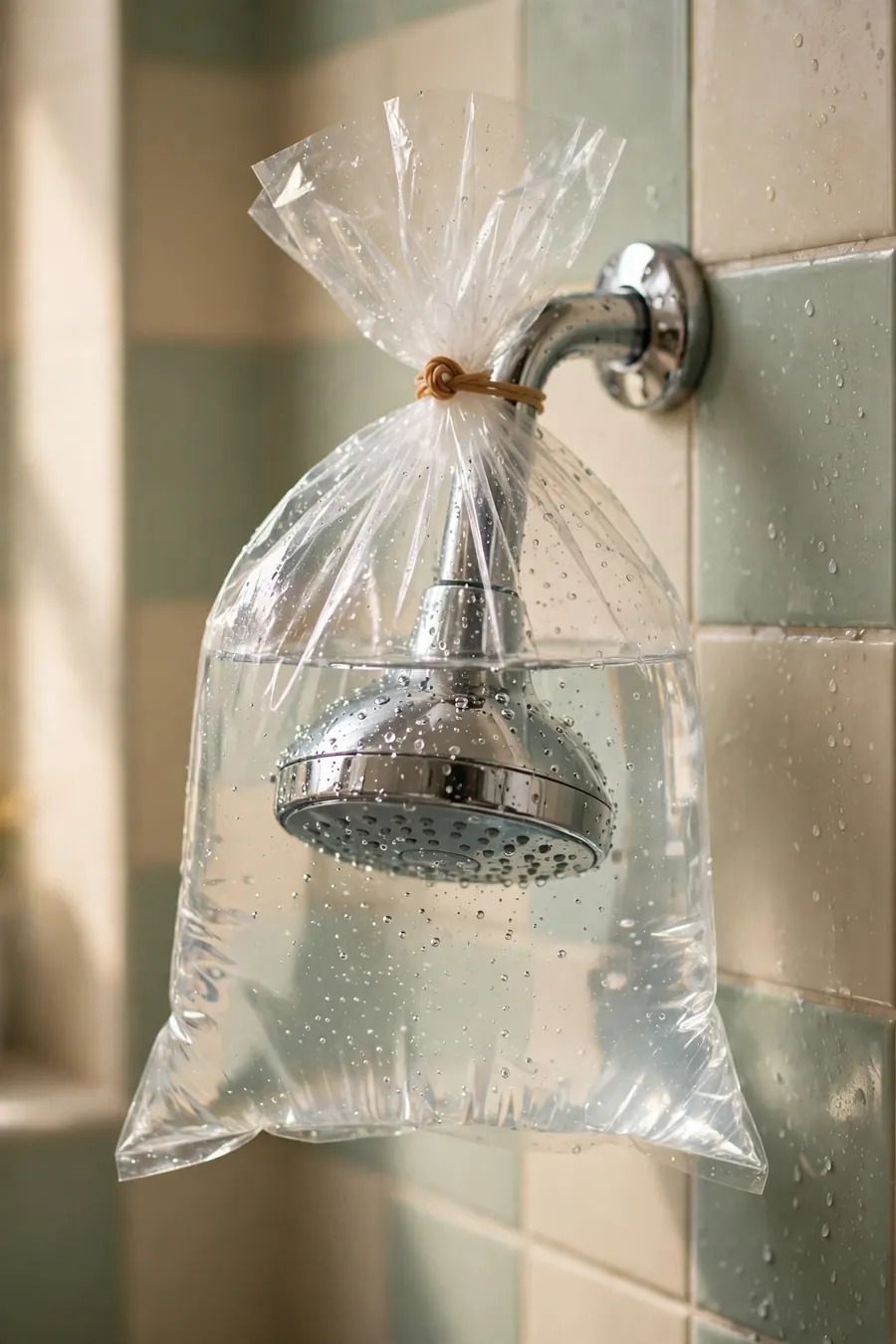
| Heavy mineral deposits, like faucet crust and a clogged showerhead | Undiluted | Wrap a vinegar-soaked cloth around the fixture for 15 to 30 minutes, up to an hour on heavy crust. For a showerhead, secure a bag of vinegar over the head for 1 hour to overnight. Rinse and buff. |
| Floors in tile, porcelain, sealed vinyl or laminate | ½ cup vinegar in 1 gallon of warm water | Mop as usual. No rinse is needed at this dilution. Check the manufacturer’s guidance first on laminate. |
| Laundry rinse aid and towel deodorizer | ½ to 1 cup, undiluted | Add to the fabric softener dispenser or straight into the rinse cycle. It softens towels dulled by detergent residue and helps with musty smells. |
| Microwave steam clean | 1 cup water plus 2 tablespoons vinegar | Heat 3 to 5 minutes until steaming, rest 2 minutes with the door closed, then wipe the loosened splatters away. |
| Kettle descale | 1:1 | Fill to cover the scale, bring to a boil, take it off the heat and let it sit 30 minutes. Discard, rinse, then boil plain water once and discard that too before normal use. |
How the Ratios Work in Real Kitchens and Bathrooms
For everyday glass, the 1:1 mix in a spray bottle is the glass cleaner most homes end up living with. Spray the mirror, wipe with one microfiber cloth, then buff with a dry one. The dry buff is the step people skip, and skipping it is usually why the glass streaks.
In the shower, the vinegar cleaning solution for shower glass and tile is that same 1:1 mix, used patiently. Spray, then walk away for 5 to 10 minutes. Dwell time does the heavy work on soap scum, because the acid needs those minutes to soften the film. Come back, scrub lightly, rinse, and dry the glass so the next deposits start from zero.
Floors prove the start-weak rule best. The vinegar cleaning solution for floors is just ½ cup of vinegar in a gallon of warm water, and at that dilution a mop leaves tile, porcelain and sealed vinyl clean with no rinse afterwards. The floor never needed the strong bottle.
Surfaces Vinegar Will Damage: The Never List
Here is the part that makes people wince, usually right after a well-meaning spray lands on the wrong counter. Vinegar is an acid, and acid etches. On the surfaces to avoid below, the damage is not a smear you can buff out later.
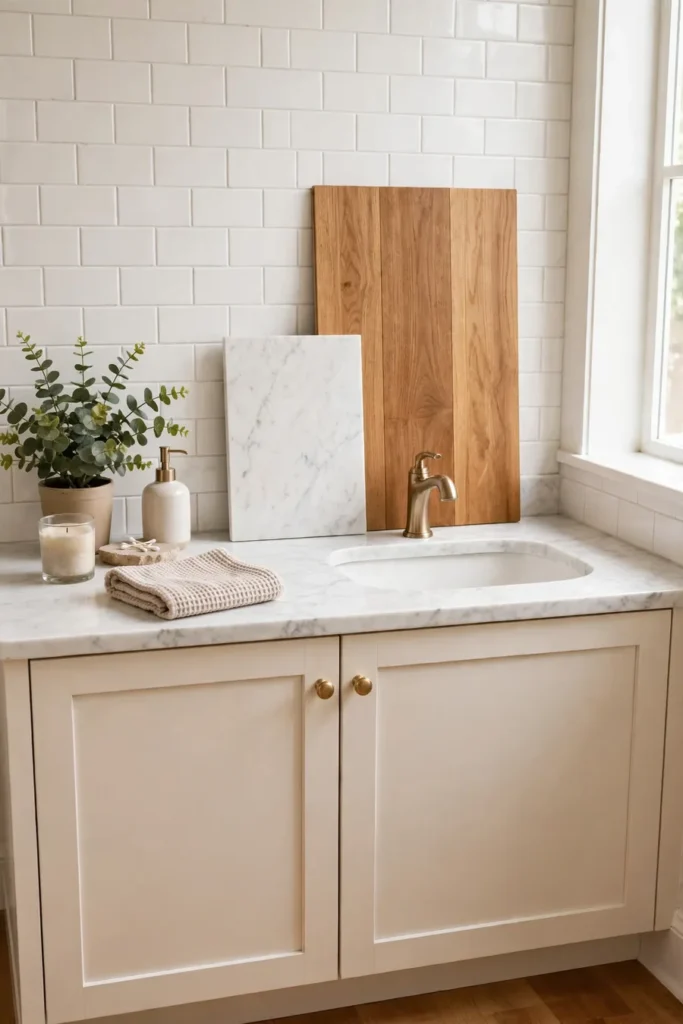
- Marble, granite, travertine, limestone and all natural stone, sealed or not. Acid etches the surface and dulls the sealer, and etching is permanent. For stone, use a soap-based spray instead.
- Hardwood floors and any waxed or oiled wood finish. Vinegar dulls and can break down the finish, which is why the floor ratio above covers tile, porcelain and sealed vinyl only.
- Unsealed or damaged grout, with repeated use. Acid slowly erodes the cement binder that holds grout together.
- Cast iron. Vinegar strips the seasoning and invites rust.
- Aluminum, copper and brass, left soaking. Prolonged contact causes pitting and discoloration, so wipe these metals instead of soaking them.
- Electronics screens. Keep vinegar sprays away from phones, tablets, TVs and monitors entirely.
- Toilet tanks. Vinegar in the tank degrades the rubber flapper and seals. The bowl is a different matter. The tank is not.
And the last never is a mixing rule rather than a surface: vinegar is never combined with bleach or hydrogen peroxide, for the reasons in the safety section above.
Common Mistakes That Make Vinegar Work Worse
Most vinegar disappointments come from method, not from the bottle.
- Mixing baking soda and vinegar together and calling the fizz cleaning power. The acid and the base neutralize each other into mostly water. The honest method is sequential: let one ingredient do its job, rinse or wipe, then use the other. A vinegar spray at the end of a baking soda oven clean, for example, is there to dissolve the chalky residue left behind.
- Spraying and wiping instantly. On minerals and soap scum, the wait is the work. Five to ten minutes of dwell beats three fast passes with a cloth.
- Reaching for the strongest mix first. Undiluted vinegar on the wrong finish is how counters get etched and floors go dull. Weak first, stronger only on proof.
- Treating vinegar like a disinfectant. It cleans and deodorizes, full stop. When someone in the house has been sick, reach for a registered disinfectant and follow its label.
Frequently Asked Questions
Can I use vinegar on granite if it’s sealed?
No. The acid in vinegar can etch the stone itself and dull the sealer on top of it, and a sealed surface is still a stone surface. For granite and marble, use a soap-based spray instead, like the castile soap all-purpose spray in our natural cleaning recipes.
Is cleaning vinegar better than regular white vinegar?
Only slightly. Cleaning vinegar is about 6% acid against 5% for regular distilled white vinegar, which makes it a touch stronger for descaling. The surface bans are identical, and plain distilled white vinegar handles every ratio in the chart.
Why did vinegar leave my floor dull?
Two usual causes. Either the floor has a waxed or oiled finish, which vinegar dulls and breaks down, or leftover soap residue from an earlier cleaner reacted with the vinegar. Switch to a soap-based wash and finish with a plain water rinse mop.
Does vinegar disinfect?
No, not to disinfectant standards. Household vinegar is not registered as a disinfectant, and it should never be described as killing germs the way a registered product does. Use vinegar for everyday cleaning and deodorizing, and use a registered disinfectant by its label when someone has been ill.
Is the baking soda and vinegar fizz actually cleaning anything?
Very little. The fizz is the acid and the base neutralizing each other, which leaves mostly water behind. Each ingredient works well on its own, used one after the other with a rinse or a wipe in between. Together in one bottle, they mostly cancel out, and sealed in a closed bottle they are a pressure hazard on top of it.
One Bottle, Kept in Its Lane
One bottle, a handful of ratios, and a short never list. That is the whole system. Keep the 1:1 spray by the sink for glass and daily jobs, save undiluted vinegar for mineral crust, and respect the surfaces where vinegar cleaning solution ratios do not apply at all. If you want the matching soap-based spray for stone and the rest of the homemade lineup, the natural cleaning recipes are the natural next read.