A Fume Free Fix for a Burnt Oven: How to Clean Oven Naturally With Baking Soda
There is a particular dread that comes with opening the oven door and getting hit with that smoky, burnt smell before anything has even started cooking. Most of us close the door again and promise to deal with it another day, because the alternative is a chemical cleaner that stings your eyes and leaves the whole kitchen smelling harsh for hours.
It does not have to go that way. Learning how to clean oven naturally with baking soda is mostly about patience, not effort. You spread a simple paste, let it sit overnight, and wipe out grease that has softened while you slept. No harsh fumes, no holding your breath, and no scrubbing until your arm gives up.
Key Takeaways
- The paste is just 1/2 cup baking soda mixed with 2 to 3 tablespoons water, spread on a cool oven and left for 8 to 12 hours.
- Time does the heavy lifting. An overnight rest handles baked on grease that a quick wipe never touches.
- Vinegar spray comes last and only as a rinse. It dissolves leftover chalky residue, it does not boost the clean.
- Oven racks get their own soak in the bathtub, so you are not fighting them in a small sink.
- Set honest expectations. Old, carbonized spots may need a second round, and that trade is worth it for a fume free kitchen.
How Do You Clean a Burnt Oven Without Chemical Cleaners?
You clean a burnt oven without chemical cleaners by coating the cool interior with a paste of 1/2 cup baking soda and 2 to 3 tablespoons water, leaving it for 8 to 12 hours so the mild abrasive paste loosens grease and burnt on food, then wiping it out with a damp cloth and finishing with a vinegar spray to clear the white residue. The oven must be off and completely cool before you start. That is the whole method, and for most home ovens it is the best way to clean oven naturally without breathing harsh fumes.
What You Need Before You Start
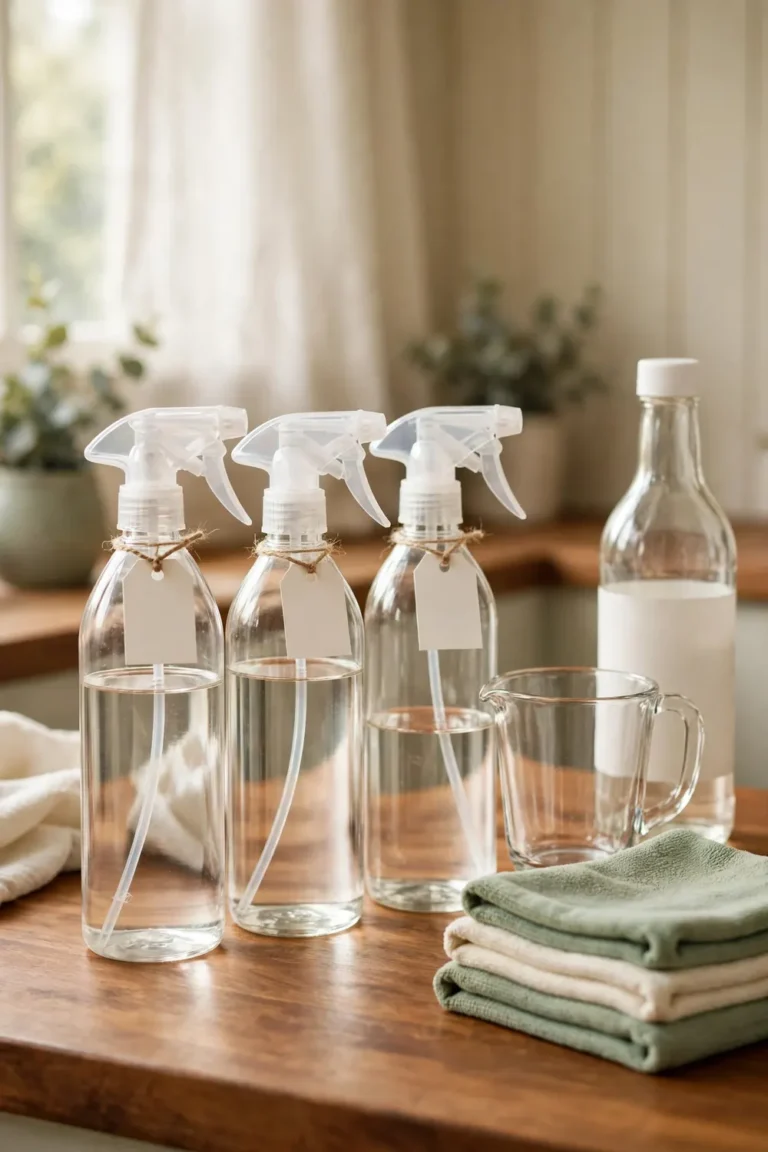
You need baking soda, water, white vinegar in a spray bottle, gloves, a damp cloth, a plastic or silicone spatula, a non scratch nylon pad, and an old towel for the floor in front of the oven. That is the full list. Nothing specialty, nothing you have to order and wait for.
One safety note before anything gets mixed. Never mix vinegar with bleach, and rinse thoroughly with plain water between different products. If a commercial oven cleaner was used in this oven recently, rinse the interior well with plain water before you start.
How to Clean Oven Naturally With Baking Soda, Step by Step
Step 1: Start With a Cool, Empty Oven
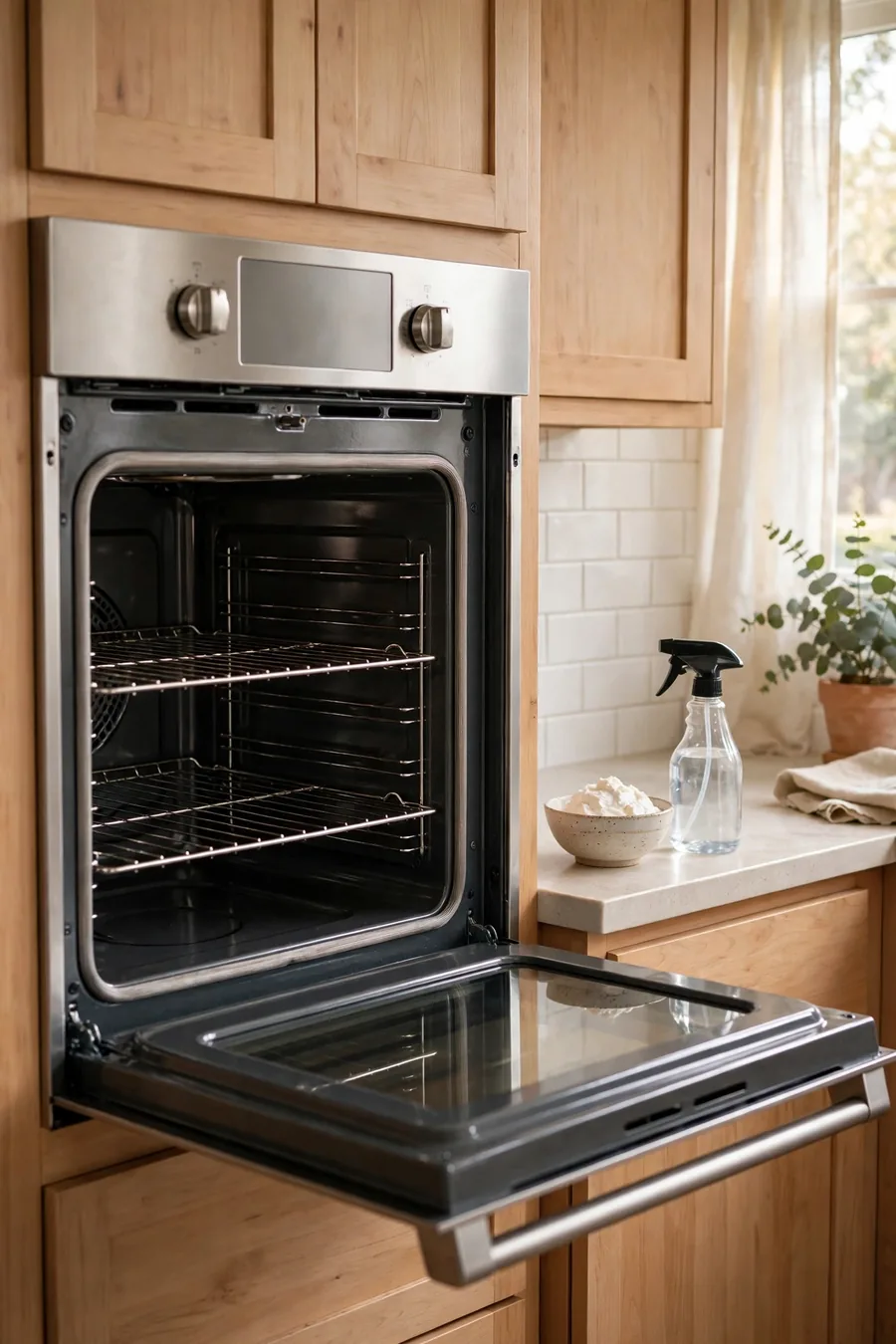
Make sure the oven is off and completely cool. Take out the racks, any oven thermometer, pizza stones, and loose items. Lay the old towel on the floor in front of the oven, because paste and dirty water will find the floor no matter how careful you are. Wipe out loose crumbs and burnt bits with a damp cloth so the paste lands on grease, not on rubble.
Step 2: Mix the Paste Fresh
Stir 1/2 cup baking soda with 2 to 3 tablespoons water until it forms a thick, spreadable paste, about the consistency of frosting. For a large oven or a heavily soiled one, double the amount. Mix it fresh each time, because this paste does not store well.
Step 3: Spread It Everywhere the Grease Is
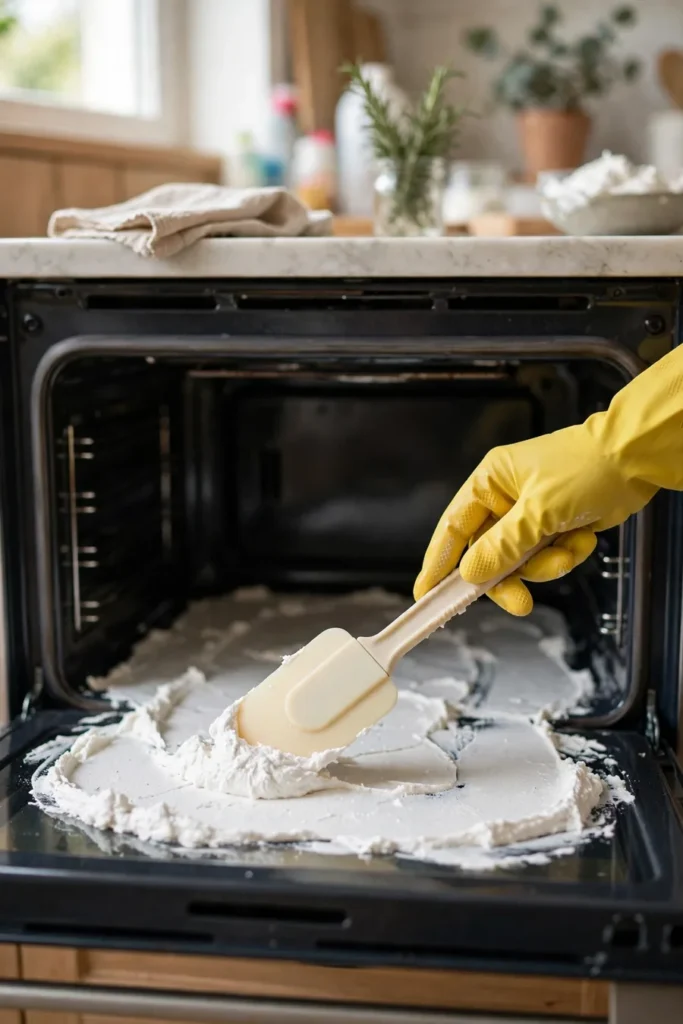
Wearing gloves, spread the paste over the oven floor, walls, back, and the inside of the door. Work it into the greasiest patches a little thicker. Keep it off the heating elements and away from any gas ports or the igniter. The paste will turn brown as it pulls in grease. That looks alarming and is completely normal.
Step 4: Close the Door and Wait Overnight
This is where how to clean oven naturally overnight either works or does not. Leave the paste for 8 to 12 hours, ideally overnight. Heavily baked on ovens may need up to 24 hours. A light refresh can get away with 1 to 2 hours, but be honest with yourself about which oven you actually have. Time is the active ingredient here.
Step 5: Wipe It Out, Slowly
Wipe out the dried paste with a damp cloth. Use the plastic or silicone spatula, never metal, for stubborn patches, and the non scratch nylon pad for gentle scrubbing. Rinse and wring the cloth often. This step takes the longest, and it is still easier than fighting fresh grease, because the overnight rest already did the hard part.
Step 6: Finish With the Vinegar Spray Rinse
Spray any remaining chalky residue with white vinegar, undiluted or mixed 1:1 with water. It will fizz lightly. That fizz is simply the acid neutralizing leftover baking soda, which is exactly why it clears the white film so well. Wipe again, then do a final wipe with a cloth dampened with plain water so no residue stays behind. Dry with a clean cloth, and open a window or run the fan during this step.
Cleaning the Oven Racks in the Bathtub

Lay the racks on an old towel in the bathtub so they do not scratch the tub. Sprinkle them generously with baking soda, spritz with vinegar, then cover them with hot water and let them soak for several hours or overnight. Scrub off what is left, rinse well, and dry them fully before they go back in the oven. The same soak works for removable stove grates, as long as the maker allows soaking.
The Glass Door, Honestly
For the inside glass, use a thinner layer of the same paste, leave it 30 to 60 minutes, and wipe with a damp cloth. That handles the greasy film most of us actually see. The brown drip stains that live between the two panes of glass are a different problem. On most ovens they need the door panel removed following the manual, and that is outside a basic clean. Anyone who tells you a paste reaches between the panes is not being straight with you.
Honest Expectations Before and After
The paste handles grease and burnt on food well, and the morning wipe down has a quiet satisfaction to it, watching brown paste come away and clean enamel show underneath. What it does not do is restore damaged enamel, and it will not erase years of carbon in one pass. Carbonized deposits may need a second round on just those spots. The method trades time for the absence of fumes, and for most households that is a fair trade.
The self cleaning cycle is a separate choice with its own trade offs, including very high heat, a strong smell, ventilation needs, and keeping pets out of the room. Some people prefer it, some avoid it, and either way it should never be run with paste inside the oven.
Safety Rules That Matter Here
- Never run a self cleaning cycle with paste inside the oven.
- Never apply paste to heating elements or gas inlets.
- Never mix vinegar with bleach, and rinse with plain water between products.
- Use no metal scrapers and no steel wool on enamel or glass. Scratches hold future grime.
- Keep the paste off aluminum oven parts and trays, because baking soda can dull aluminum. Enamel and steel interiors are the intended surfaces.
- Ventilate during the vinegar wipe out step.
Common Mistakes That Make This Harder
Rushing the rest. Wiping after an hour and declaring the method useless is the most common failure. Baked on grease needs the full overnight rest.
Scrubbing harder instead of repeating. If a black spot survives one round, put fresh paste on that spot for a second night instead of reaching for something abrasive that scratches enamel.
Skipping the final plain water wipe. Leftover residue bakes on next time you cook and makes the oven look dirty again faster than it should.
Frequently Asked Questions
How long should the paste sit, really?
Overnight, meaning 8 to 12 hours, for baked on grease. An hour or two only handles light soil. Time is the active ingredient in this method, far more than scrubbing.
Does the vinegar spray at the end actually help?
Yes, but not by boosting the clean. The vinegar dissolves the chalky baking soda residue so the interior wipes fully clean. It is a finish rinse, used after the paste is wiped out, and that order matters.
My oven still has black spots after one round. Now what?
Repeat the paste on just those spots for a second overnight rest rather than scrubbing harder with anything abrasive. Years of carbon often need two rounds, and a second patient round protects the enamel.
Is the baking soda and vinegar fizz actually cleaning anything?
Not much. Acid and base neutralize each other into mostly water, so the fizz looks busy but cleans less than each ingredient used on its own. That is why this method keeps them separate, paste first and vinegar last.
Do homemade cleaners disinfect the oven?
No. Baking soda and vinegar clean and deodorize, but household vinegar is not a registered disinfectant. For everyday oven cleaning that is fine, because heat during cooking is part of normal oven use. When disinfecting truly matters, use a registered product according to its label instead.
One Box of Baking Soda, One Night of Patience

A smoky oven does not need harsh chemicals or a lost weekend. It needs one box of baking soda, a spray bottle, and a night of patience. Now that you know how to clean oven naturally with baking soda, pick the night, spread the paste, and let the morning wipe show you how much work time quietly did for you. Your next move can be just as simple: give the racks their bathtub soak the same night, and the whole oven feels new at once.