How to Organize a Small Laundry Room on a Budget, Even When It Is Really a Closet
If your laundry room is really a closet, you know the routine. The door barely closes. The detergent jug lives on the floor because there is nowhere else for it, a sock orphanage has started on top of the dryer, and every wash day begins with a small hunt for the stain remover. Small laundry room organization ideas on a budget usually fail for one boring reason. They are written for rooms with cabinets and counters. A tiny laundry space has neither, so the fix has to work differently. You go up the walls, you use the machines themselves, and you give every bottle and sock a set place so the room stops improvising.
Key Takeaways
- Work vertical first. The wall above the machines is the biggest storage surface in the room.
- Treat $40 as the ceiling for the whole project, dollar store baskets and a secondhand shelf first, not a cart full of matching containers.
- Group supplies into four shelf zones, wash, clean, dry, and lost and found, so anyone can find things and put them back.
- Keep detergent and pods up high and out of reach. Pods look like candy to small children.
- Renters can do the whole core setup with zero drilling: a freestanding over-machine unit, a slim cart, magnets, and the door.
How Do I Organize a Very Small Laundry Room Cheaply?
Go vertical before you buy a single bin. Put one or two open shelves, or a freestanding shelving unit, above the washer and dryer, because that wall is the largest unused surface in the space. Then contain what is left with dollar store baskets, a slim rolling cart in the gap beside the machines, and an organizer on the door. Group everything into zones, washing supplies, cleaning tools, drying extras, and a lost and found basket for single socks. Done in that order, a full setup stays under a $40 cap, needs no floor space, and asks nothing of your landlord.
Step One: The 20 Minute Clear-Out
Organizing a mess just files the mess. Set a timer for twenty minutes and pull everything out. Toss the empty bottles, the dried-up stain stick, the single gloves, and the mystery rag that nobody claims. Wipe the machine tops and the floor while they are actually reachable. Most tiny laundry rooms hold about a third more stuff than the household uses, and every item that leaves now is one less item needing a home later. What survives goes into rough piles: wash, clean, dry, lost and found. Those piles become the zones later.
Go Up: The Space Above the Machines
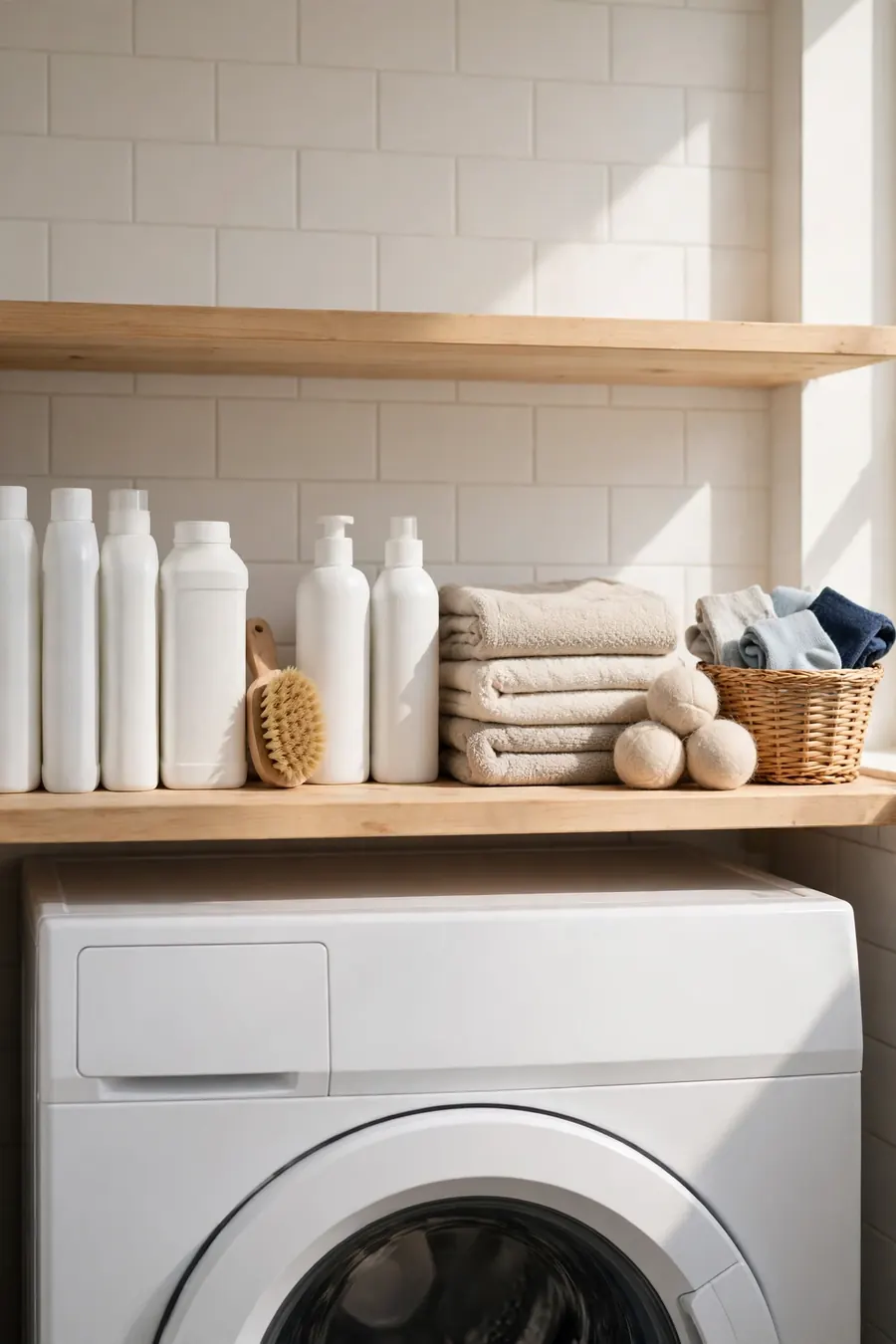
Open shelves over the washer and dryer
One or two open shelves above the machines change the whole room. Open shelving beats a cabinet here because you can see every supply at a glance, which quietly stops the duplicate buying that eats a budget. Keep the lowest shelf reachable without stretching on tiptoes. Heavy detergent goes low and light items go high. Machines vibrate, so push bottles back from the edge or corral them in baskets. A basket is a guard rail that also looks tidy.
The freestanding version for renters
If drilling is off the table, a freestanding over-machine shelving unit gives you the same shelves with zero installation. It is a floor-standing frame that straddles both machines. It costs more than a plain shelf board, so it is the one piece worth hunting secondhand or saving the budget for. Everything else in this article costs dollar store money.
A folding counter that appears when you need it
Lay a smooth board across both machine tops and you have a folding station. Fold straight out of the dryer, into piles, done. No board? The machine tops alone still work as the folding surface, as long as they are kept clear enough to use. That is the whole trick. A surface that is always buried cannot be a folding station, so the tops have one job and everything else lives somewhere else.
Use the Gap and the Machine Sides
The slim rolling cart
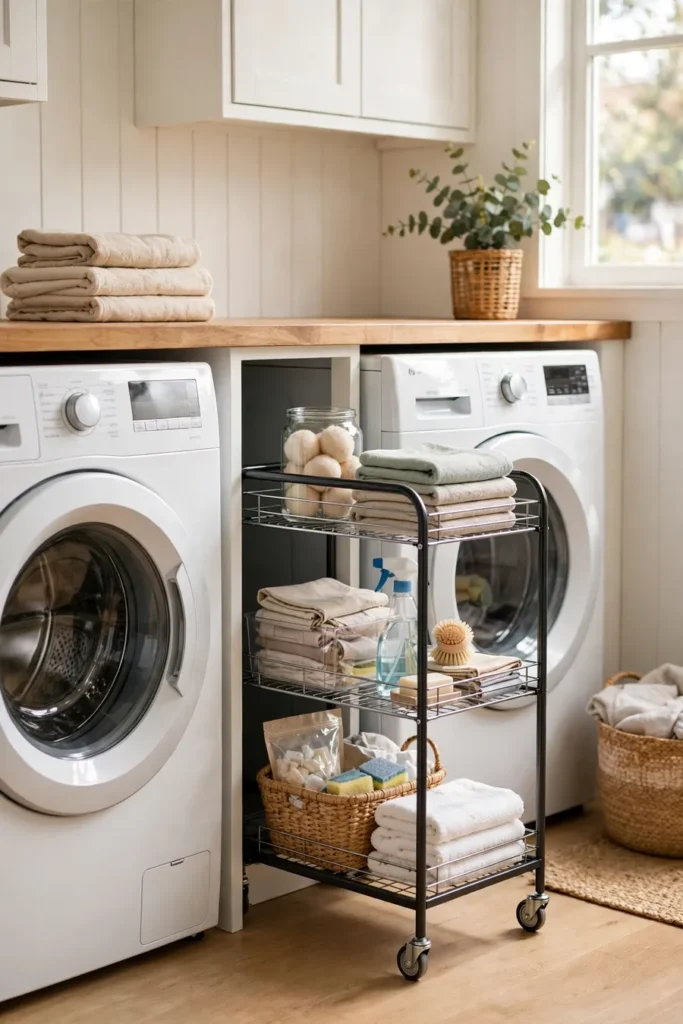
Measure the gap between the machine and the wall before you buy anything. Slim rolling carts come in several narrow widths, and the right one slides into a space that currently collects lint and lost coins. Detergent, stain remover, and dryer sheets ride on its tiers, pulled out for wash day and pushed back after. It is one of the two best first buys in a small laundry closet, because it swallows the bottle clutter whole.
Magnetic storage on the machine itself
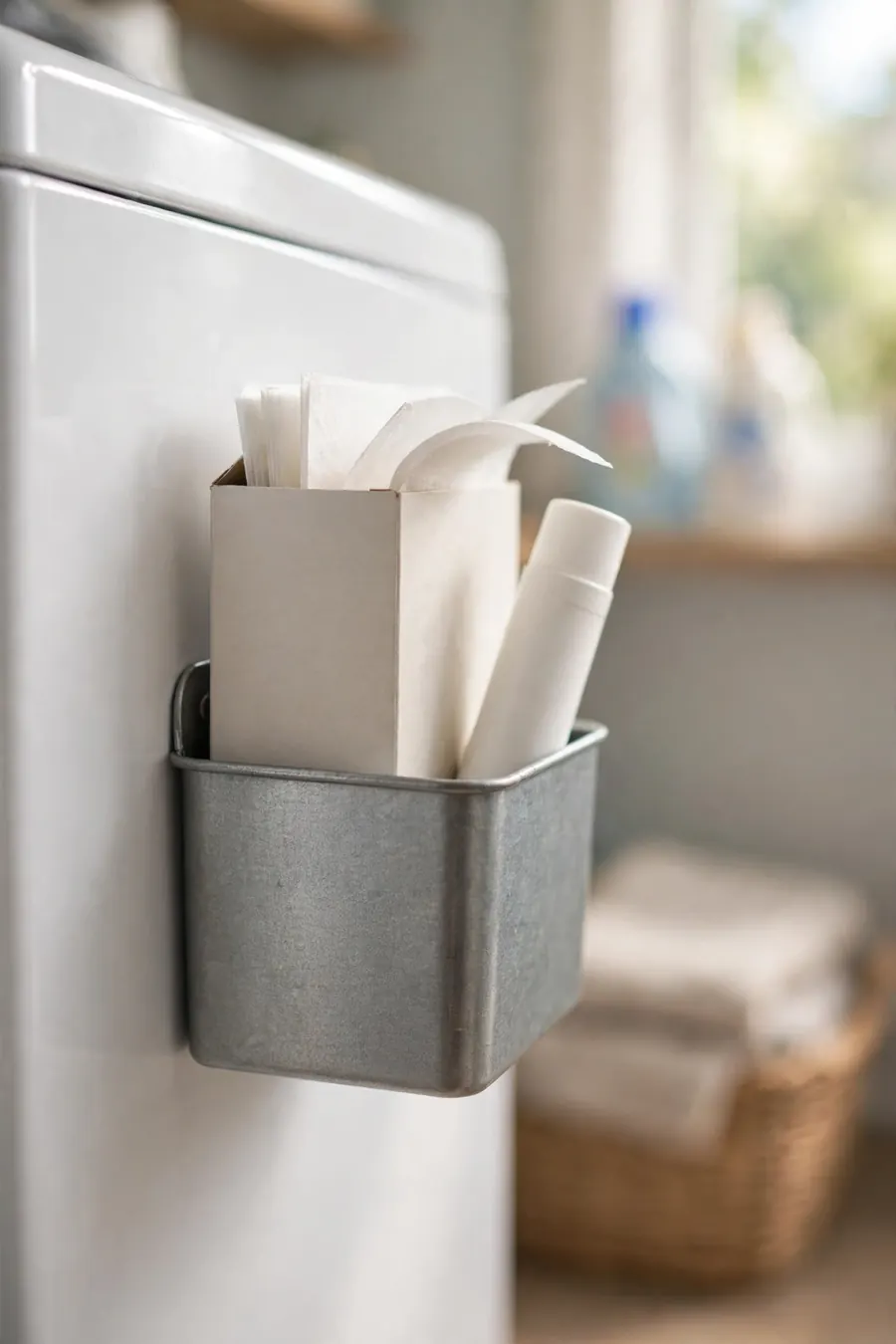
The steel side of most washers and dryers is free storage. A magnetic shelf or bin sticks there with no installation at all and holds dryer sheets, a stain stick, and the lint tools that otherwise wander. It is a small thing, but small things are exactly what make a tiny room feel chaotic when they have no home.
A tension rod for light loads only
A tension rod stretched between the walls above the machines works as a hanging rail for spray bottles hung by their triggers, or for a few hangers of shirts drying. Keep it honest, though. Tension rods hold light loads. A row of heavy wet towels will bring one down, usually at the worst moment.
Put the Door to Work
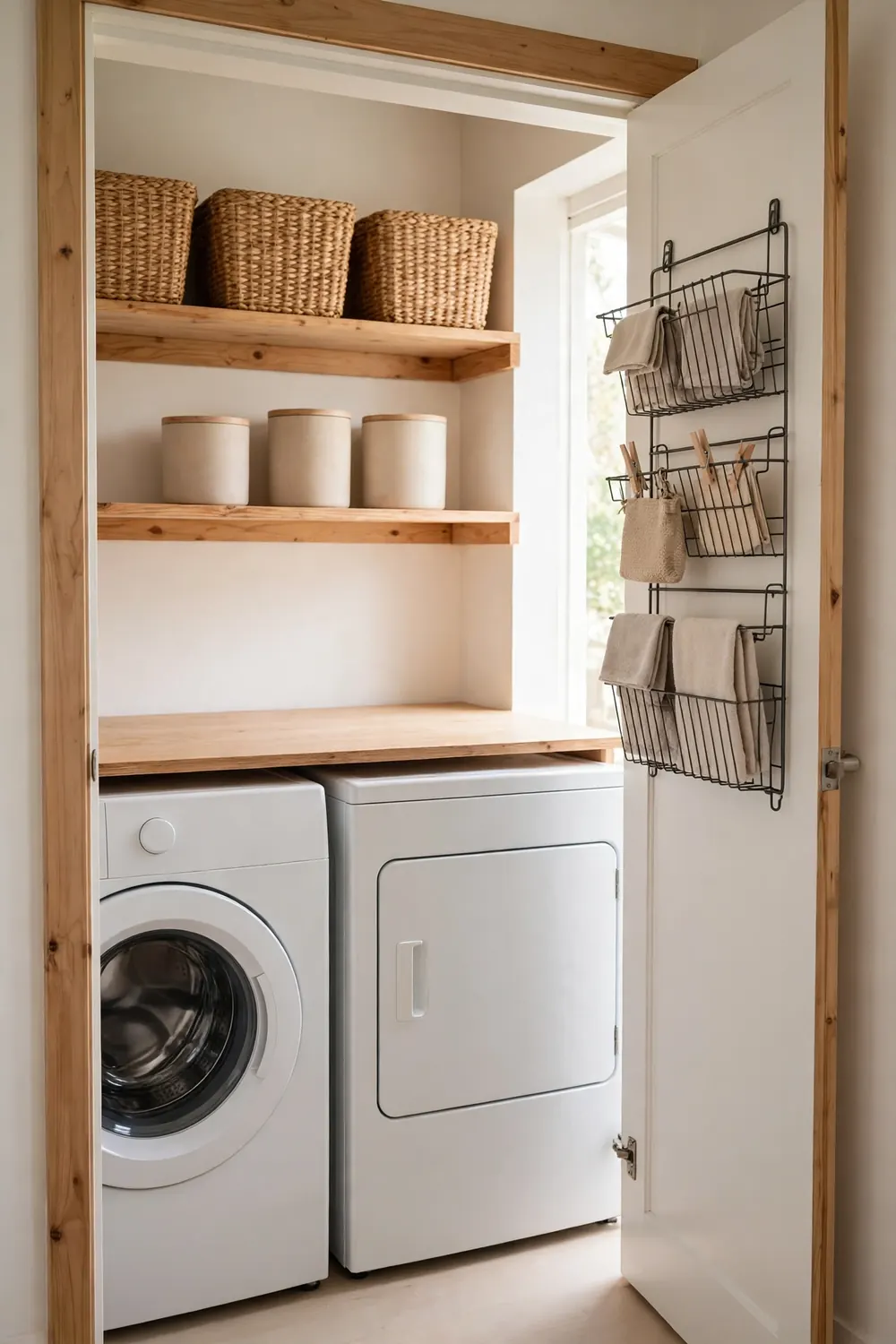
An over-door wire organizer, or a clear-pocket shoe organizer, turns the inside of the door into a supply wall for bottles, clothespins, and cleaning tools. Choose sturdy metal over flimsy plastic. A door loaded with cleaning bottles is heavier than it looks, and a sagging organizer is worse than none.
The same door can sort the laundry itself. Hang three slim laundry bags on hooks, for lights, darks, and delicates, and sorting happens on the door instead of in hampers eating the floor. In a laundry closet with no floor space to spare, that swap alone can be the difference between a door that closes and one that does not.
Decanting Detergent, Done Safely
Decanting detergent into a smaller, prettier container is fine, with two rules that are not optional. First, detergent and pods live up high, stored away from children, full stop. Laundry pods look like candy to a small child, and that is a poisoning risk, not a tidiness detail. If little kids are ever in the house, pods stay in their original container with the lid clicked shut, on the top shelf or in a latched bin.
Second, anything you decant keeps its safety information within reach. Keep the original jug on the top shelf, or tape the dosing and warning details where you can read them. Never pour detergent into a drink bottle or an unmarked food container, and label anything you do decant, plainly, with what it is. A neat shelf is not worth a guessing game with chemicals.
The Daily Systems That Keep It Tidy
Storage is the skeleton. These small systems are what stop the room sliding back by Friday.
- One caddy for small supplies. Stain remover, the measuring cup, dryer sheets, and clothespins live in one dollar store basket you pull out and put back. Scatter is what makes a small laundry area feel chaotic, and a caddy ends the scatter.
- Per-person laundry bags. In a family setup, each person’s washable mesh bag goes straight into the wash as its own load or section. Socks stop migrating between loads, and sorting at the end mostly disappears.
- A lost-sock station. One small basket, or a short line with clothespins, at the folding spot. Single socks wait there to be matched at fold time instead of building a sad pile on the shelf.
- Fold and stage. Fold at the machine into one put-away basket per person or room, so clean laundry leaves the laundry area in a single trip instead of living on the dryer for three days.
- Hang straight from the dryer. Keep a few hangers by the machine. Shirts go on hangers warm, skip folding entirely, and come out with fewer wrinkles.
- Zones on the shelf. Washing supplies, cleaning tools, drying extras, lost and found. Four groups, in the same order every time, so the system survives other people doing laundry too.
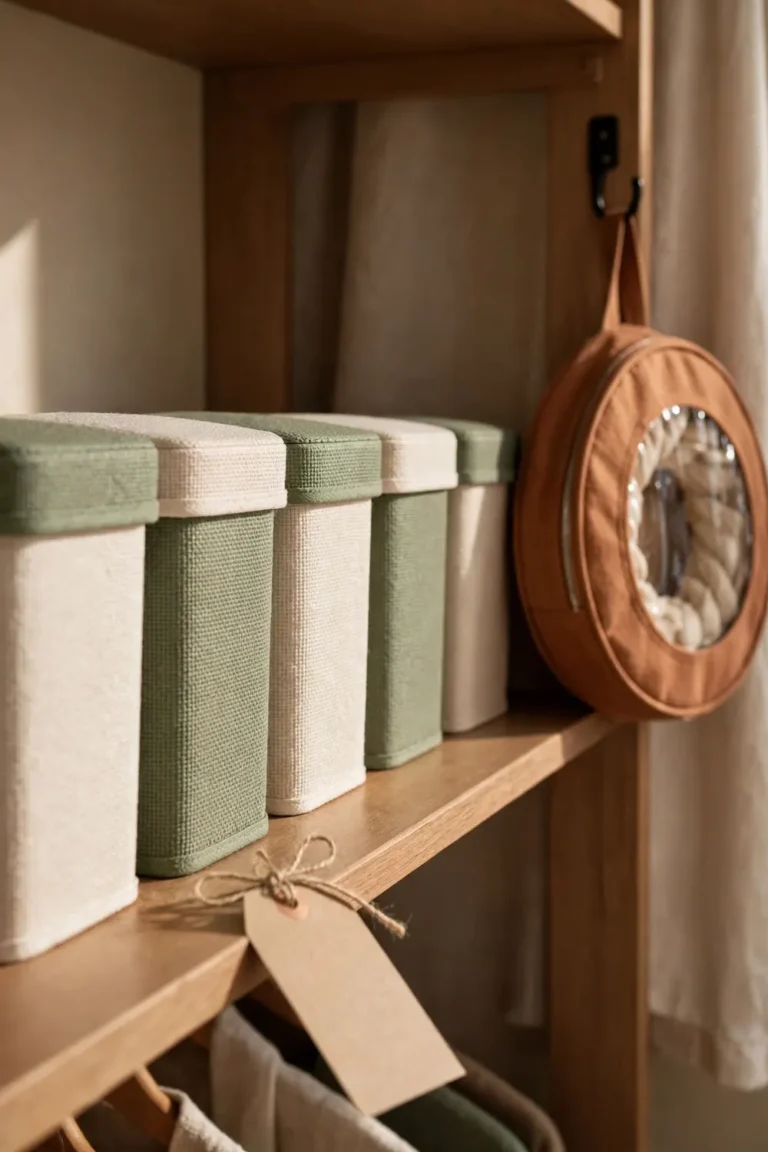
A note on containers, honestly. The cheapest thin bins flex and crack under a full detergent jug, and in a small room that runs warm and steamy, adhesive products and bargain plastics give up sooner than they would in a dry hallway. Use bins for light things, keep heavy bottles low and directly on the shelf, and let the dollar store handle baskets and caddies rather than anything load bearing.
Small Laundry Room Organization Ideas on a Budget for Renters
Almost everything above is already renter safe, but the order matters. Start with what stands on its own: the freestanding over-machine unit, the slim cart, the magnetic bin, the hanging bags. Next, what hangs or stretches: the over-door organizer and a tension rod, light loads only. Adhesive comes after that, with a warning. Adhesive shelf brackets are a weak choice above machines, because vibration and heavy detergent bottles are exactly what they handle worst. Use adhesive for a lightweight hook on a smooth door if you must, never as the main shelf support.
Drilled shelves come last, and for many renters, never. If you own the home and do drill, check for pipes and wires in the laundry wall first. Laundry walls are full of both, and that is a safety flag, not a formality.
Keep It Working: Five Minutes and Two Habits
Once a week, give the room five minutes. Baskets back in their zones, the folding surface cleared, the lost-sock basket checked against the week’s singles. Systems in tiny rooms do not fail all at once. They fail one stray bottle at a time, and five minutes catches it early.
Two habits protect the machines themselves. Clean the lint trap after every load, not when you remember. A clogged trap makes the dryer run longer on every load, and lint buildup is a genuine fire risk. And let the room breathe. A small laundry space gets steamy, so crack the door or run the fan after a hot wash cycle. Drying the room out protects your shelves, your labels, and anything adhesive from giving up early.
Frequently Asked Questions
How do I organize a laundry closet with no floor space?
Go fully vertical. Shelves or a freestanding unit above the machines, an over-door organizer, and hanging sort bags on the door mean nothing needs to touch the floor at all.
What should I buy first on a tiny budget?
One slim gap cart and one supply caddy. Together they contain the two biggest mess sources in a small laundry room, the bottles and the small supplies, for dollar store money.
How do I stop losing socks?
A lost-sock basket at the folding spot, plus per-person mesh wash bags. Singles get matched at fold time instead of collecting on shelves and machine tops.
Conclusion
A tiny laundry room does not need more space. It needs the space it already has, above the machines, beside them, and on the door, put to work in a set order. Shelves first, cheap containment second, zones to hold it all in place. Small laundry room organization ideas on a budget work when they respect how wash day actually happens in your house, hunt for the stain remover included. Start with the clear-out and the shelf, and the next load already feels calmer.