Safety Zones First: Fridge Organization Ideas That Stop Good Food Going to Waste
Every fridge has that one back corner. You open the door looking for the cheese, and instead you find a container from two Sundays ago, wearing a fur coat nobody bought it. Throwing food away stings in a specific way, because you paid for it twice: once at the store, and again in the guilt when it hits the trash.
Here is the quiet truth about fridge organization ideas. The pretty matching containers were never the point. Food gets eaten when it is stored safely and you can actually see it. This guide starts with the safety zones that decide where things belong, then builds the simple visibility habits that stop good food from dying in the dark.
Key Takeaways
- Safety decides the layout: ready to eat food lives up top, raw meat goes low and sealed on a tray, and the door is for condiments only.
- Milk and eggs belong on an interior middle shelf, not the door, because the door is the warmest spot in the fridge.
- Keep the fridge at or below 40 degrees F, and get leftovers into shallow containers within 2 hours; they are good for 3 to 4 days.
- An Eat Me First bin at eye level is the single habit that cuts food waste the most.
- Clear containers, date labels on masking tape, and a five minute weekly reset keep the system running with no new purchases required.
What Is the Best Way to Organize a Fridge to Save Money?
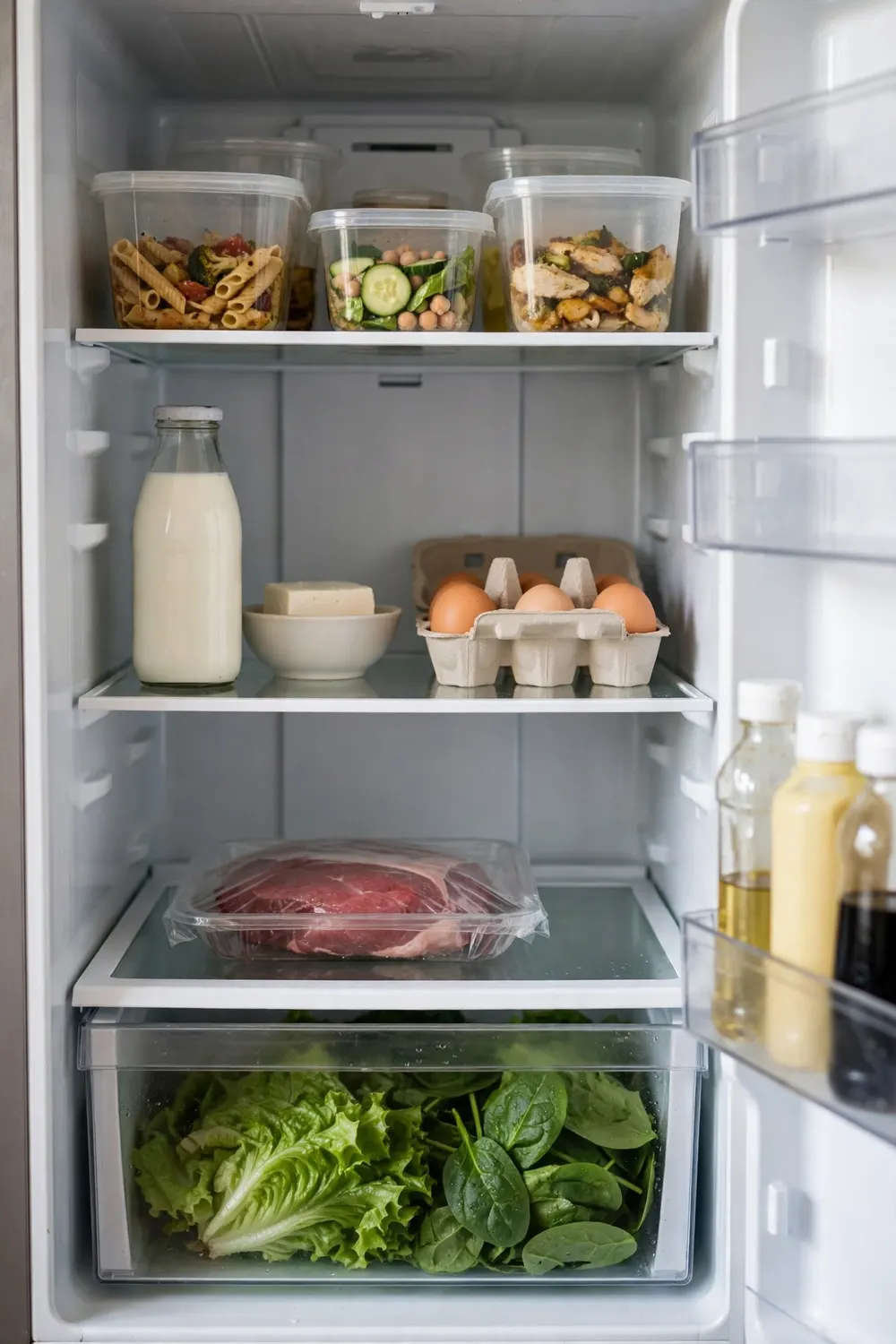
The best way to organize a fridge to save money is to set safety zones first and visibility second. Ready to eat food goes on the upper shelves, dairy and eggs sit on an interior middle shelf, raw meat stays sealed on a tray on the lowest shelf, and condiments take the warm door. Then every leftover goes into a clear container with its date written on a piece of tape, and anything close to its limit moves into one Eat Me First bin at eye level. Food you can see is food that gets eaten, and food that gets eaten is money that stays in your pocket.
Step One: Empty It Out and Be Honest
You cannot organize a fridge you have not looked at honestly. Pull everything out, shelf by shelf so nothing sits on the counter for long, and wipe the shelves down as you go. Be straight with yourself at this stage. The leaking takeout sauce from March, the mystery container nobody can date, the third open jar of the same salsa: they go. A system built on top of food nobody will eat fails on day one, because the good stuff ends up hiding behind the hopeless stuff all over again.
The Safety Zones: Where Everything Actually Belongs
A fridge is not one big cold box. Some spots are colder and steadier than others, and the zone map below is standard food safety guidance, the same storage order the USDA and FDA describe. Set it once, and every grocery trip after that mostly puts itself away.
Keep it at or below 40 degrees F. The dial on the door is a rough guess at best, so an inexpensive appliance thermometer is the one tool worth owning here. It tells you the truth the dial will not.
Upper shelves are for ready to eat food. Leftovers, cooked food, washed produce that is ready to eat, drinks, and snacks live up high. The rule that matters: nothing raw sits above this line, where its juices could drip down onto food you will eat as it is.
Middle shelves are for dairy and eggs. Milk, cheese, yogurt, and eggs in their cartons belong on an interior middle shelf. Not the door. The door is the warmest part of the fridge, with the biggest temperature swings every time it opens, and those swings quietly shorten the life of milk and eggs.
The lowest shelf is for raw meat, sealed and on a tray. Raw meat, poultry, and seafood go as low as they can, sealed in a container or set on a rimmed tray that catches any leaks. Down low, nothing can drip onto food below it, and the bottom of the fridge is usually one of its coldest spots, which suits the most perishable food you own.

Crisper drawers have jobs, not just space. Use the humidity settings the way they were designed. High humidity suits leafy greens and vegetables that wilt. Low humidity suits fruit, especially apples and pears, which give off ethylene gas that speeds up spoiling in nearby vegetables.
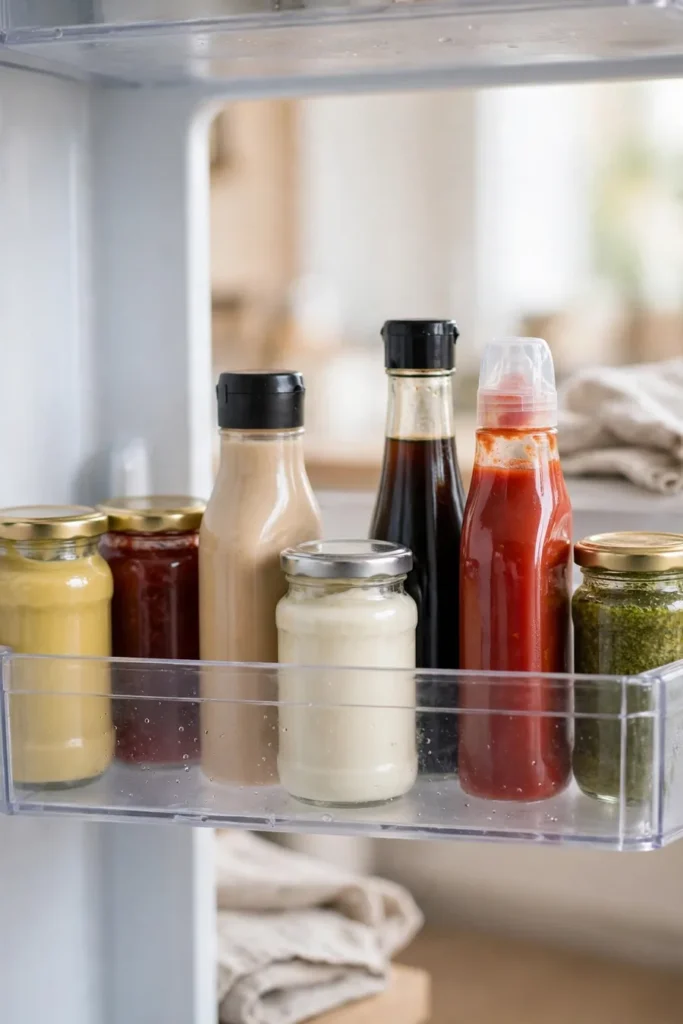
The door is condiment territory. Ketchup, mustard, jam, pickles, sauces, and juice can handle the door and its warm swings. Milk and eggs cannot. If a food would suffer through a warm afternoon, it does not belong in the door.
Leave room for the cold to move. Do not pack the shelves solid, and do not block the vents. Cold air has to circulate, or you get warm pockets where food spoils early while the thermometer swears everything is fine.
Fridge Organization Ideas That Make Food Easy to See
Zones keep food safe. Visibility is what gets it eaten. These habits are cheap, mostly free, and they are where the money gets saved.
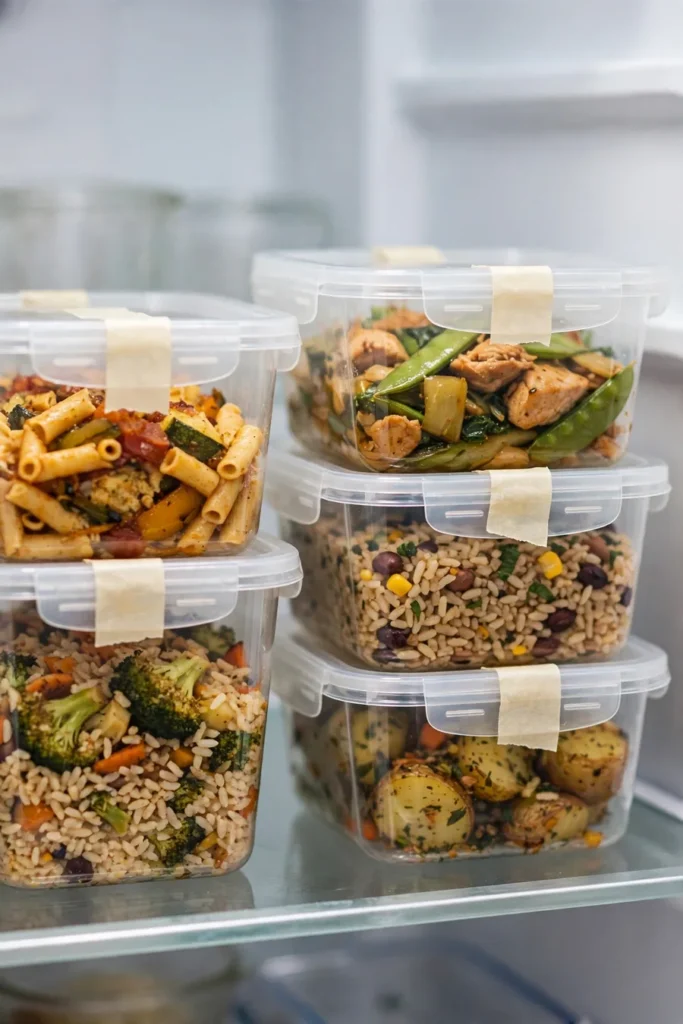
Clear containers for leftovers and prepped food. You cannot eat what you cannot see. Clear boxes turn a shelf into something you can scan in one glance, instead of a row of foil tops you have to open and sniff.
One Eat Me First bin at eye level. Pick one bin or one shelf section and call it the Eat Me First spot. Anything nearing its date goes there, and everyone in the house learns to check that bin before opening anything new. This one habit does more for a grocery budget than any container set ever will.
First in, first out. New groceries go behind the older ones. New leftovers slide in beside or behind the older containers, so the oldest food is always the food you meet first.
Labels with dates, the cheap way. A roll of masking tape and a marker live near the fridge. Every leftover and opened item gets its name and its date. It takes five seconds, and it is the whole difference between a leftover and a science project.
Decant only what earns it. Bulky packaging can move into smaller containers to free shelf space and cut air exposure, but only for food you will actually finish. Some things keep better in their original packaging. Decanting everything is a weekend project, not a system.
Group by meal, not just by type. A bin or shelf corner holding everything for tonight’s dinner, or for this week’s lunches, ends the daily digging and the forgotten half onion behind the milk.
Square beats round, and a turntable helps the deep spots. Square and rectangular containers tile a shelf with no dead corners, which matters most in small fridges. A small lazy susan under the jars on a deep shelf brings the back row to you, so nothing retires back there unnoticed.
Cheap Containers, Honest Limits
Dollar store bins are fine for this job, with one honest limit: thin plastic is lightweight duty only. Use cheap clear bins for produce, snacks, and the Eat Me First collection, and give heavy cans and big bottles a sturdier box or the shelf itself, because a cheap bin cracking under glass bottles helps nobody. Measure your shelves before you buy anything, buy a few of one style so they stack neatly, and start with the clear containers you already own. If the calm fridge organization aesthetic is what you are after, it shows up on its own once everything is clear, zoned, and the same few shapes repeat. Fridge organization containers do not need to be new to work, just see-through and used the same way every week.
Small Fridges, Apartments, and Rentals
Nothing in this system needs installing, drilling, or a landlord’s permission, which makes it about the most renter friendly organizing there is. If your fridge organization layout is really just an apartment fridge, or a dorm mini fridge with no real shelf gradient, swap shelf position for tray separation: raw protein sealed on its own tray, physically apart from ready to eat food, and the Eat Me First bin shrunk down to one small box. One more rental note. If your fridge cannot hold 40 degrees F even after you give it space and airflow, that is not an organizing problem. Report it to your landlord. It is a maintenance issue, and no bin will fix it.
Keep It Alive: The Five-Minute Weekly Reset
Once a week, on shopping day if you can, give the fridge five minutes. Scan the Eat Me First bin and move anything aging to the front. Wipe the one shelf that needs it. Check the dates on the tape. Then keep a small inventory note on the door, a whiteboard or a note on your phone, listing the easy to forget things you already own. That little list stops the quietest budget leak in the kitchen: buying a second jar of something while the first one sits open at the back.
Mistakes That Undo the Whole System
Milk and eggs in the door. Covered above, and it still undoes more fridges than anything else here.
Packing the shelves solid. Blocked vents and no airflow mean warm pockets, and warm pockets mean food spoiling early for no visible reason.
Leftovers with no date. If nobody knows when it was cooked, nobody trusts it, and it gets thrown out on suspicion alone.
Re-shelving food nobody will eat. Organizing around spoiled or hated food just hides the good food behind it again.
Tasting it to test it. Never taste questionable food to check it. When in doubt, go by the package date and the USDA FoodKeeper guidance, and throw it out if it fails either one.
Frequently Asked Questions
Where do eggs and milk really go?
On a middle shelf, toward the back, where the temperature stays steadiest. The door is the warmest, most changeable spot in the fridge, and milk and eggs are the two foods that suffer most from that swing.
How long are leftovers good for?
Refrigerate leftovers within 2 hours, keep the fridge at or below 40 degrees F, and eat them within 3 to 4 days. After that, freeze them or let them go.
Do I need matching containers to organize my fridge?
No. Safety zones and visibility do the real work. Clear containers you already own, used the same way every week, will beat a brand new matching set sitting in a fridge with no zones at all.
A Fridge That Pays You Back
Organizing a fridge is not really about the fridge. It is about the money sitting on those shelves in the form of food, and whether it ends up as dinner or as trash. Set the zones once, keep the Eat Me First bin honest, and spend five minutes a week keeping it true. Start tonight with just the door: move the milk and eggs to the middle shelf, and let the condiments have their warm little kingdom back. The rest of the system can follow on shopping day.