
Small Space Storage Ideas That Give Every Room Breathing Space
A small home is not really the problem. The problem is the stuff that has nowhere to land. Coats slide off the couch arm. Shoes breed by the front door. The vacuum cleaner lives in the hallway like it pays rent, and every flat surface collects paper, chargers, and things you meant to put away three days ago.
Then there is the other version of a small home, and it feels completely different. You open a door and nothing shouts at you. You can see the floor. The counters are mostly clear, your shoulders drop a little, and the room feels bigger than it is. These small space storage ideas are built to get you that second version, and most of them ask you to edit and rearrange before you spend a single dollar.
Key Takeaways
- Edit before you buy. No container can fix a home that simply holds too much stuff.
- Go vertical first. Wall height, door backs, corners, and the gap above cabinets hold more than any new piece of furniture.
- Closed beats open. Lidded, matching containers calm a room down, while rows of open bins read as clutter even when they are tidy.
- Keep the floor visible. Storage that lifts things off the floor makes a small room feel bigger right away.
- Renters, work in this order: freestanding first, then tension, then over-door, then adhesive, and drilled only with permission.
What Are the Best Storage Ideas for Small Spaces?
The best storage ideas for small spaces are the ones that hide clutter and free up floor: under-bed bins for off-season clothes, over-door hooks for coats and bags, a slim rolling cart in the kitchen gap, a storage ottoman that doubles as a coffee table, and labeled bins on the closet top shelf. Start by editing what you own and giving everything one home. Buy containers last, and choose closed, matching ones so the room stays calm to look at.
Start With the System, Not the Shopping
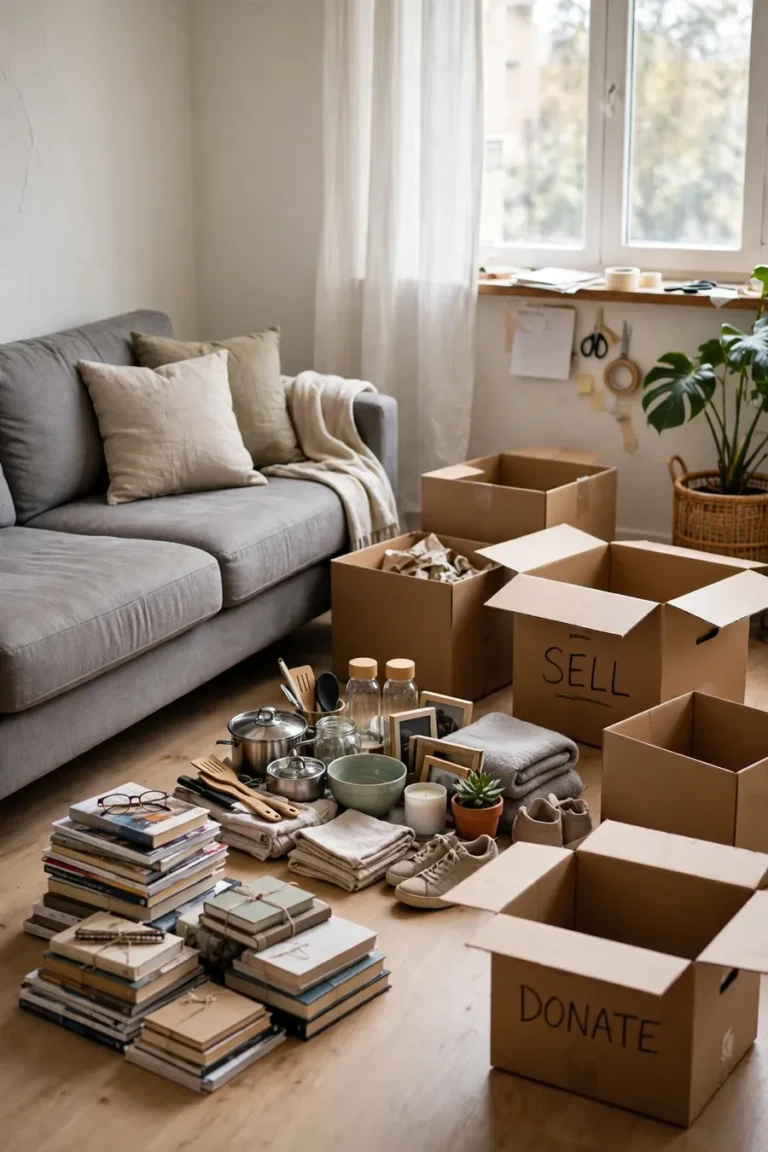
Most storage advice starts with a shopping list, and that is exactly why so many small homes end up with organized clutter. A bin for the mess is still the mess, just in a nicer box. The order that actually works is slower and cheaper. First, edit. If you have not used it in a season and it has no real home, it is not a storage problem yet. It is a decision you have not made.
Second, give everything one home. Not three places where the scissors might be, one place, the same place every time. When an item has one home, putting it away takes two seconds, and two seconds is a habit anyone can keep on a tired Tuesday night.
Third, use the space you already own before you buy more of it. Wall height, the backs of doors, dead corners, and the awkward gap above the kitchen cabinets are storage you have already paid for. And once the system is working, guard it with one simple rule: one in, one out. Every new thing that enters a small home sends something else out. That rule is the whole reason good storage stays good.
Entryway: Give Everything a Landing Spot
Over-door hooks or a slim hook rail by the door. Coats, bags, and hats need a landing spot within two steps of the door, or they will land on the couch and the floor instead. An over-door hook rack needs no tools and no holes, and it takes the daily pile off every other surface in the home. Just check that the door still closes comfortably with the rack on it.
A lidded bench or a single basket for shoes. The shoe pile spreads because it has no edges. One bench with a lid, or one decent sized basket, gives it edges. A bench also doubles as the seat you use to put the shoes on.
One small tray or basket for mail and keys. Paper migrates. Give it one tray on a ledge or one small basket and it stops colonizing the kitchen counter. A wall-mounted tray works too if you are allowed to drill, but the ledge version does the same job with zero commitment.
Living Room: Hide It Inside the Furniture
A storage ottoman or lidded bench as the coffee table. This is the hardest working swap in a small living room. It holds blankets, remotes, games, and charging cables, works as a table and extra seating, and hides all of it behind a lid. Hidden storage is what makes a room feel restful instead of busy.
A storage ladder leaned against the wall. A leaning ladder drapes throws and quilts and holds clip-on baskets, and it uses only a few inches of floor. Because it leans, there is nothing to install, which makes it one of the friendliest small space storage hacks for renters.
Picture ledges instead of a bookcase. A bookcase eats depth. Shallow picture ledges hold books, frames, and small plants in a fraction of the footprint. Ledges do need screws, so treat them as a drill-with-permission idea. If drilling is off the table, a leaning ladder shelf gives a similar feel.
The strip behind the sofa. The dead space between the back of the sofa and the wall fits a slim console or a simple row of baskets. Blankets and board games live there quietly, out of sight but within reach.
Kitchen: Claim the Gaps and the Doors
A slim rolling cart in the fridge gap. Many kitchens have a gap a few inches wide between the fridge and the wall, and it is pure wasted space. A slim cart turns it into three tiers for produce, jars, or cleaning supplies, and it rolls out when you need it. Measure your gap before you buy, because cart widths vary.

Racks inside the cabinet doors. The inside of a cabinet door is a blank wall you open twenty times a day. An over-door style rack or a light adhesive rack there holds wraps, lids, and spice packets at eye level. Keep adhesive loads light and small, and follow the weight rating on the package. Heavy cans do not belong on a sticky hook.
Shelf risers inside cabinets. A simple riser doubles one cabinet shelf, so mugs and bowls stop stacking into towers you are afraid to touch. It is one of the cheapest storage ideas for small spaces, and it works in the pantry just as well as the dish cabinet.
Knife storage that fits your lease. A magnetic strip on the wall frees a whole drawer, but it has to be screwed in, so it is an owner or permission only idea. If you rent, an in-drawer knife tray protects the blades, keeps the drawer tidy, and moves with you when you leave.
Bedroom and Closet: Use the Space Under and Above

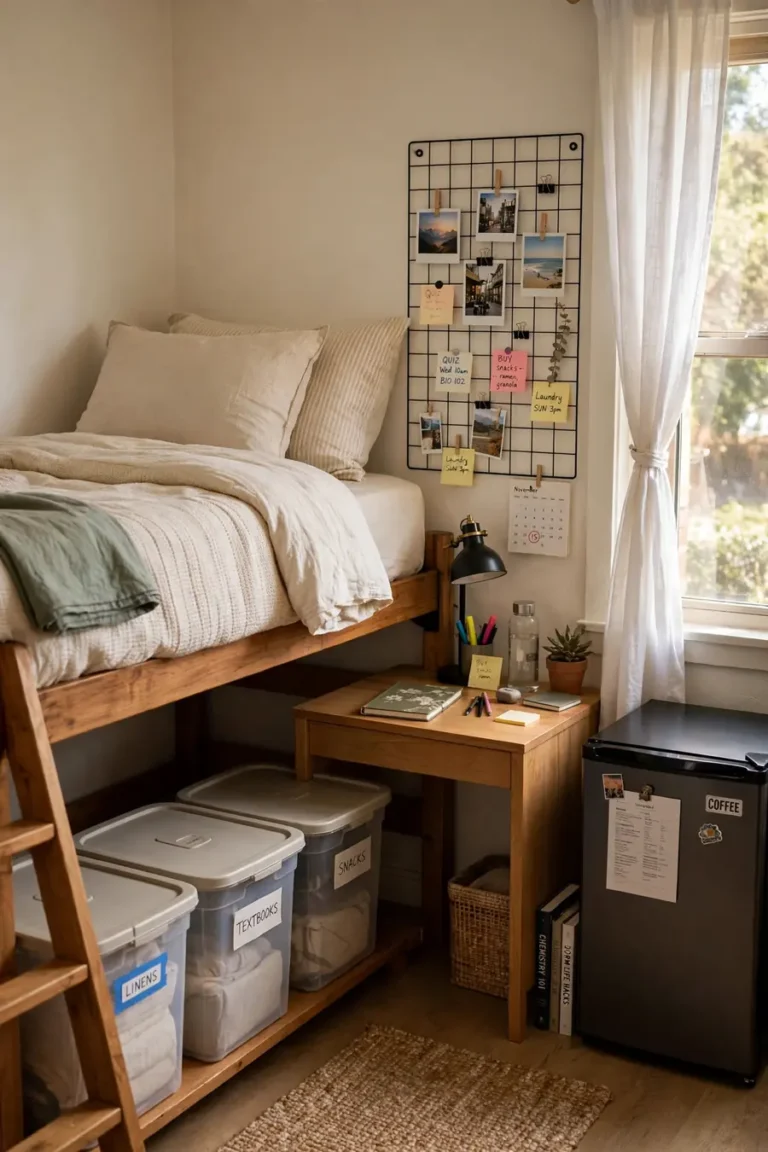
Under-bed bins with lids. The space under the bed is the largest unused cavity in most small homes, and most people store dust there. Lidded bins or fabric bags slide under and hold off-season clothes and spare linens, and the lids keep the dust off what you store. Measure the clearance under your frame first so the bins you buy actually fit.
Vacuum storage bags for the bulky stuff. Duvets, winter coats, and spare pillows are mostly air. A vacuum bag squeezes them down to a fraction of their size, which turns an impossible closet problem into one flat bag under the bed or on the top shelf. It is a cheap small space storage diy trick that pays back at every season change.

Labeled bins on the closet top shelf. The top shelf becomes a dumping ledge when things go up there loose. Uniform bins, labeled with what is actually inside, turn it into real seasonal storage. Matching bins matter here more than anywhere, because that shelf sits right in your eye line every morning.
Swap the nightstand for drawers. A pretty pedestal table beside the bed stores almost nothing. A small dresser or a rolling cart in the same footprint gives you drawers for the book, the charger, the lip balm, and the tissue box, and the top stays clear. Same square footage, far more storage.
Bathroom: Small Room, Same Rules
A slim rolling cart between the sink and the toilet. That narrow strip beside the toilet fits a slim cart that holds cleaning supplies and spare toilet paper, and it wheels out when you clean. When it is parked, it nearly disappears. Freestanding, no installation, fully renter safe.
A freestanding shelf over the toilet. The air above the toilet tank is dead space in almost every small bathroom. A floor-standing shelf unit claims it for folded towels and a basket or two, standing on its own legs so your deposit stays safe. This is also the spot where closed baskets earn their keep, because bathroom clutter is small, fiddly, and endless.
Adhesive hooks inside cabinet doors. The inside of the bathroom cabinet door can corral hair tools, brushes, and cords. Be honest about adhesive in a bathroom, though. Steam and humidity work on it over time, and a loaded hook can let go. Keep these hooks to light items, press them onto smooth clean surfaces, and do not trust them with anything heavy or breakable.
The Utility Corner: A Home for the Awkward Things
Every small home has items that fit no category: the vacuum, folding chairs, the ironing board, winter coats in July. They clutter hallways because nobody assigned them a home. So assign one corner on purpose.
Vacuum and folding chairs. Give them one closet floor corner or a spot behind a door. Folding chairs hang flat on a sturdy hook behind a door, and an over-door hook rack does the job when drilling is not allowed. The vacuum gets the closet corner, parked in the same place every time, so it stops migrating around the home.
Bulky seasonal gear. Winter coats and heavy blankets go into vacuum bags and then onto the closet top shelf, or into one lidded bin in the least used closet in the home. One bin, clearly labeled, beats four mysterious bags stuffed in four different places.
Buy Last, Not First
When you do shop, shop like an editor. Measure the space before you buy anything, because a bin that is an inch too wide is just new clutter with a receipt. Choose one container style and buy it in multiples, so shelves look calm and bins stack and swap between rooms. Pick closed over open wherever the contents are not beautiful, which is most contents.
And keep the honest limits in mind. The cheapest thin bins at the dollar store are fine for light things like socks, gloves, and cleaning cloths, but they crack under the weight of canned food and heavy bottles. Spend the small extra on sturdy bins for heavy jobs. Good small space storage solutions are rarely the cheapest box on the shelf. They are the right box, bought once, after the editing is done.
Common Mistakes That Make Small Rooms Feel Smaller
- Buying organizers before editing. Containers cannot shrink a collection. Edit first, and you will buy half as many bins.
- Choosing open storage everywhere. Open bins show everything you own all the time. In a small room, that visual noise is the clutter.
- Letting storage spread across the floor. Baskets and boxes lined up on the floor shrink the room they were meant to save. Lift it, hang it, or tuck it under something.
- Trusting adhesive with heavy loads. Adhesive is the weakest rung on the ladder. It fails in steam, it can lift matte paint when it comes off, and it drops things. Keep it light.
Frequently Asked Questions
What is the fastest storage win in a small home?
Under-bed bins and one over-door hook set. Both add real storage the same day, with no tools and no new furniture, and together they swallow the two biggest pile makers in most homes: off-season clothes and the coats and bags that land by the door.
How do I add storage without making the room look more cluttered?
Match your containers, choose closed over open, and keep one clear surface in every room. Visible empty surface is what makes storage read as calm. A room can hold plenty and still feel restful when most of it sits behind lids and doors.
Is it worth buying storage furniture for a rental?
Only pieces that do double duty, like a storage ottoman or a lidded bench, and only pieces that can move with you to the next place. Skip anything built in or sized to fit one specific room, because rentals change and your storage should change with them.
A Calmer Home, One Home for Everything
Breathing space is not about owning less of a life. It is about a home where the things you love have a place to be, and the floors and counters get to be empty sometimes. Start with one room, edit honestly, use the walls and the door backs and the space under the bed, and let shopping be the very last step instead of the first.
If you work through these small space storage ideas room by room, the change sneaks up on you. One morning you will open a door, see floor, see clear surfaces, and realize the room has been quiet for a while. That quiet is the whole point.