Small Bathroom Storage Ideas That Need No Drilling
A cleanser parked by the faucet, three half-finished shampoos in the tub, a towel with nowhere to land. In a rental, the obvious fix, another cabinet screwed to the wall, is off the table. The good news is that most small bathroom storage ideas worth using never needed a drill in the first place. Freestanding shelves, tension poles, over-door organizers, and a little honest editing give a tiny bathroom real storage, and every bit of it leaves with you on moving day.
Key Takeaways
- Edit first. Most small bathrooms are storing backups and empties that belong in one bin outside the room.
- The space over the toilet is the biggest win: a freestanding shelf turns dead air into two or three real shelves.
- Follow the renter order of safety: freestanding first, then tension, then over-door, and adhesive last, loaded lightly.
- Roll towels instead of stacking them, keep two sets per person in the room, and store the rest in a lidded bin elsewhere.
- At move-out, everything here comes out in minutes, with nothing to fill, sand, or repaint.
How Do I Add Storage to a Small Bathroom Without Drilling?
You add storage to a small bathroom without drilling by claiming the spots that need no fixings at all. Put a freestanding shelf over the toilet, where the air above the tank is usually wasted. Run a tension pole caddy up the shower corner. Hang an organizer on the back of the door. Fit tiers around the pipes under the sink. Start with freestanding pieces, then tension, then over-door hooks, and treat adhesive as the last resort, because steam weakens it and removal can lift paint off drywall.
Step Zero: Edit Before You Organize
Start by pulling everything out onto the bath mat, all of it. Toss the empties, the expired sunscreen, the products you tried once and hated. What is left will probably surprise you. A small bathroom rarely holds too much daily stuff; it holds backups. Three spare bottles of the same shampoo do not need prime space by the sink. Most small bathroom organization advice starts with buying bins, but the honest first step is subtraction. Keep out only what you use every day, and put the backups in one lidded bin in a bedroom closet or under a bed. Organizing products you never touch is how a room stays cluttered even after you buy storage.
Over the Toilet: The Biggest Win in the Room
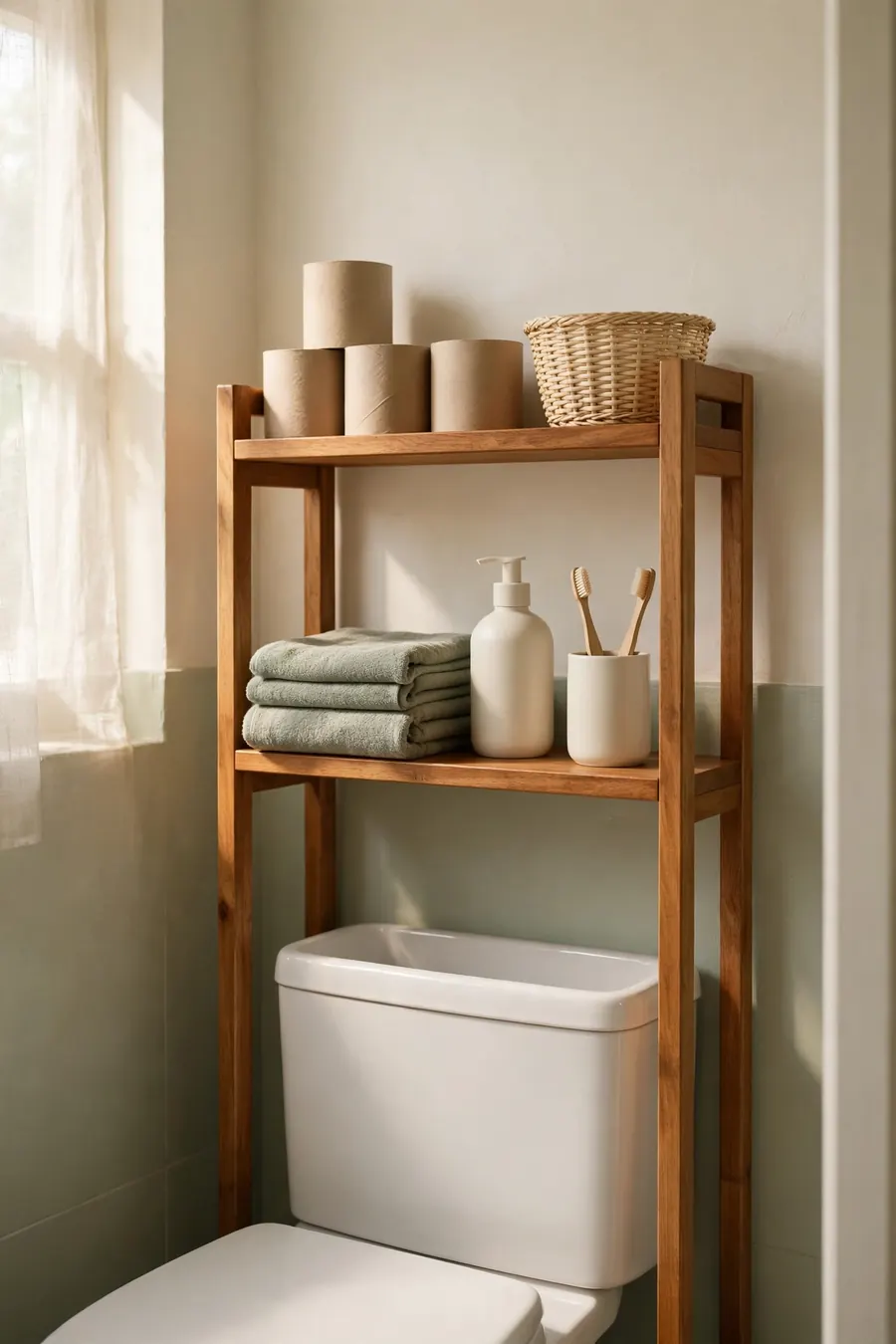
The wall space above a toilet tank is dead air in most bathrooms, and it is the largest storage gain available without tools. A freestanding over-toilet shelf stands on the floor and straddles the tank, giving you two or three shelves for rolled towels, spare toilet paper, and baskets of backups, with zero installation. It is the first piece to look for among over toilet storage ideas. A leaning ladder shelf does the same job with a smaller footprint. If neither fits, a tension pole caddy wedged in the corner beside the toilet or tub stacks baskets from floor to ceiling and comes down in seconds when you move.
The three-zone reach rule
Whatever you put above the toilet, arrange it by reach. Leave a clear zone directly above the tank, roughly a hand’s breadth of open space, so the lid can lift off when the toilet needs a repair. The reach zone at arm height holds daily items. The overhead zone, anything above eye level, is for light backups only. Never store heavy or breakable things on the top shelf over a toilet. A glass bottle falling into a porcelain bowl is a mess nobody needs.
The Back of the Door Is a Storage Wall
The bathroom door is a full wall most renters ignore. An over-door organizer with clear pockets swallows hair tools, backup toiletries, and the cleaning spray that otherwise lives on the floor. An over-door hook rack gives each person a spot for one towel and a robe.
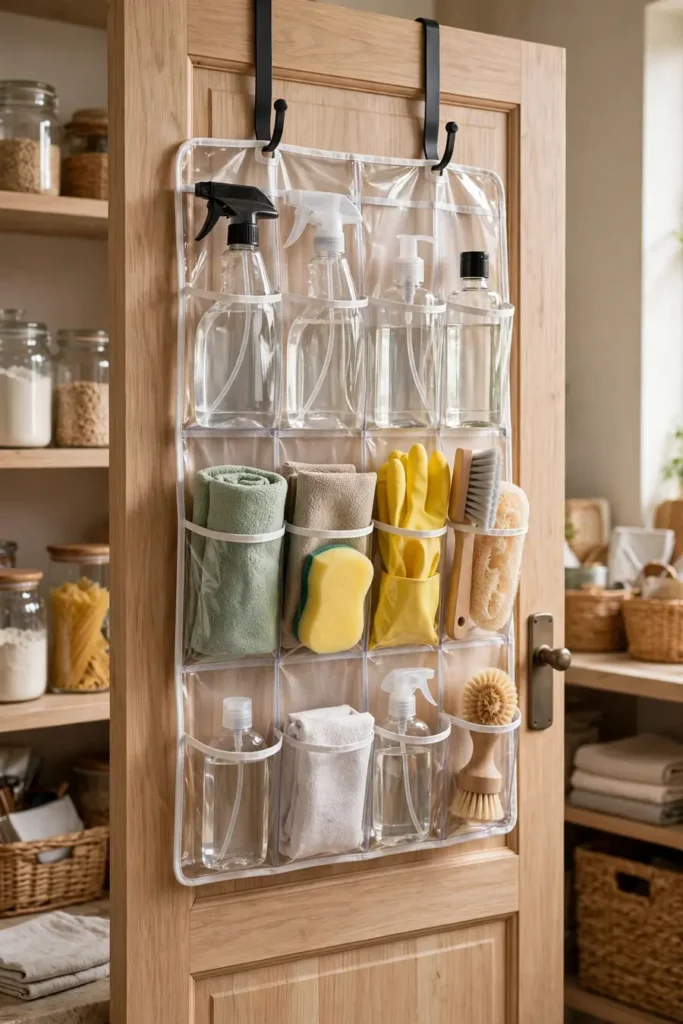
Choose low-profile hooks and check that the door still closes fully without scraping the frame. If it closes cleanly, the door costs you nothing and damages nothing, which makes it some of the most renter friendly storage in the room.
Small Bathroom Storage Ideas for the Shower and Tub
The reliable answer in the shower is a tension-pole corner shower caddy. Its shelves sit in the corner, held by pressure, so it works even on textured tile where sticky options fail. A second tension rod mounted high inside the shower gives loofahs, washcloths, and S-hook baskets a place to drip dry off the tub floor. A simple bath tray across the tub holds bath products and a book with zero installation. Adhesive and suction caddies have their place, but only on smooth, non-porous surfaces like glazed tile, glass, or metal, never across grout lines or on textured tile. Clean the spot with rubbing alcohol first, expect to re-stick a suction cup now and then, and keep both types to light, non-breakable loads.

Under the Sink: Work Around the Pipes
The cabinet under the sink is deep, dark, and interrupted by pipes, which is why things vanish in there. Measure around the plumbing first, then choose a two-tier sliding organizer or an under-sink stack of bins sized to the space. Pull-out tiers end the kneel-and-dig routine, and a turntable does the same for loose bottles. The neatest trick costs almost nothing: a small tension rod stretched across the cabinet lets spray bottles hang by their triggers, which frees the entire cabinet floor. Slim adhesive bins on the inside of the cabinet door hold minis and small bottles, light items only.

Towels, the Skinny Gap, and the Tank Top
Folded towel stacks topple. Rolled towels do not. Roll or file-fold them in a basket on the over-toilet shelf or in a slim rolling cart, and you can pull one out without disturbing the rest. Keep two sets per person in the bathroom and store the extras in that lidded bin elsewhere. That skinny gap between the sink and the toilet, too narrow for furniture, fits a slim rolling cart for makeup, hair tools, or spare toilet paper, and it wheels out when you clean. Finally, put one narrow tray on the toilet tank. It corrals the few things allowed there so the tank does not become a shelf by default.
How the No-Drill Methods Rank for Renters
Not every no-drill method is equally kind to a security deposit. Ranked honestly:
| Method | Best for | Watch out for |
|---|---|---|
| Freestanding | Over-toilet shelves, carts | Needs floor space and a level floor |
| Tension | Shower caddy corners, cabinet rods | Slips under heavy loads; needs solid, parallel surfaces |
| Over-door | Towels, pockets of toiletries | The door must still close fully |
| Adhesive and suction | Light hooks and minis on tile or glass | Steam weakens adhesive; removal can lift paint |
One more material rule: bathrooms are steam rooms, so choose rust-resistant metal, plastic, acrylic, or sealed wood. Untreated wood swells, and cheap chrome pits and rusts. Whatever adhesive you do use, respect the weight rating on the package, and keep adhesive hooks to loads well under it. The rating exists because the hook cannot hold more, no matter how much you want it to.
Common Mistakes That Put Your Deposit at Risk
- Sticking adhesive shelves to painted drywall. On removal they can pull the paint with them, and repainting comes out of your deposit. On tile or glass they are fine. On paint, test a hidden spot first, and never stick anything to paint less than a week old.
- Hanging a shelf of glass bottles over the tub on adhesive. Steam loosens adhesive slowly, and the shelf always lets go at the worst moment.
- Loading a tension rod like a closet rod. Tension holds light duty only. Heavy loads make it slip, usually in the middle of the night.
- Crowding the top shelf over the toilet with heavy jars. Light backups only, always.
- Skipping the measuring tape. Under-sink organizers that ignore the pipes end up returned, or shoved in sideways and useless.
- Organizing before editing. Storage bought for products you never use is just tidier clutter.
Frequently Asked Questions
What is the best no-drill storage for a small rental bathroom?
A freestanding over-toilet shelf plus an over-door organizer. Together they add the most storage of any no-drill pair, and both leave zero marks when you move out.
Will adhesive shelves damage my bathroom walls?
They can on painted drywall, where removal can lift paint, and steam weakens the bond over time. On tile or glass, loaded lightly and within the package rating, they are the renter-safe option.
Where do towels go with no linen closet?
Roll them into a basket on the over-toilet shelf, or keep them in a slim cart. Two sets per person is plenty in the room itself. Store the rest in a lidded bin in a bedroom closet or under a bed.
How do I add storage without buying furniture?
Start with the edit, then use what the room already offers: the back of the door, the gap beside the toilet, the space above the tank, and the cabinet floor freed up by hanging spray bottles from a tension rod. Baskets and trays you already own can do the corralling. Most small bathrooms need better placement, not more furniture.
Conclusion
The clear sink edge is the whole point. When every bottle has a place and the counter is empty again, a tiny bathroom stops feeling like a storage problem and starts feeling like a room. Start with the edit and the over-toilet shelf, add the door and the shower corner next, and keep adhesive in its place, lightly loaded on tile. These small bathroom storage ideas ask nothing from your walls, and every piece of bathroom storage, no drill marks included, leaves with you when you do.