Thrift Store Home Decor: The 60-Second Test for Pieces Worth Buying
Two shoppers can walk down the same thrift store aisle and see two completely different stores. One sees a wall of other people’s castoffs. The other spots the heavy brass lamp tucked behind a stack of plastic storage bins, checks the cord in ten seconds, and carries it home happy. The difference is not luck. It is a handful of quick checks, done right there in the aisle, that sort the solid pieces from the future regrets.
Key Takeaways
- Give every piece the 60-second test before it goes in the cart: lift it, wobble it, flip it over, sniff it, and judge the wear honestly.
- Buy materials you can verify. Solid wood, brass, ceramic, glass, and real metal clean up well and last for years.
- Trust your nose. Smoke and mildew smells sink deep into wood and fabric, and what you catch in the store only gets stronger at home.
- Skip soft goods you cannot fully wash, anything with pest signs, and old painted pieces you would have to sand.
- At home, repeat a material or a color across the room. Repetition is what makes thrift store home decor look collected instead of random.
What Home Decor Is Worth Buying at a Thrift Store?
The pieces worth buying are the ones made from materials you can check and clean right in the aisle: solid wood furniture and frames, brass and metal with sound fittings, ceramics and stoneware without cracks, glassware and vases, mirrors with intact glass, and baskets with a sound weave. If you can lift it, inspect the back, and wash it clean, it will usually earn its place at home.
The 60-Second Test for Any Piece
It takes about a minute, it costs nothing, and it works on everything from a side table to a ceramic crock.
1. Lift it
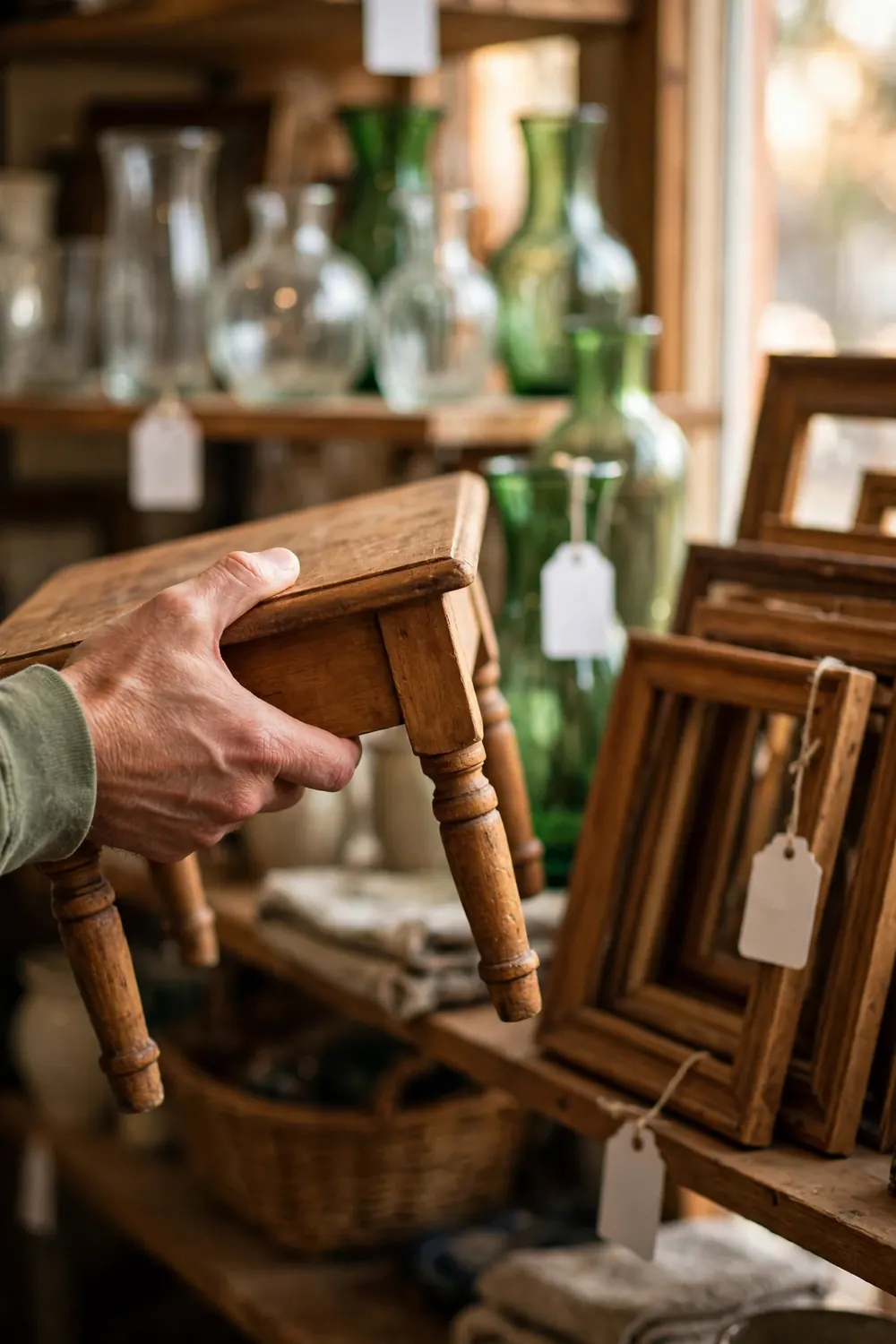
Solid wood, real ceramic, glass, and metal have heft. A piece that feels hollow and feather light is usually thin veneer over particleboard, or flimsy plastic in a costume. Heavier is not always better, but for wood and ceramics it is the fastest quality signal you will get.
2. Wobble and glide
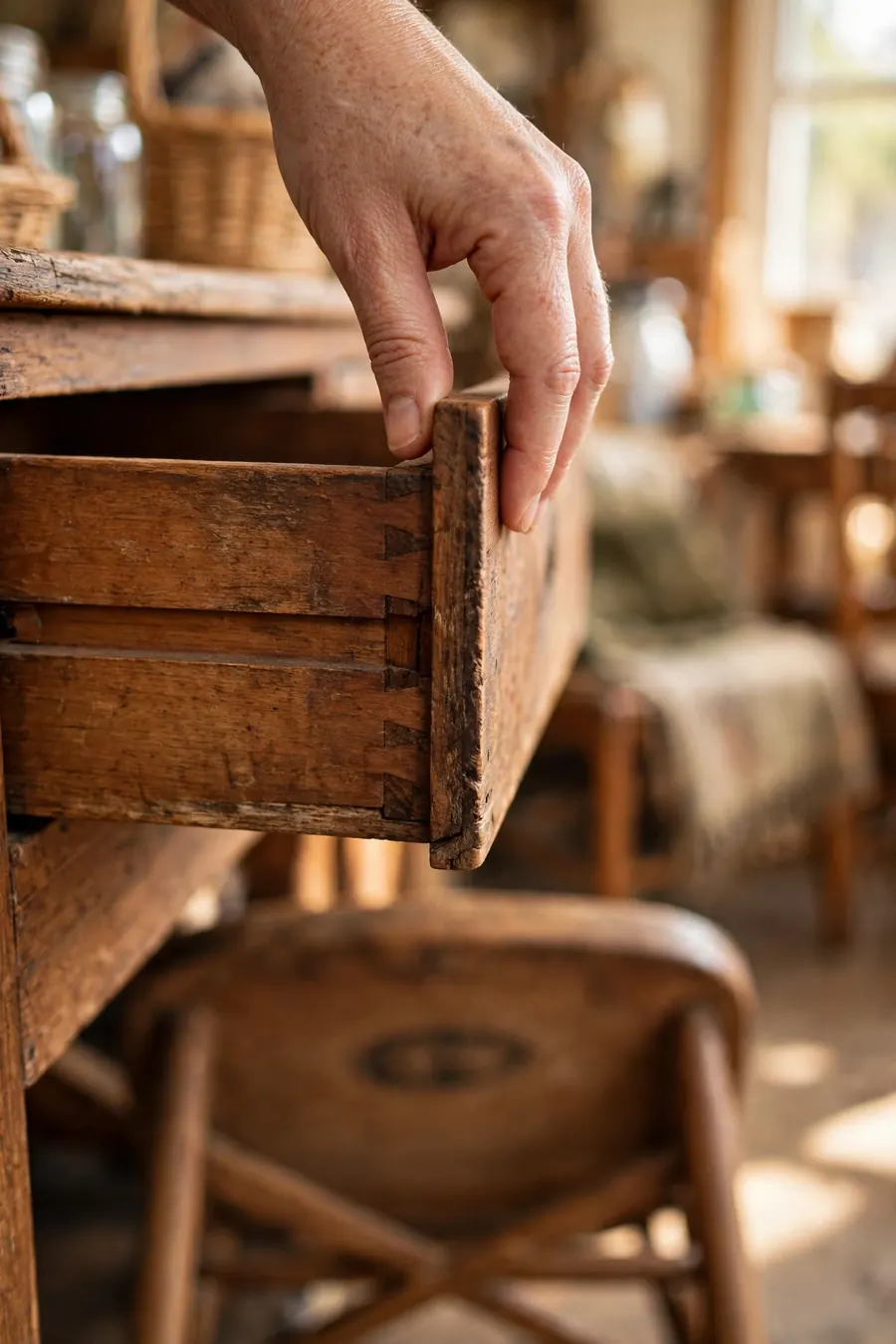
Set furniture flat on the floor and press down on the corners. Open every drawer and door. Drawers should glide, joints should sit tight with no gaps, and you want to see dovetail or screwed joints rather than staples.
3. Check the back and underside
Crouch down or flip the piece over. Maker’s marks, real wood backs, and finished undersides point to furniture that was built properly in the first place. The underside is also where water damage and pest signs tend to show up first.
4. Sniff it, honestly
Get close and breathe in, drawers and fabric included. Smoke and mildew live deep in wood pores, and if a piece smells in the store, it will smell stronger in your living room. Some odors never fully leave. This one check kills more bad purchases than the other four combined.
5. Patina or damage?
Softened edges, gentle fading, and worn brass are patina, and they style beautifully. Structural cracks, lifting veneer, water rings soaked into the grain, and a film of smoke are damage. Buy the patina, leave the damage.
Thrift Store Home Decor That Is Almost Always Worth Buying
These categories reward the hunt most reliably, because their quality is easy to check and a wash does most of the restoration.

Brass and other real metal
Candlesticks, trays, and vintage kitchen metal like flour sifters, scales, and old utensils were built for daily use, and most pieces only need a wash and a polish. Cast iron belongs in this pile too. Heavy lamp bases are one of the best bargains in the whole store, and a fresh shade makes them read almost new. The honest limit is the cord: if it is frayed, cracked, or heat damaged, the lamp stays on the shelf, and any older lamp you do bring home deserves respect for its wiring.
Solid wood furniture
Side tables, stools, and bookcases in real wood are the backbone of thrifted home decor ideas that actually last. Wood can be cleaned, repaired, and repainted for years, so a sound piece is rarely a mistake. The limits hide underneath: check the underside before you pay, and walk away from lifting veneer or water rings that have soaked into the grain. Those do not sand out the way hopeful buyers imagine.
Ceramic, stoneware, and glass
Crocks, planters, serving pieces, vases, and plain glassware wash up perfectly clean, which makes them some of the safest buys in the store. Colored glass looks far more expensive than it is when you style several pieces together on one shelf. Check rims for chips, and hold ceramics up to the light to look for hairline cracks. Give a crock a gentle tap: a clear ring is a good sign, and a dull thud means a crack is hiding somewhere.
Frames and mirrors
Buy the frame and ignore the art inside it. A solid wood or ornate frame is worth the price even when the print is headed straight for the recycling bin, and many first-rate thrift flip decor projects start exactly this way. Mirrors follow one stricter rule: the glass decides. Cracks, speckling, or cloudy desilvering spots around the edges mean the mirror stays, unless the frame alone is honestly worth the price to you.
Baskets and textiles you can wash
Woven baskets and wood crates are storage that styles itself, and hardcover books with the jackets removed give you that calm, linen-spine look for almost nothing. Inspect baskets at the handles, where the weave breaks first, and give them a sniff for mustiness before they go in the cart. Textiles follow the house rule for soft things: if it comes home, the insert gets washed or binned and the cover gets a hot wash. If a soft piece cannot be washed properly, it does not come home at all.
The Maybe Pile: Inspect These Hard
A few categories are neither automatic buys nor automatic skips. They just demand the full inspection.
Upholstered accent chairs. Check the seams, the underside, and unzip the cushions if you can. Do a deep sniff. Look carefully for droppings or shed skins, the calling cards of bedbugs. If you do not have a real cleaning plan, or if anything at all feels doubtful, the chair moves to the skip pile. No bargain is worth that risk.
Project pieces. Buy only the project you will honestly start this month. Ask yourself one question before paying: would I sand this on Saturday? If the answer is a shrug, leave it. A garage full of good intentions has never decorated a single room.
Anything with a cord. Small appliances and plug-in pieces only count if the store lets you plug them in and watch them run cleanly. Frayed cords, scorch marks, or a model you suspect was recalled end the conversation on the spot.
What to Skip, Every Single Time
This is the section to save, because these skips protect your home, not just your budget.
- Mattresses and pillows. No cleaning method makes them a safe secondhand buy.
- Upholstered furniture with any odor, stain, or pest sign. Smoke and pet smells live deep in the foam and rarely leave, and bedbugs are an infestation, not a cleaning task. This is the single most important skip on the list.
- Soft goods you cannot fully wash, throws and cushions included. If it cannot survive a proper wash, it stays in the store.
- Cribs, car seats, and helmets. Safety standards change, and you cannot know an item’s crash or recall history. Never secondhand, no exceptions.
- Chipped laminate and lifting veneer. Once a surface peels or chips, there is no cheap fix that lasts, and the piece will look tired from day one.
- Scratched or flaking nonstick cookware, and old ceramics with unknown glazes for food use. Painted items from before 2009 and mystery glazes can carry lead concerns, especially around food and children. Display only, or walk away.
- Painted furniture from before 1978 that you plan to sand. Old paint can be lead paint, and sanding turns it into dust you breathe. Test kits exist if a piece is truly worth it, and chipped or flaking antique paint is a leave-it, whatever the price tag says.
- Damaged electrics and used string lights. Frayed cords and heat damage are fire risks dressed up as bargains.
- Anything broken for later, and anything you are buying only because it is cheap. Cheap is not a decorating strategy. A piece has to pass the test and have a named spot waiting for it at home.
Second Hand Decor Styling: Making Finds Look at Home
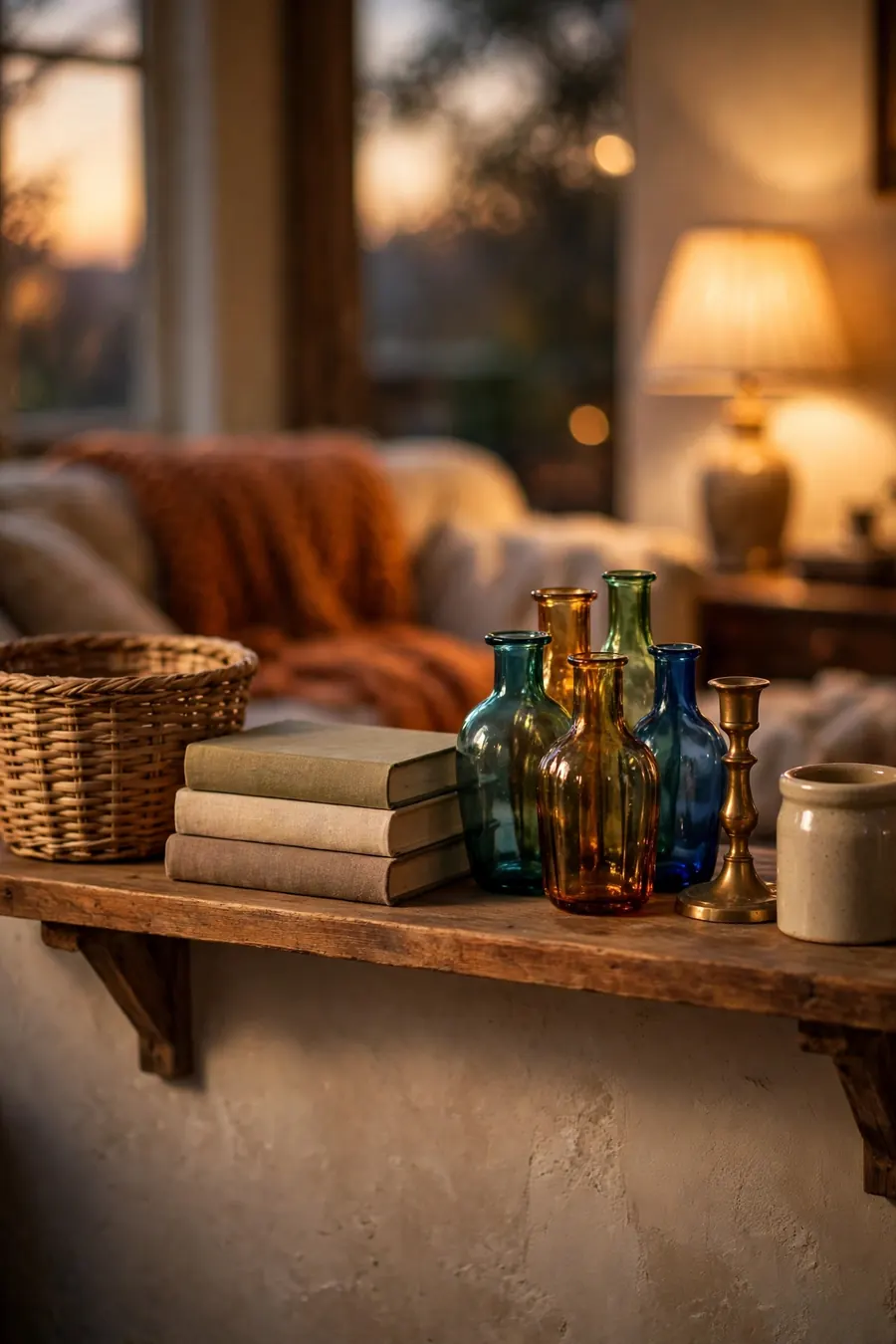
Thrifted pieces look random when they land one by one, and collected when you repeat something. Group colored glass in threes on one shelf. Let one material, wood or brass, turn up in two or three places in the same room. Mix a thrifted side table with the sofa you already own instead of building a whole room of secondhand in a single weekend. That mix, plus pieces that have been genuinely cleaned, is what keeps a room feeling chosen rather than cast off. It is also the heart of upcycled home decor ideas that look intentional.
Frequently Asked Questions
What is the best home decor to buy at thrift stores?
Solid wood pieces, frames and mirrors, glass and ceramics, baskets, and hardcover books. They are durable, they clean up well, and you can verify their quality right in the aisle with the 60-second test.
What should you never buy secondhand for your home?
Mattresses, soft goods you cannot wash, upholstered pieces with odor or pest signs, cribs and car seats, damaged nonstick cookware, and suspect lead-painted items. If it cannot be cleaned, checked, or trusted, it stays in the store.
How do I know if a thrifted piece is good quality?
Run the test: heft, wobble, drawer glide, the back and underside, and the sniff. Quality shows in weight, joints, and materials, not in the price tag. A well-made piece announces itself in about a minute.
One Last Walk Down the Aisle
A thrift store will always hold treasure and tat side by side, and honestly, that mix is what makes the hunt fun. The test takes a minute, the good materials are easy to spot once your hands know the feel of them, and the skip list keeps the mistakes on the shelf instead of in your home. Shop for a spot you actually have, buy the patina, and let somebody else carry home the wobbly, smelly bargains. That is how thrift store home decor turns into a home that looks collected, calm, and entirely yours.