Renter Friendly Wall Decor Ideas That Leave Zero Holes
You know this wall. It runs the whole length of the living room, painted the same flat white as every rental you have ever lived in, and staring back at you since move in day. Your lease bans nails, and your deposit is money you fully intend to see again. So the wall stays blank, and the room never quite feels like yours.
It does not have to stay that way. Almost everything a homeowner hangs with a nail can go up another way in a rental, and come down clean at the end of the lease. The six renter friendly wall decor ideas below put zero holes in the wall.
Key Takeaways
- Match adhesive strips to the packet’s weight rating for that strip size. Too heavy? Lean it.
- One large leaning piece anchors a long wall faster than a dozen small frames.
- Ledges do not need screws. Bookcase tops and dressers do the same job.
- Tension rods turn window frames and alcoves into hanging space for light fabric.
- Washi tape is for the lightest pieces only, and it is perfect for them.
- Removal is a method too. Pull strip tabs straight down, slowly, and paint stays put.
Can You Really Fill a Rental Wall Without Any Holes?
Yes. A rental wall can hold framed art, mirrors, fabric and small displays with zero holes, if you match the method to the weight. Adhesive strips handle most framed pieces when you follow the packet rating. Anything heavier leans or rests on furniture, so the floor carries the weight instead of the paint. Light fabric hangs from tension rods, and the lightest paper needs nothing stronger than washi tape.
1. Adhesive Picture Strips and Hooks
What it holds well. Framed prints, small mirrors, light canvas art, and hooks for hats and wreaths on smooth doors.

How to do it. Weigh the frame first. Check the rating on the packet for your strip size, stay under it, and use as many strip pairs as the packet calls for. Wipe the wall spot with rubbing alcohol and let it dry. Press each strip for thirty seconds, then wait the full hour the packet asks for. That hour is where most failures are born: the bond needs time to set.
Honest limits. Smooth painted walls only. Heavy texture, brick, wallpaper and fresh paint weaken the bond or risk the paint. Textured walls? Skip ahead to leaning.
Clean removal. Hold the frame steady and pull the tab straight down along the wall, slowly, never out toward you. The strip stretches, lets go, and leaves the paint alone.
2. Picture Ledges That Rest Instead of Mount
What it holds well. Layered frames, small prints, a trailing plant, a stack of books, and pieces you swap with the seasons.

How to do it. A true picture ledge screws into the wall, so renters borrow the idea instead of the hardware. Set a low bookcase, dresser or console against the wall and use its top as the ledge. Stand frames in a row, overlapping slightly, tallest at the back. A freestanding leaning shelf works the same way, nothing fixed to anything.
Honest limits. You give up a strip of floor, and pieces can slide if bumped, so keep breakables back from the edge. A leaning shelf that wobbles is not renter friendly, it is a hazard.
Clean removal. Pick everything up and carry it out. There is nothing to undo.
3. Leaning Large Art and Mirrors
What it holds well. The heavy pieces strips cannot carry: oversized framed art, big canvases, and a full length mirror.
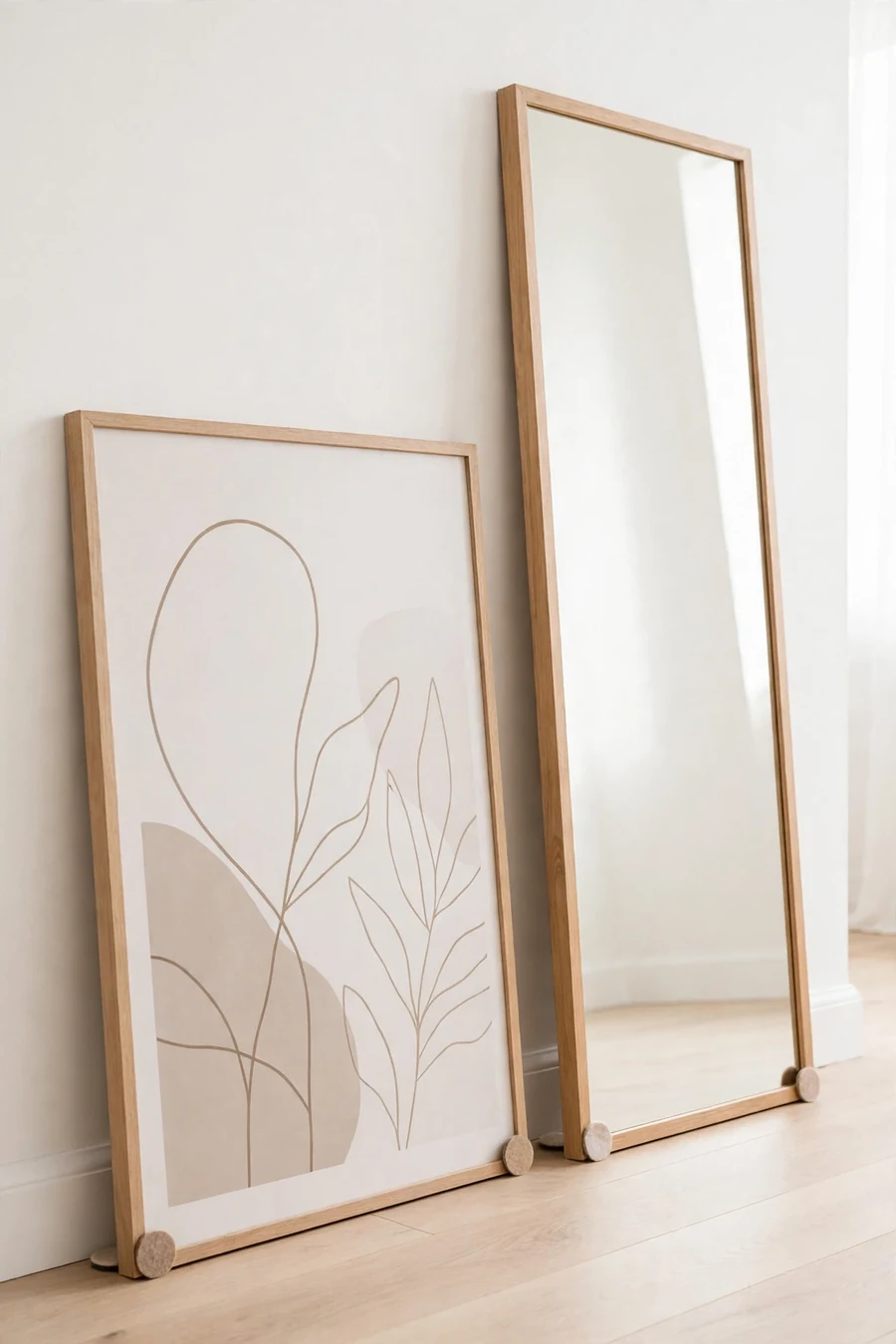
How to do it. Choose one large piece for the long wall rather than five small ones. Stand it on the floor, base a few inches out from the baseboard, top resting on the wall. Add felt pads to the back corners so the contact points do not scuff the paint. A large mirror does double duty: it fills a big stretch of wall and bounces window light back into the room.
Honest limits. It takes floor space, and homes with toddlers or big dogs should think twice about tall leanable pieces.
Clean removal. Lift and carry. Nothing stronger than a felt pad ever touched the wall.
4. Tension Rods in Window Frames and Alcoves
What it holds well. Sheer curtains, light fabric panels, tapestries, and paper garlands strung across a gap.
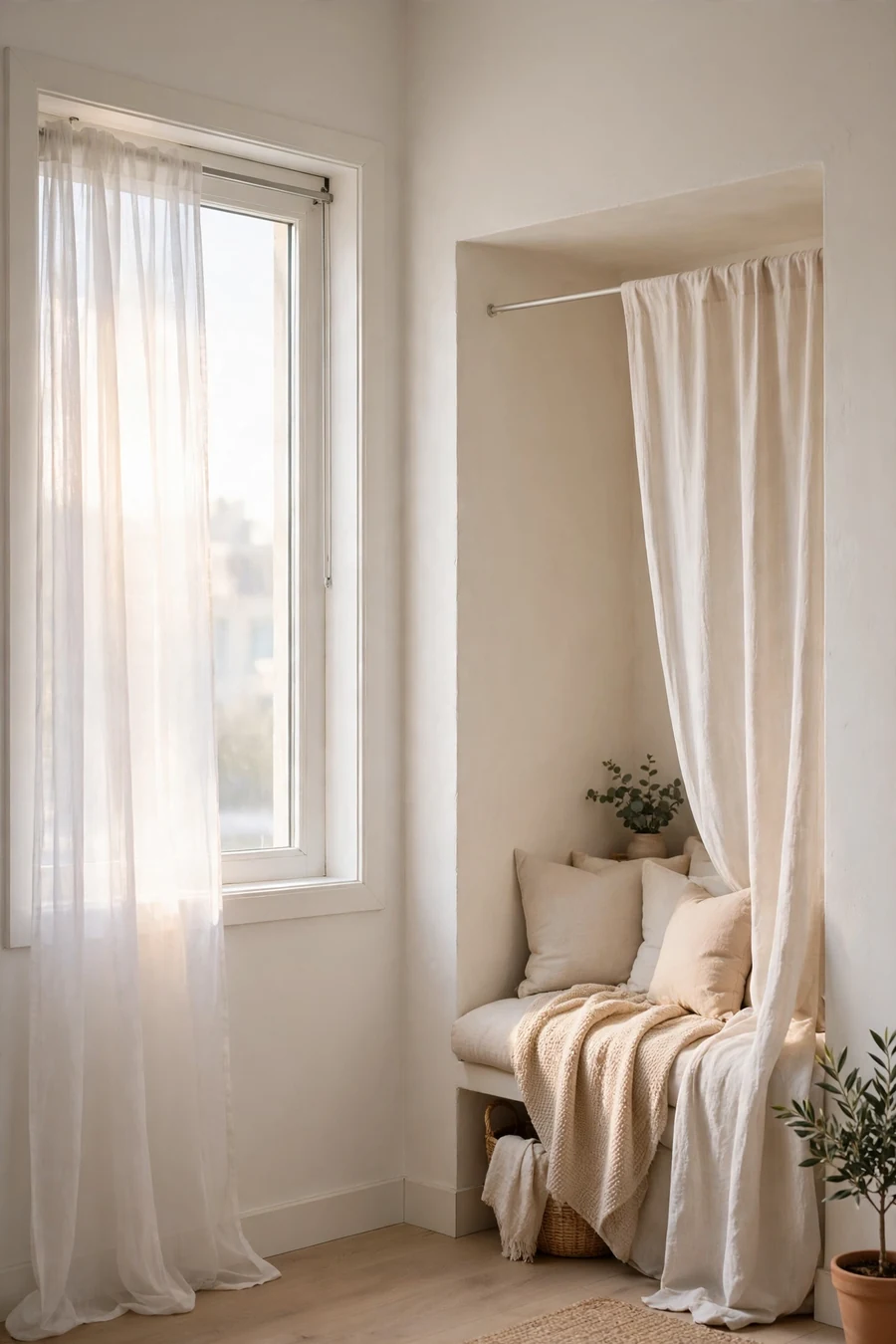
How to do it. Measure the inside width of the frame or alcove. Choose a rod that lists that width inside its range, twist it slightly longer than the gap, and compress it into place so spring pressure holds it. Hang sheers inside the frame, or run a fabric panel across an alcove to fake a feature wall where the lease says no paint.
Honest limits. Tension holds light things only. A heavy lined curtain will walk the rod down the wall in the night, usually the night you have guests. Tug the rod firmly before trusting it.
Clean removal. Twist, collapse, done. No mark of any kind.
5. Washi Tape, Paper and Light Fabric
What it holds well. Unframed prints, postcards, photos, kids’ artwork, paper garlands, and any page you love.

How to do it. Washi tape is a low tack paper tape made to peel off clean. Tape all four corners of a print, or build tape frames around each piece, so the tape becomes part of the design. A light scarf or pretty tea towel goes up the same way, taped at the top corners.
Honest limits. Lightest pieces only, full stop. Humidity loosens it, so a steamy bathroom is not its best room. Test one corner overnight before committing a whole set.
Clean removal. Peel slowly at a low angle, tape close to the wall. If a corner resists, warm it with your hand and peel slower.
6. Plate Rail Displays and Over Door Options
What it holds well. Wreaths, hats, hanging storage pockets, and a plate or basket collection shown off the old fashioned way.
How to do it. Over door hooks slip over the top of a door and hold a wreath or hanging organizer, no wall contact at all. A door back is usually the smoothest surface in the apartment, so it is also the best spot for an adhesive hook. For the plate rail look, line plates or shallow baskets along the top of a tall bookcase or high dresser, resting on furniture instead of screwed in.
Honest limits. Check door clearance before hanging anything thick, and close the door gently the first day to check for rattles.
Clean removal. Lift the hooks off. Nothing was ever attached.
The Long Living Room Wall, Start to Finish
Here is that long blank wall, done in an afternoon, in order. Start with the anchor: one large leaning mirror or framed print at the end nearest the window. Next, the gallery above the sofa, hung on strips. Lay the arrangement on the floor first, biggest piece just off center, smaller ones around it, a hand’s width between frames. Photograph it, then hang piece by piece.
At the far end, a low bookcase against the wall carries a ledge display: two layered frames, a plant, a stack of books. In the narrow gap beside the door, put three small prints in washi tape frames. Three zones, one wall, and not a single hole anywhere.
Move Out: Taking It All Down Clean
Work from the lightest method to the heaviest, top of the wall down. Washi tape first: peel low and slow. Strips next: hold each frame steady and pull the tab straight down along the wall until the strip stretches and releases. Then tension rods, twisted and collapsed. Over door hooks lift straight off. Leaning pieces last; wipe the dust line where they rested.
Once in a while a strip still pulls paint, usually where paint was already loose or a tab got pulled outward instead of down. Do not pick at the spot. If a flake comes away, keep it: it is your exact color match. Take it to a paint counter for a small sample pot, then dab on a thin coat and feather the edges. If your lease forbids painting at all, tell your landlord before the final walkthrough. A small repair mentioned early is treated very differently from damage found at inspection.
Frequently Asked Questions
How can I hang pictures in a rental without nails?
Use adhesive strips matched to the packet rating for framed pieces, lean anything large or heavy, and rest smaller frames on bookcase tops and dressers. Between those three, nearly everything a nail holds has a home.
Do adhesive strips damage paint when you take them off?
Not when they come off the packet way: tab pulled straight down, slowly, so the strip stretches and releases. Damage comes from pulling outward, rushing, or paint already lifting.
Can I hang a mirror without putting holes in the wall?
Yes, and the biggest mirrors are the easiest. Lean a full length mirror against the wall, or rest a smaller one on a dresser. Strips suit only small, light mirrors, within the packet rating.
What is the heaviest thing I can hang without nails?
There is no single number; it depends on the strip size. The packet rating for the largest strips sets the ceiling. Past it, stop hanging and start leaning, and let the floor carry the weight.
Do these ideas work in a bathroom or kitchen?
Mostly, with one caution. Steam loosens washi tape and weakens ordinary strips, so check the packet for a water resistant bathroom version. Leaning pieces, over door hooks and tension rods do not care about humidity.
One Last Thing
A blank rental wall is not a rule, it is a problem with six solutions. Match the method to the weight, follow the packet, pull the tabs down slow at move out, and the wall goes back to flat white. Your deposit stays yours, and the room finally looks like somebody lives there on purpose.