

Crockpot Meals for 2: Small-Batch Dinners That Don’t Leave a Week of Leftovers
It is Wednesday night, and you are standing in front of the fridge looking at the same stew you ate on Monday. And Tuesday. The recipe promised six servings, and it kept that promise a little too well. When there are only two people at the table, most crockpot recipes are not dinner. They are a week-long commitment.
If that sounds familiar, the fix is not to give up on the slow cooker. The fix is to cook in the size your household actually eats. Crockpot meals for 2, made in a small 2 to 3 quart cooker, give you a proper dinner tonight and one lunch portion tomorrow. Then the pot is empty, the fridge is clear, and nobody has to be polite about leftovers on night four.
Key Takeaways
- A 2 to 3 quart slow cooker is the right size for two. It keeps a small batch cooking evenly instead of spreading thin in a big pot.
- Recipes written for two from the start beat family recipes eaten down over a week: dinner tonight, one lunch tomorrow, done.
- Scaling down? Cut the meat and vegetables in half, but cut the liquid by less than half.
- Cook time barely changes when the batch shrinks. Start checking early and let a thermometer make the final call.
- Chili, beef stew, and lentil dishes taste even better the next day. Pasta cooked in the pot does not.
The Short Answer
Yes, slow cooking works beautifully for two people, as long as the recipe and the cooker are both sized for two. Use a 2 to 3 quart cooker, keep it between half and two thirds full, and pick recipes that make two generous servings plus a small lunch portion. The chicken stew below is built exactly that way, and the scaling notes after it will shrink almost any family recipe you already love.
The Lead Recipe: Chicken and Vegetable Stew for Two
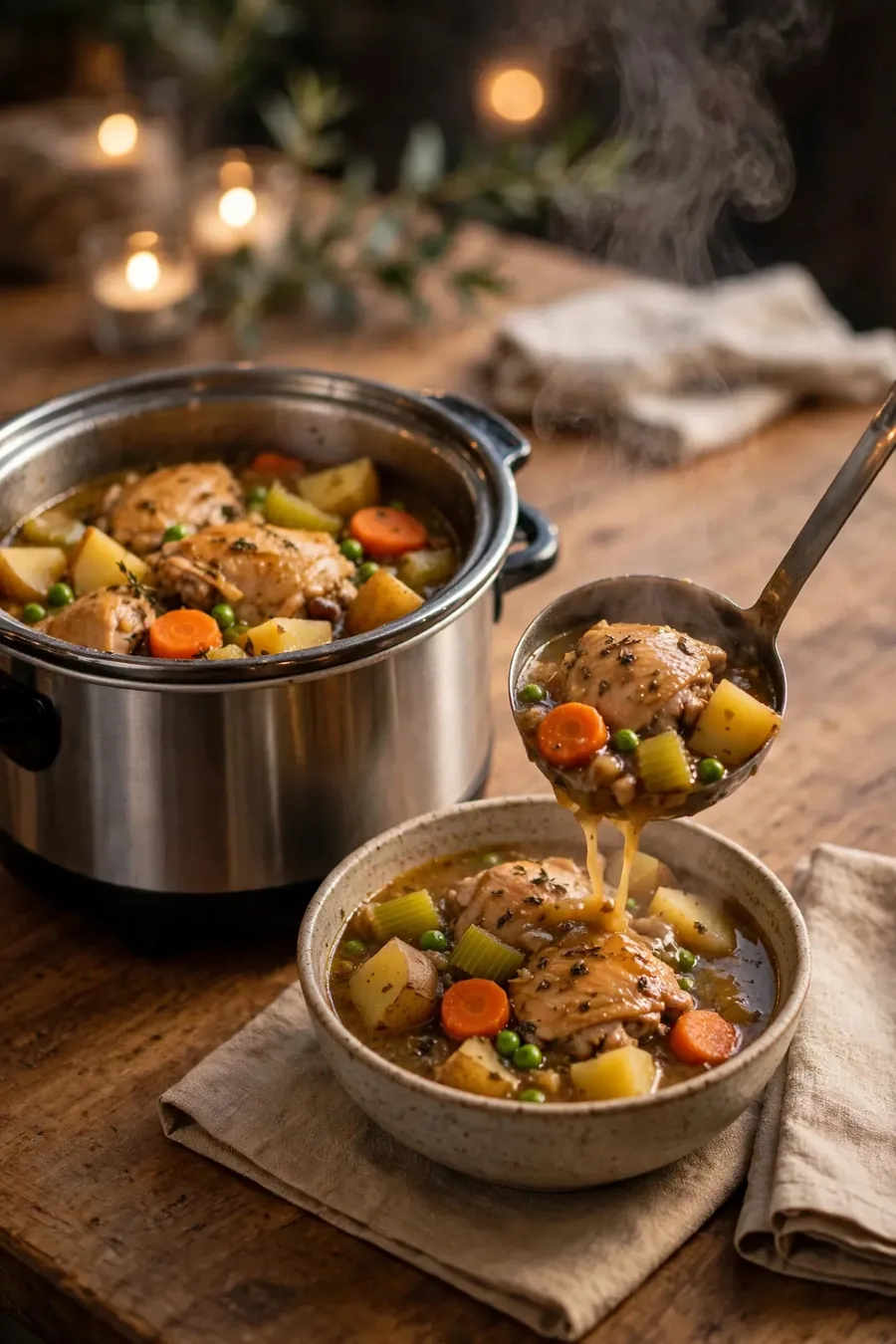
This is the dinner to start with: a proper stew with tender chicken, potatoes that hold their shape, and enough gravy to spoon over everything. Nothing about it tastes like a compromise. It is simply written for two people from the first line.
| Ingredient | Amount |
|---|---|
| Boneless, skinless chicken thighs | 1 pound (about 4 small thighs) |
| Potatoes, cut into 1 inch chunks | 2 medium (about 3/4 pound) |
| Carrots, peeled and sliced into 1/2 inch rounds | 2 medium |
| Celery, sliced | 1 stalk |
| Yellow onion, chopped | 1 small |
| Garlic, minced | 2 cloves |
| Low sodium chicken broth | 3/4 cup |
| Tomato paste | 1 tablespoon |
| Dried thyme | 1 teaspoon |
| Salt | 1/2 teaspoon |
| Black pepper | 1/4 teaspoon |
| Bay leaf | 1 |
| Frozen peas | 1/2 cup |
| Cornstarch mixed with cold water (optional, for thicker gravy) | 1 tablespoon plus 1 tablespoon water |
Method:
1. Layer the vegetables first. Put the potatoes, carrots, celery, and onion in the bottom of a 2 to 3 quart slow cooker, closest to the heat, so they finish tender instead of crunchy.
2. Season the chicken. Sprinkle the salt, pepper, and thyme over the thighs and lay them in a single layer on top. Thighs stay juicy through a long cook in a way chicken breast rarely does.
3. Add the liquid. Whisk the tomato paste into the broth, pour it over the chicken, and tuck the bay leaf and garlic into the liquid.
4. Cook until tender. Cover and cook on LOW for 6 to 7 hours or on HIGH for 3 to 3 1/2 hours, until the potatoes are soft and the chicken reads 165 degrees F on a food thermometer.
5. Finish with the peas. Fish out the bay leaf, stir in the peas, cover, and let them warm through for about 10 minutes. For a thicker gravy, stir in the cornstarch mixture, switch to HIGH, and cook 15 minutes more until the liquid turns glossy.
6. Serve and pack the lunch. Ladle into two bowls. Whatever is left, usually one good portion, goes into a container for tomorrow’s lunch.
How to Shrink Any Family Recipe Down to Two
Once you trust the little cooker, you can rescue the family recipes you already like. The math is friendlier than you might expect.
Start with the servings, not the ingredients. Most crockpot recipes serve 6 to 8. Cut one in half and you get 3 to 4 servings: dinner plus one or two lunches. If you want tonight only, cut it to a third instead. Either way, you choose your leftovers on purpose rather than having them chosen for you.
Meat and vegetables scale straight down. Half the chicken, half the potatoes, half the beans. Keep the pieces the same size as the original recipe, though. Smaller pieces dry out; same size pieces cook evenly and stay tender.
Liquid is the exception. Cut it by less. A small batch still needs enough liquid to keep the meat mostly covered. If a family recipe calls for 2 cups of broth, use a generous 3/4 cup rather than a strict half, and never go below about 1/2 cup in a small cooker. If the meat looks high and dry, add one more splash.
Season with a lighter hand, then adjust. Salt and dried herbs scale down evenly. Strong flavors, like chili flakes, smoked paprika, and vinegar, taste louder in a small pot, so use a touch less than the strict fraction and taste at the end. Half a seasoning packet works fine; fold it over, clip it, and save the rest.
Respect the fill line. A slow cooker does its best work between half and two thirds full. Two chicken thighs at the bottom of a 6 quart pot spread the liquid too thin and can scorch at the edges. In a 2 to 3 quart cooker, the same dinner sits at the right depth.
Keep the timing roughly the same. Halving a recipe does not halve the time. A small batch may finish a little early, so start checking about an hour before the original recipe’s shortest time, and let the thermometer settle it: 165 degrees F for chicken, fork tender for stews.
Three More Small-Batch Dinners for Two
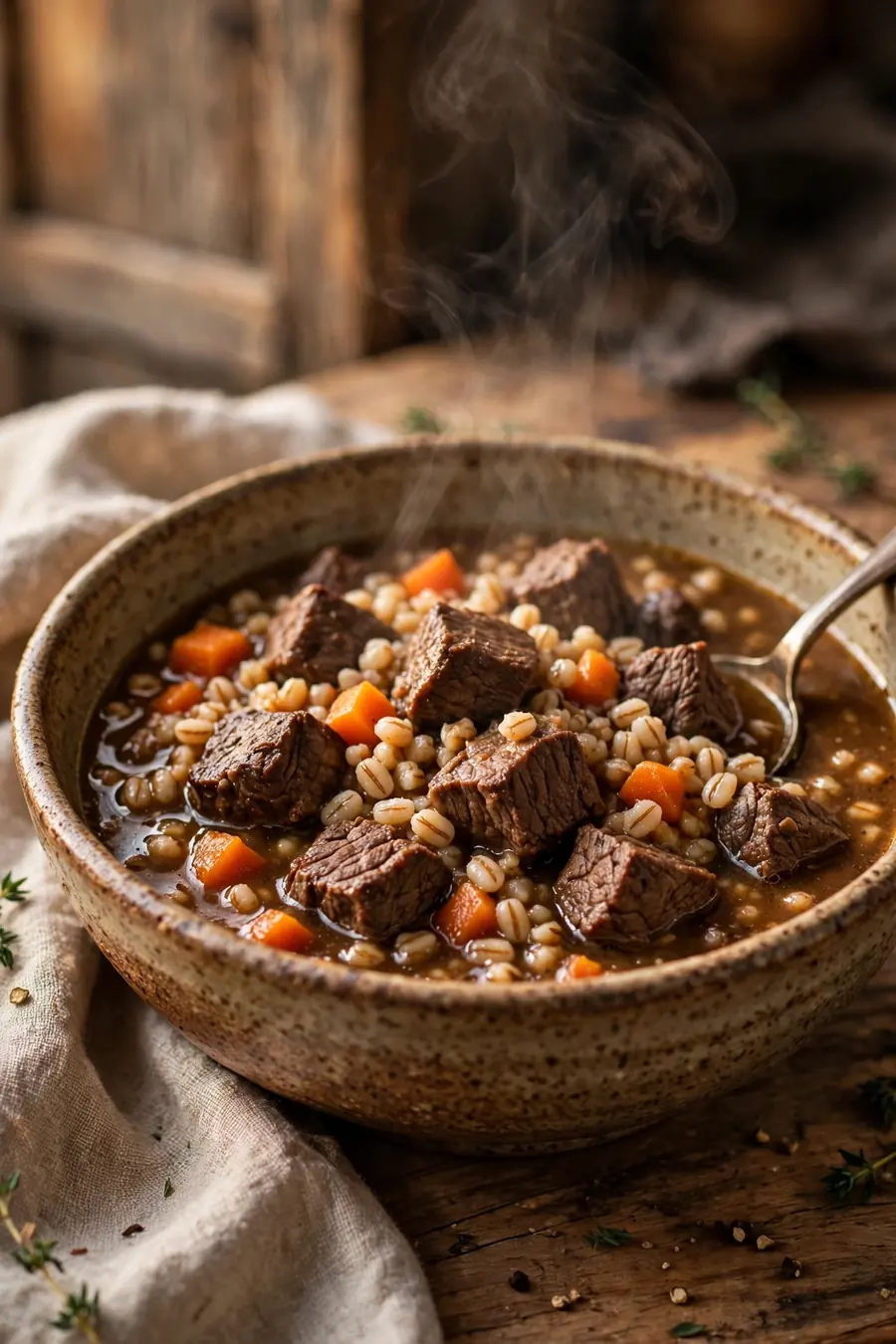
Beef and Barley
Put 12 ounces of beef stew meat, cut in 1 inch cubes, into the small cooker with 1/3 cup pearl barley (rinsed), 1 diced carrot, 1 chopped small onion, 1 sliced stalk of celery, 1 1/2 cups beef broth, 1 tablespoon tomato paste, 1/2 teaspoon dried thyme, 1/2 teaspoon salt, and 1/4 teaspoon black pepper. Cook on LOW for 7 to 8 hours or on HIGH for 3 1/2 to 4 hours, until the beef is fork tender and the barley is plump. The standard minimum for beef is 145 degrees F with a rest for cuts like steak, and a long, slow cook takes stew meat far past that, so tenderness is your real test.
Small-Batch Turkey Chili
Brown 8 ounces of ground turkey in a skillet, breaking it up, until cooked through, about 8 to 10 minutes. Move it to the cooker with 1 cup canned kidney beans, drained and rinsed (about half a 15 ounce can; the rest keeps, covered, in the fridge for a day or two), 1 can (14.5 ounces) diced tomatoes with their juices, 1 chopped small onion, 1 tablespoon chili powder, 1 teaspoon ground cumin, 1/2 teaspoon garlic powder, and 1/2 teaspoon salt. Cook on LOW for 5 to 6 hours or on HIGH for 2 1/2 to 3 hours. The turkey went in cooked, so this time is about the flavors settling into each other.

Red Lentil and Sweet Potato
Rinse 3/4 cup red lentils and add them with 1 small sweet potato, peeled and cut into 1/2 inch dice (about 1 1/2 cups), 1 chopped small onion, 2 teaspoons curry powder, 1/2 teaspoon ground ginger, 1/2 teaspoon salt, and 1 1/2 cups vegetable broth. Cook on LOW for 4 to 5 hours or on HIGH for 2 to 2 1/2 hours, until the lentils have fallen apart and thickened the pot and the sweet potato is soft. Stir in 1/2 cup canned coconut milk at the end and let it warm through before serving.

Which Dishes Improve as Leftovers, and Which to Cook Fresh
Even a small batch usually leaves one lunch portion, so it helps to know which dinners deserve that second appearance.
Chili is the famous one. A night in the fridge lets the spices settle into the beans, and most people find it tastes better on day two. Beef stews like the barley one above reheat gracefully too, because the gravy protects the meat. Lentil dishes, bean soups, and curries hold up well. Make those when you genuinely want tomorrow’s lunch sorted.
Cook these fresh and eat them the same night. Anything with pasta or rice cooked right in the pot keeps soaking up liquid and turns soft and swollen. Delicate vegetables like the peas in the stew lose their brightness, creamy sauces can separate, and crisp toppings give up their crunch within the hour. None of that is a reason to skip those dinners. Just size them to the night.
One safety note worth the space: get leftovers into the fridge within 2 hours, and eat them within 3 to 4 days. One lunch tomorrow sits comfortably inside that window. A fifth night of stew does not.
Questions Two-Person Households Ask
What size slow cooker is best for two people?
A 2 to 3 quart cooker is the sweet spot. It holds dinner for two plus a lunch portion, and a batch that size fills it to the half to two thirds level where slow cookers heat most evenly. Extension services give the same guidance for one or two people who do not want many leftovers.
Can I cut a family crockpot recipe in half?
Yes, and it is the easiest way to start. Halve the meat, vegetables, and canned goods, reduce the liquid by a little less than half, and cook the batch in a smaller cooker rather than your big one.
How full should a small slow cooker be?
Between half and two thirds full. Below half, food cooks too fast at the edges and can dry out or scorch. Above two thirds, the middle takes too long to get properly hot. If a halved recipe does not reach halfway up your smallest cooker, cook it whole on a week when you do want leftovers.
Does a smaller batch cook in half the time?
No. The pieces of food are the same size, so they need roughly the same time to become tender. A small batch often finishes a little early, so start checking about an hour ahead and trust a thermometer over the clock: 165 degrees F for chicken and ground turkey, fork tender for stewing beef.
Can I just use my big 6 quart cooker for a small batch?
You can, but the results usually disappoint. The liquid spreads thin, the edges overcook, and dinner dries out before the middle is ready. If a small cooker is not in the budget yet, put a 2 to 3 quart size at the top of the thrift store list. It is one of the easiest secondhand finds there is.
Dinner for Two, On Your Terms
Cooking for two is not a smaller version of cooking for a family. It is its own thing, and it deserves recipes written for it from the start. With a little cooker on the counter and a short list of dinners sized for your table, Wednesday night never has to taste like Monday again.


