Decluttering Checklist Bedroom: A Zone by Zone Sort for Small Rooms
A small bedroom does not need much to feel crowded. One chair buried under clothes. A nightstand that collects everything you own. A wardrobe that will not quite close without a shove. Suddenly the room feels loud, even on the days it is technically clean.
And you know how it goes. You tidy, it looks fine for two days, and then the piles creep back like they pay rent. They come back because nothing actually left the room. Tidying just moves clutter around. A sort takes it out, for good.
This decluttering checklist bedroom guide sorts zone by zone, in an order that shows results fast: surfaces, wardrobe, drawers, under the bed, nightstand. It is built for small bedrooms and renters. No walk-in closet. No spare room. No storage unit across town. Three levels, and you stop at the level your room actually needs.
Before You Touch a Single Drawer
- Work zone by zone: surfaces, wardrobe, drawers, under the bed, nightstand.
- Decide every item the same way: keep, move, donate, or toss. No fifth pile.
- Sort first with bags and boxes you already own. Buy nothing until the sort is done.
- Two sets of sheets per bed is plenty: one on the bed, one spare.
Decluttering Checklist Bedroom, in Short: Five Zones, Four Bags
A decluttering checklist bedroom sort works when you go zone by zone and decide each item once. Set out four bags labelled keep, move, donate, and toss, start with the surfaces, then do the wardrobe, drawers, under the bed, and the nightstand. Keep only what you use, what fits, and what has a home in the room. Everything else leaves today.
The 10-Second Check: Can You See Your Dresser Top?
Check 1: Can you see the top of your dresser and nightstand? If both are buried, your problem is surfaces and things that belong in other rooms.
Check 2: Does your wardrobe close without a push? If it needs force, your problem is volume, not organizing. No bin fixes a wardrobe that holds too much.
Check 3: What is under your bed, from memory? If you cannot name it, it is storage you forgot, not storage you use.
Level 1: Free, Four Bags, Zone by Zone
[Cost: Free | Time: 30 to 45 minutes per zone, one zone at a time]
Level 1 costs nothing, and honestly, it does most of the work. The rest is just finishing touches.
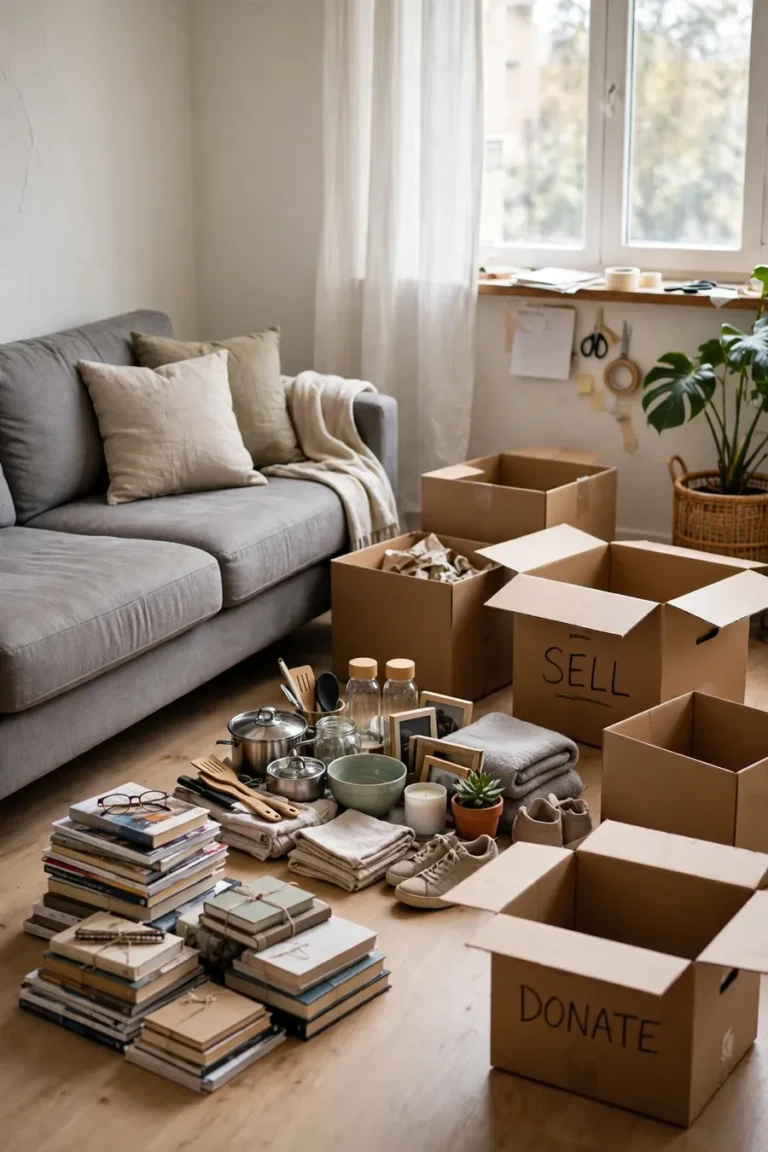
Step 1: Set out four bags, then use one rule for every item. Label the bags keep, move, donate, and toss.
- Keep: it stays in this bedroom, in a named spot.
- Move: a good thing in the wrong room, like mugs, mail, or tools.
- Donate: it works, it is clean, someone else would use it.
- Toss: broken, stained, worn out, or out of date.
Pick each item up and ask: Have I used or worn it here in the last few weeks, or last season for seasonal things? Does it fit and still work? Does it have a home in this room? Would I notice it gone in a month? Mostly yes means keep. A good item with no home here means move or donate. A no on fit or condition means donate or toss. If you stall, bag it as donate and keep moving.
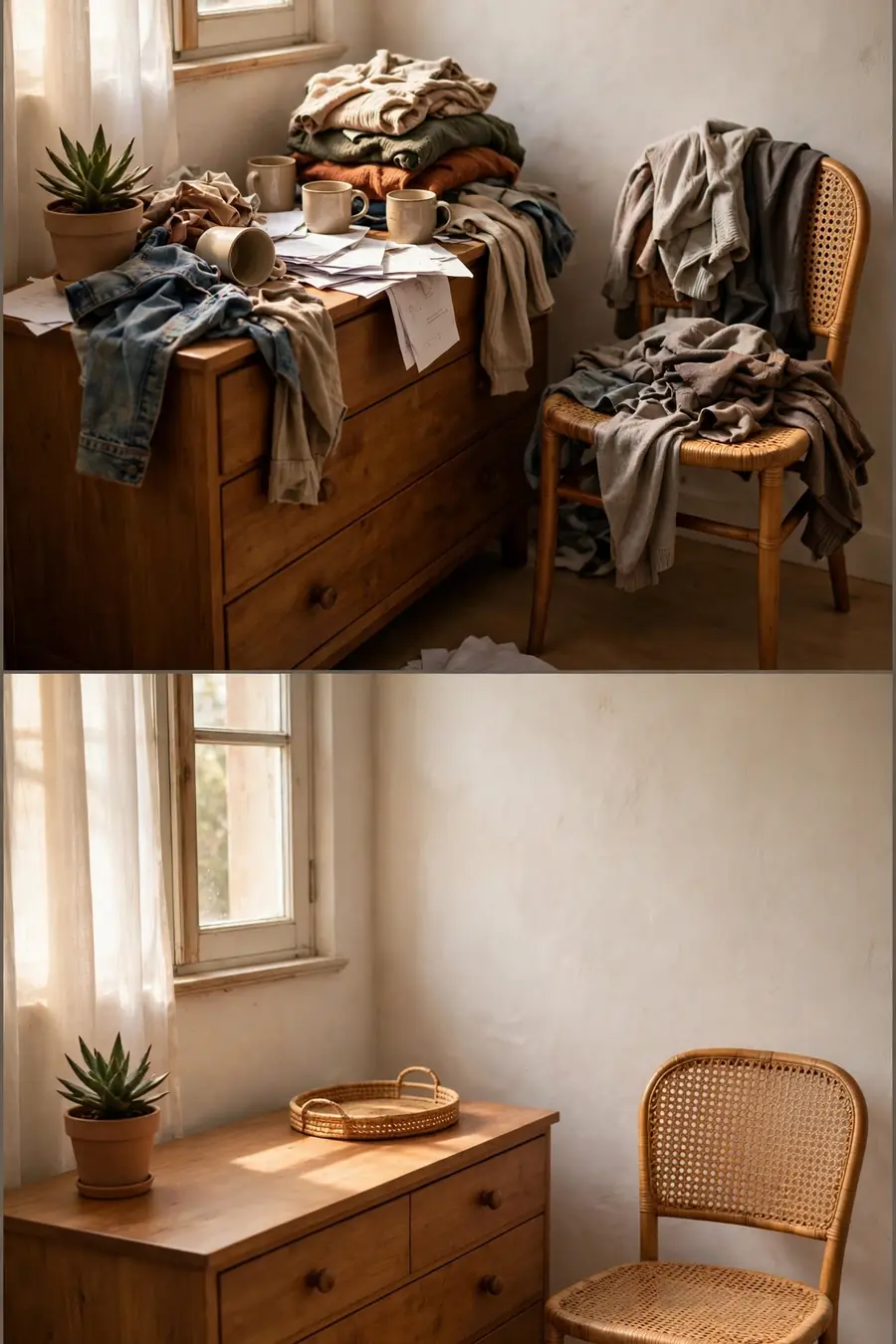
Step 2: Zone 1, surfaces. Clear the dresser top, the chair, and the floor around the bed, one surface at a time.
- Sort everything straight into the bags. Dirty clothes go in the hamper, clean clothes go to the wardrobe or a drawer now, not back on the chair.
- Put back only what lives on that surface every day. Done: the chair holds a person or nothing.
Step 3: Zone 2, the wardrobe. Work one rail or shelf at a time, sorted onto the bed.
- Clothes that do not fit now, or not worn in a year, go in donate. Broken hangers and empty boxes go in toss.
- Hang or fold keepers back in groups: tops, bottoms, sleepwear. Leave space between hangers. No space means the sort is not finished.
- Once sorted, the closet organization for small closets guide goes deeper on this one space.
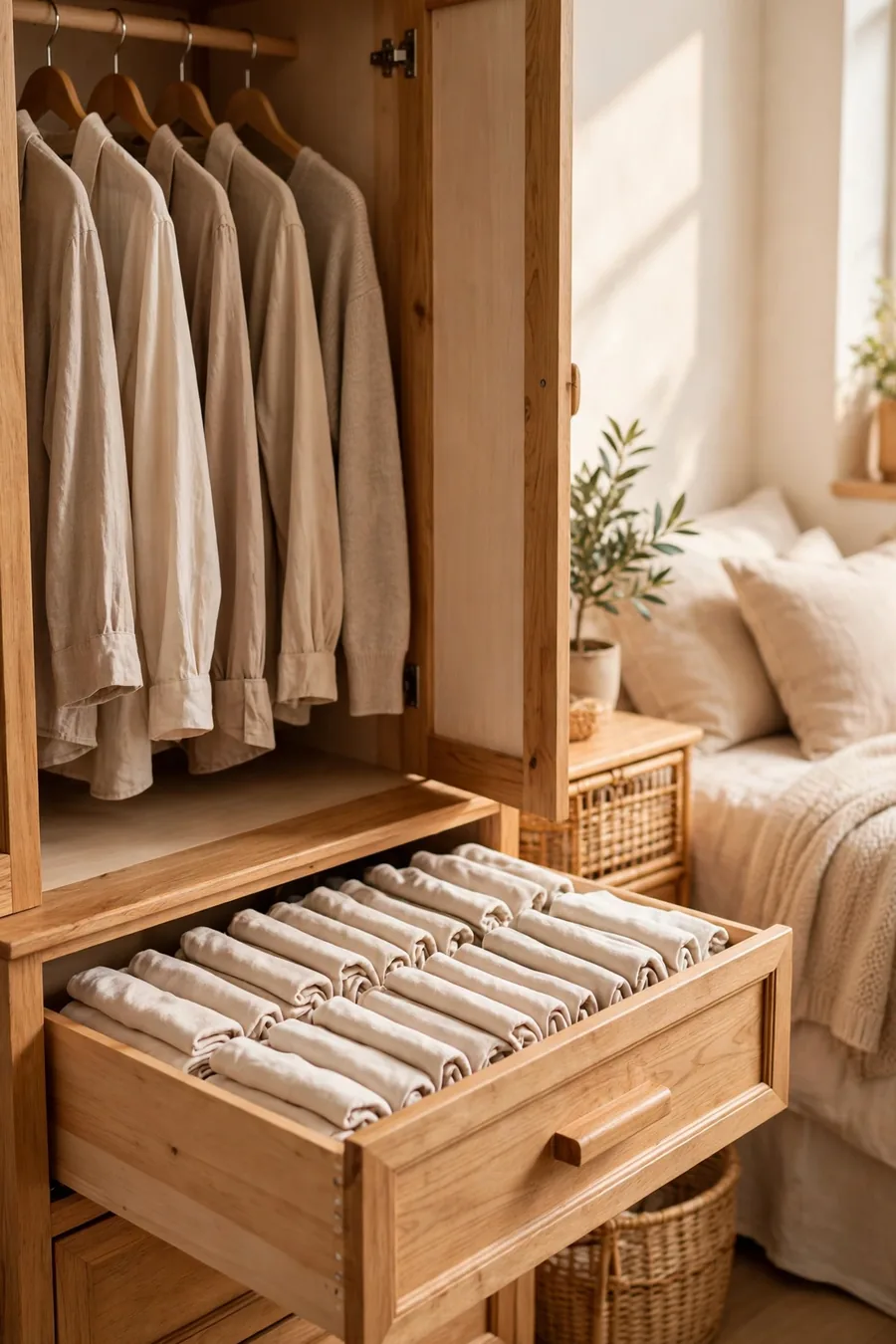
Step 4: Zone 3, the drawers. One drawer at a time, emptied onto the bed.
- Toss single socks, worn out underwear, and anything with holes or stretched elastic. Move out what is not clothing: batteries, receipts, cables.
- Fold keepers in rows so you see each item. One job per drawer: tops, bottoms, socks and underwear, sleepwear. Done: it closes without a push.
Step 5: Zone 4, under the bed. Pull everything out, even the boxes at the back.
- If you forgot it was there, that is your answer: donate or toss it.
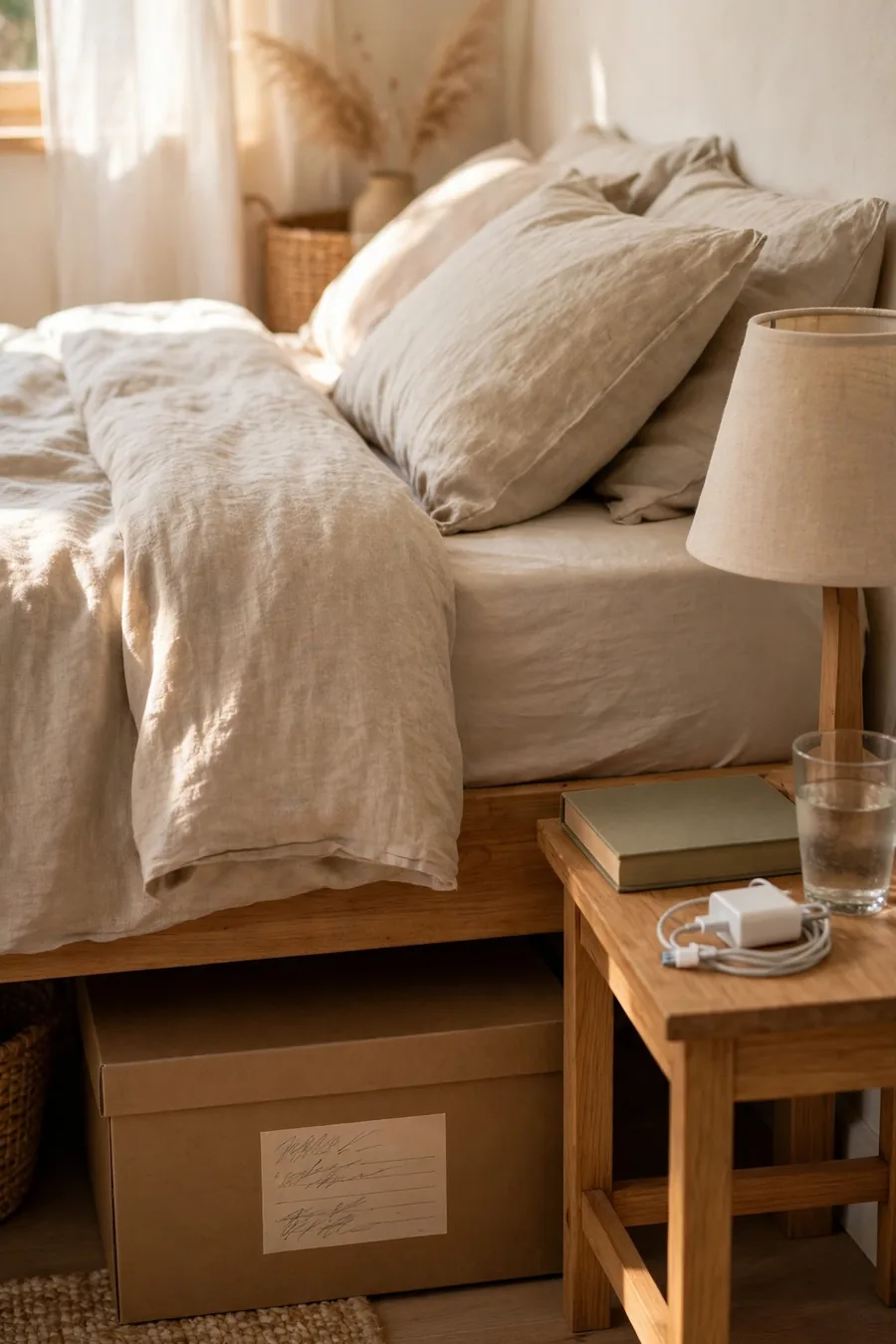
- Keep back only flat, occasional things: the spare sheet set, off season clothes, a suitcase you use. Sweep the empty space first.
Step 6: Zone 5, the nightstand. Top and drawer, both emptied.
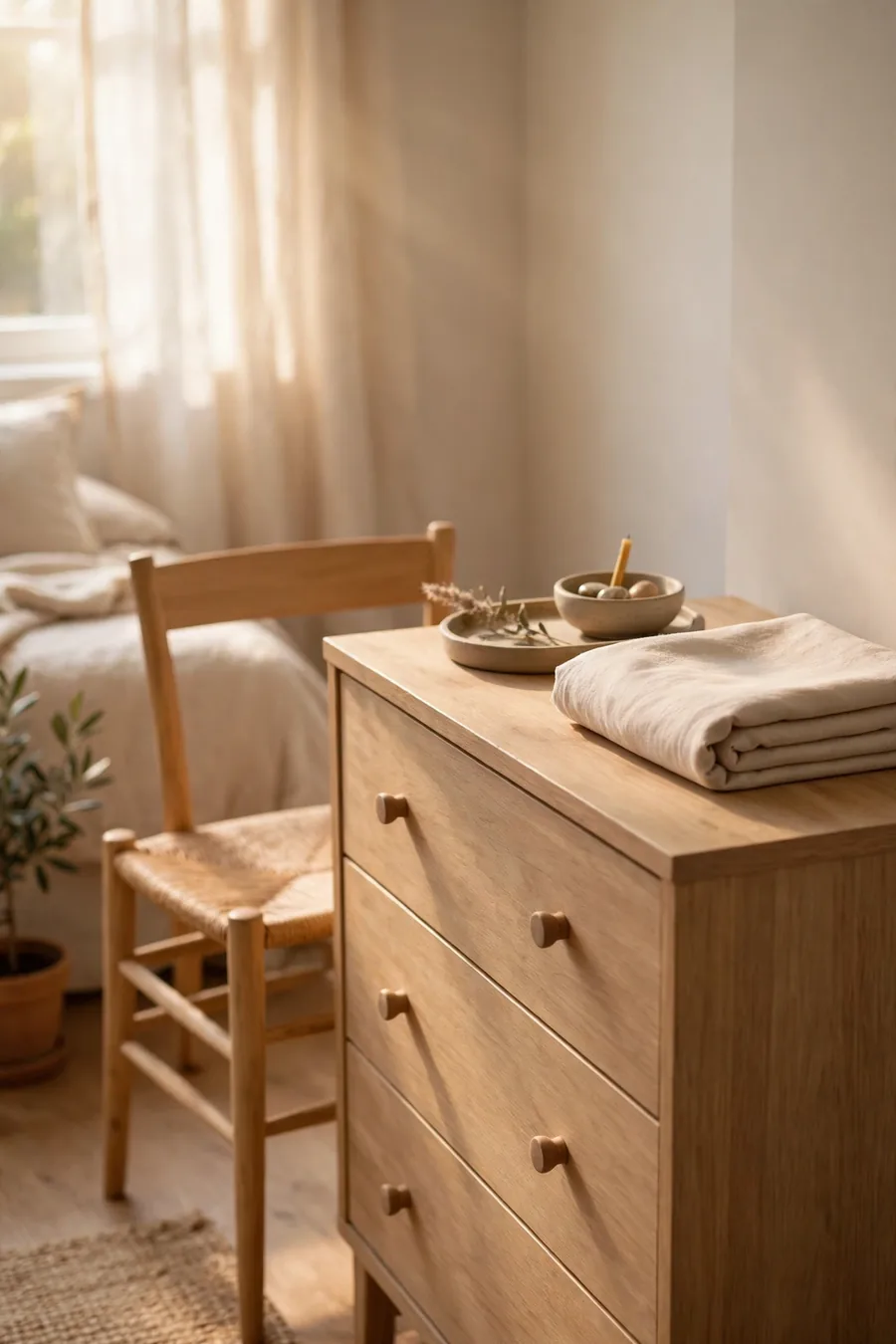
- Keep on top only what you use at night: a lamp, one book, a glass, a charger.
- Toss dried out lotions, dead batteries, receipts, and wrappers. Finished books go in donate. Set out of date medicines aside for a pharmacy take back point, not the trash.
Step 7: Take the bags out today. Donate and toss bags leave before you stop. Empty the move bag into the right rooms once, at the end. Bags left in the corner are clutter with labels.
Level 2: Dollar-Store and Thrift, Only the Gaps Get Bought
[Cost: Dollar-store level | Time: 20 minutes for one short trip, 15 minutes to set up]
Level 2 comes after the sort. Never before it. Only now can you see the real gaps clearly: the things that earned their place, but still have no container and no label.
Step 1: List the gaps before you shop. Write down only what is missing: one small bin for the wardrobe floor, one tray for the nightstand or dresser top, a few labels for under bed boxes. If it is not on the list, it does not go in the basket.
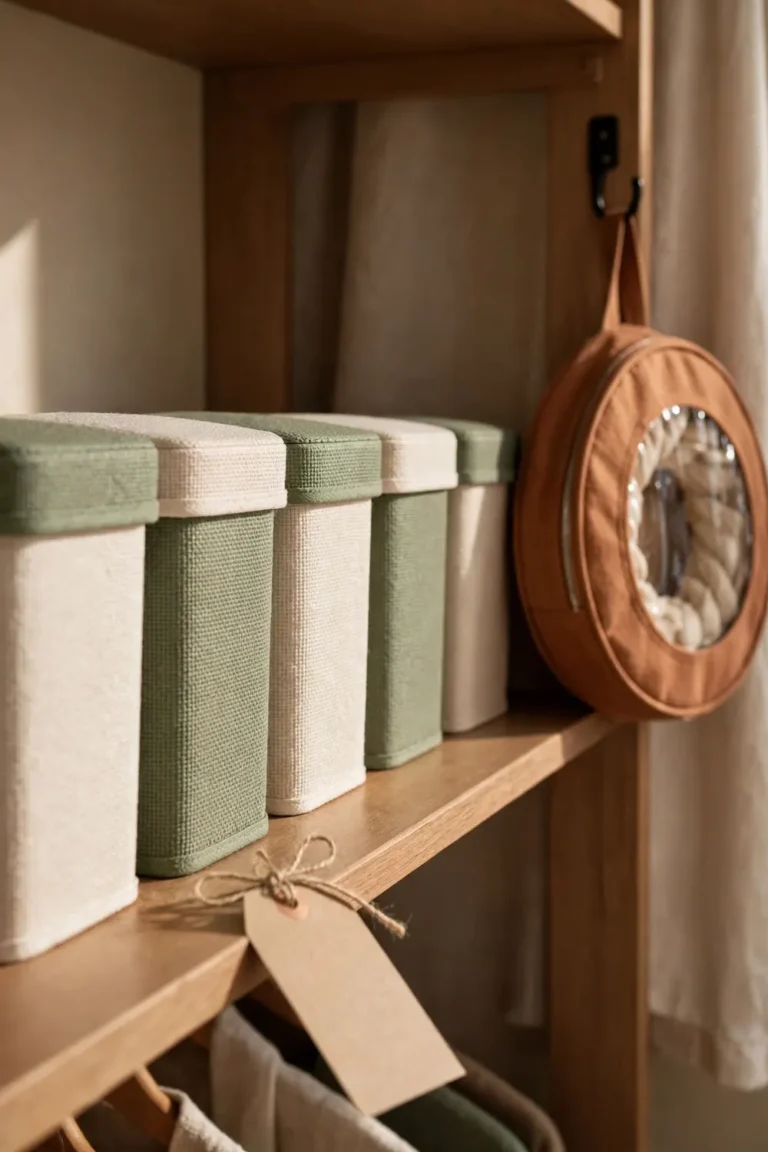
Step 2: Buy bins to fit the space. Measure the under bed height and the wardrobe shelf before you go. A bin that does not fit is a new problem with a lid.
Step 3: Label what you cannot see. Under bed and top shelf boxes get a plain label with what is inside. That label stops next season turning into another full empty out.
Step 4: Give the chair clothes a real home. Worn once clothes need one spot: a hook, the hamper top, or one drawer section. Without a home, the chair pile is back within a week.
Level 3: One Small Buy, the One Gap That Still Bugs You
[Cost: One small buy | Time: 15 minutes to choose, 20 minutes to set up]
Level 3 is one small buy, chosen from what the finished room still lacks. Not a set. Not a system. One thing.
Step 1: Pick the one gap that still annoys you daily. Usually one of these: bags and hats with nowhere to go, drawers with no dividers, or under bed things in bags that tear.
Step 2: Check it passes the small room test.
- Does it fit the exact spot, measured, not guessed?
- Does it hold things you kept in the sort, not things you might buy later?
- Can it leave with you if you move, with no fixing to the wall? Renters, this one matters most.
Step 3: Set it up the same day and stop there. Put the kept items in, label it if you cannot see inside, and call the room done. One buy stays one.
The Swap Table: Sort First, Buy Later
| The expensive way | The thrifty swap, same result |
|---|---|
| Buying organizers before sorting | Sort with bags and boxes at home first, buy only for the gaps left |
| A storage unit for overflow | Four bags: move, donate and toss leave the room today |
| Matching storage sets for every zone | One tray, one bin and labelled boxes you already own |
| Extra sheet sets just in case | Two sets per bed: one on the bed, one spare |
Bedroom Sorting Questions, Answered
Where do I start decluttering my bedroom?
Start with the surfaces you see from the door: the dresser top, the chair, and the floor around the bed. Visible zones first makes the room feel calmer tonight, and clears the flat space you need for sorting after.
How long does it take to declutter a bedroom?
Plan on short sessions, not one long block. One zone takes about 30 to 45 minutes, and a crowded wardrobe can take a session of its own. Most small bedrooms get sorted across a few sittings in one week.
What should I throw away when decluttering my bedroom?
Toss what is broken, worn out, or out of date: single socks, clothes with holes or stretched elastic, broken hangers, flat pillows, dried out lotions, dead batteries and chargers for devices you no longer own, and old receipts. Out of date medicines go aside for a pharmacy take back point.
How do I declutter a small bedroom with no extra storage?
Sort before you store. Use the four bag rule so things leave the room instead of moving to a new container, keep under the bed for flat occasional items only, and give each drawer one job. Buy storage last, and measure first.
What do I do with clothes I am not sure about?
Put them in one bag, write today’s date on it, and set a date about a month ahead. If you have not opened it by then, donate it unopened. If you reach for something, it has earned its place back.
Tick Them Off Zone by Zone: The Bedroom Zone Checklist
This article comes with a free one-page printable, “The Bedroom Zone Checklist,” in the same order as this guide, with a tick box on every line:
- Zone 1, surfaces: dresser top, chair, and floor around the bed clear.
- Zone 2, wardrobe: rails and shelves sorted, clothes that do not fit out, keepers grouped, space between hangers.
- Zone 3, drawers: each drawer sorted, worn out items out, one job per drawer, closes without a push.
- Zone 4, under the bed: everything out, forgotten items out, only flat occasional storage back in.
- Zone 5, nightstand: top down to lamp, book, glass and charger, drawer sorted.
- The decision rule at the top, and a bag count at the bottom: donate, move, and toss bags that left the room.
For the same checklist style in the other rooms, the decluttering checklist printable on this site covers the whole home in the same format.
Today’s One Small Job: Just the Nightstand, Fifteen Minutes
Today, do only one zone, the smallest win: the nightstand. Empty it onto the bed, keep back only a lamp, one book, a glass, and a charger, and bag the rest as move, donate, or toss. Fifteen minutes, one clear surface tonight. When the bedroom is done, the January declutter challenge carries the same habit across the rest of the home.