A Weekly Cleaning Schedule That Fits Real Life (Room by Room)
You know the one. The beautiful colour coded schedule, printed on a hopeful Sunday and stuck to the fridge with the good magnets. Monday went fine. Tuesday mostly happened. By Wednesday it was already fibbing to you, and by Sunday night you were scrubbing a bathroom at nine o’clock out of pure guilt, which somehow felt worse than the mess ever did. The schedule was not really the problem. It was written for a person with no job, no tired days, and no life wandering in and knocking the plan sideways. This weekly cleaning schedule is written for the rest of us. It assumes you will miss days, and it builds the missing in from the start.
Key Takeaways
- Ten to fifteen minutes of daily basics stop every room from sliding backwards between its turns.
- One focus room a day, at roughly 20 to 30 minutes, is the whole system. There are no marathon days.
- Missed a day? Never double up. Roll anything urgent to the Friday catch up, or let the rotation come back around.
- Sunday is a rest day on purpose. A schedule with no rest day built in is a schedule you quit by week three.
- Print this page and pin it where you will actually see it. A schedule living in a drawer cleans nothing.
How Do I Make a Weekly Cleaning Schedule I Will Actually Follow?
You make a weekly cleaning schedule you will actually follow by keeping it small enough to survive a bad week: ten to fifteen minutes of daily basics like dishes, counters, and a quick tidy, plus one focus room a day for about twenty to thirty minutes, on days you are free to swap around. Build in a catch up slot for anything urgent that got skipped and one full rest day, and never punish a missed day by doubling the next one. The rotation always comes back around within the week, so a room you miss still gets its turn soon enough. A realistic cleaning routine is not the one that looks best on paper. It is the one still quietly running in month three.
How the System Works
There are three moving parts, and none of them is willpower.
The daily basics. These happen every day and take about 10 to 15 minutes total: dishes washed or the dishwasher loaded and run, kitchen counters and stovetop wiped after cooking, spills wiped as they happen, beds made, trash out as needed, and a quick tidy that returns everything to where it lives. That last one, the ten minute reset, does more than it gets credit for. A room that gets reset daily never quite reaches the state that makes you want to close the door on it.
The focus room. Each weekday belongs to one zone. You clean that room properly, top to bottom, and then you stop. The power of this is mostly psychological: you never face the whole house at once, and every room knows its turn is coming.
The anchors. The schedule sticks better when each day hangs on something you already do. Bathroom day while the kettle boils and the kids are in the tub. Bedroom day on the morning the bedding wash goes on anyway. Pick an anchor that exists, and the habit stacks onto a routine that was never going to be skipped.
Days can move freely, by the way. Swap Tuesday and Thursday because life said so. The structure is the system, not the labels on the days.
What You Need, and Three Safety Rules
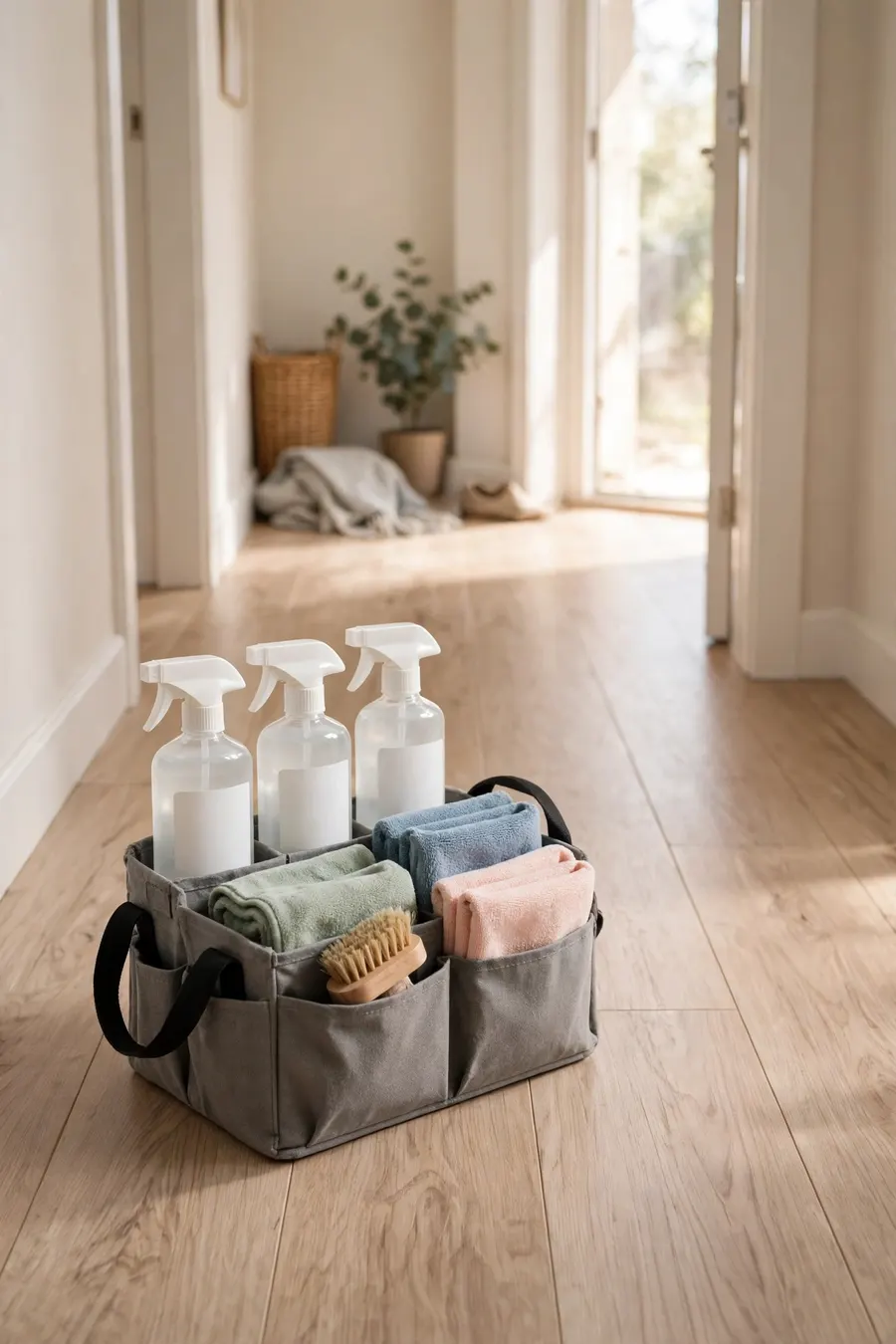
Keep one small caddy stocked and carry it room to room: an all purpose spray, a glass cleaner, a soft scrub, microfiber cloths, a scrub brush, gloves, and a trash bag, with the vacuum and mop travelling with you. One box or bottle of each staple covers the whole house, so there is no need for a cupboard of special products.
Three safety rules ride along with every day on this schedule. Never mix vinegar, or any acid cleaner, with bleach, and never mix hydrogen peroxide with bleach. If you switch products on the same surface, rinse with plain water in between. Never store baking soda and vinegar mixed in a sealed bottle, because the pressure can burst it, and keep vinegar off marble, granite, and other natural stone, and off hardwood floors, where the acid does lasting damage. Label every bottle with what is in it, and test any new mix on a hidden spot first. Homemade mixes clean and deodorise well, but they do not disinfect the way a registered disinfectant does. When someone in the house has been ill, use a proper disinfectant and follow its label.
The Week, Day by Day
Here is the whole grid. The times are typical ranges for an average home, not promises, and the jobs inside each day run in the order listed, top to bottom.
| Day | Focus | Jobs, in order | Typical time |
|---|---|---|---|
| Monday | Bathrooms | Toilet (bowl, seat, base), sink and faucet, mirror, shower or tub quick scrub, swap the towels, empty the trash, mop the floor | 25 to 30 min |
| Tuesday | Bedrooms and laundry | Change all bedding, dust surfaces, clear nightstands and dressers, vacuum including the edges, run the bedding wash | 25 to 30 min |
| Wednesday | Living areas | Dust shelves, electronics, and decor, wipe remotes and light switches, vacuum the sofa including under the cushions, vacuum or mop the floors, wash throws as needed | 20 to 30 min |
| Thursday | Kitchen | Counters and backsplash, stovetop, sink scrub and shine, appliance fronts, inside of the microwave, fridge check (toss expired food, wipe spills), mop the floor | 25 to 30 min |
| Friday | Floors and catch up | Vacuum and mop every remaining floor, entryway reset (mats, shoes, door), and redo anything skipped earlier in the week | 20 to 30 min |
| Saturday | Laundry and one rotating job | Finish the laundry, fold it, and put it away, plus one rotating deep task from the list below | 30 to 45 min |
| Sunday | Rest | Nothing scheduled. Optional 10 minute tidy to set up Monday | 0 to 10 min |

Saturday’s rotating job cycles through four, one per week:
- Week 1: Inside the oven, or the fridge interior.
- Week 2: Inside windows and mirrors throughout the house.
- Week 3: Baseboards, doors, and light fixtures in two rooms.
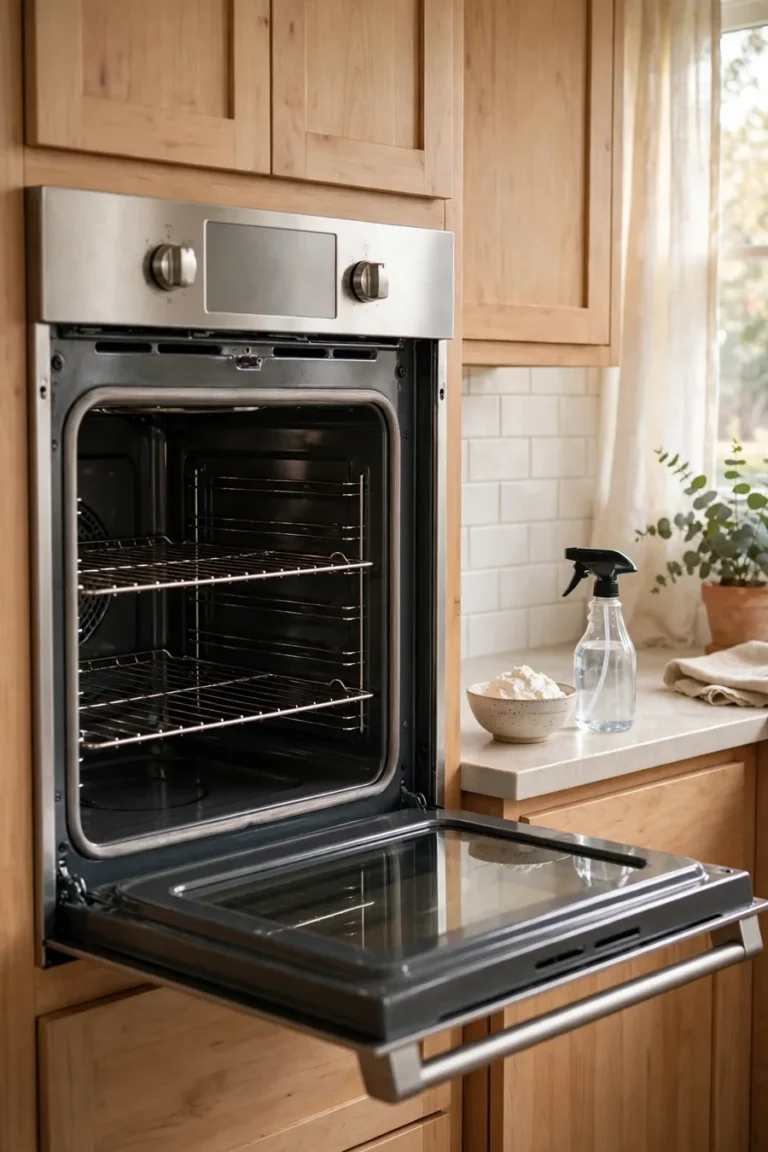
- Week 4: A grout scrub in one bathroom, or descaling the showerhead and faucets.
A few honest adjustments, because homes differ. In a small apartment, merge Wednesday and Friday and the whole plan compresses to about 15 minutes a day. With kids or pets, add a midweek 10 minute spot vacuum, and give bathroom day a second quick pass when it needs one. With two adults, alternate the focus days, or split by territory: one person takes kitchen and bathrooms, the other takes bedrooms, living areas, and floors.
When Life Happens

It will. Somebody gets sick, work runs late, the car does something expensive. Here is the rule that keeps this cleaning checklist weekly instead of becoming another source of dread: never double up two missed days into one marathon. Just resume at today’s room. The rotation comes back around within the week, so Monday’s bathroom gets cleaned next Monday, and honestly, it can wait until then.
Anything genuinely urgent rolls to Friday’s catch up slot. Anything else can be dropped entirely if the room still looks fine, and dropped without ceremony. A skipped day is not a debt and it does not collect interest. The Sunday night guilt scrub is exactly what this system exists to delete, because guilt is a terrible housekeeper. It works one frantic evening, then takes the rest of the month off.
Frequently Asked Questions
What if I miss a day?
Resume with the current day’s room. The rotation comes back around in a week, and the Friday catch up slot absorbs anything urgent in the meantime.
How long should daily cleaning actually take?
The daily basics run about 10 to 15 minutes, and the focus room about 20 to 30 minutes. Treat those as typical ranges for an average home, not a guarantee for every house and every week.
What doesn’t belong on a weekly schedule?
Inside appliance cleaning, behind furniture work, vents, filters, and mattress care. Those jobs live on the monthly and seasonal deep clean list, where they get proper time instead of being squeezed into a weekday.
Print this weekly cleaning schedule and pin it somewhere you will see it on the tired days, not just the motivated ones. Then let it be ordinary. Ordinary is the whole point: small basics every day, one room at a time, a day off that is actually off. A few weeks in, something quiet happens. The house stops having good days and bad days, and just stays… fine. Consistently, boringly fine. And fine, it turns out, feels wonderful to come home to.