How to Clean a Smelly Dishwasher: Vinegar and Baking Soda, the Right Order
You open the dishwasher after the cycle ends, expecting clean plates and that warm, soapy smell. Instead the steam hits you with something sour. Ugh. Most of us have stood right there, door half open, wondering if the plates are actually clean.
Here is the part nobody tells you. The smell is almost never the tub. It lives in three places the wash water barely touches: the filter, the spray arms, and the rubber gasket around the door. Clean those by hand first, and the vinegar and baking soda cycles finally get a chance to work.
This article walks the whole clean in order, from the filter to the last rinse. Three levels. Stop at the one that fits your afternoon.
Why the Smell Keeps Coming Back
- How to clean a smelly dishwasher starts with your hands, not a cycle: filter, spray arms, and gasket first.
- Vinegar and baking soda run in separate cycles, vinegar first, baking soda second. Mixed together they mostly cancel each other out.
- Vinegar cycle: 1 to 2 cups of white vinegar in a bowl on the top rack, empty machine, full hot cycle, no detergent.
- Baking soda cycle: 1 cup sprinkled on the tub floor, short hot cycle, only after the vinegar cycle ends.
- Smell gone after the clean means a cleaning problem. Smell back in a few cycles, or water standing in the tub, means a drain problem.
The Short Answer: Filter First, Then Vinegar, Then Baking Soda
To clean a smelly dishwasher, empty it, pull out the bottom rack, and clean the filter, spray arms and door gasket by hand first. Then place 1 to 2 cups of distilled white vinegar in a dishwasher-safe bowl on the top rack and run a full hot cycle with the machine empty and no detergent. When that cycle ends, sprinkle 1 cup of baking soda across the bottom of the tub and run a short hot cycle. Leave the door open for about an hour to air dry, and repeat monthly or whenever the smell returns.
The 10-Second Check: When Did the Filter Last Get Cleaned?
Three quick questions, answered honestly, and you will know exactly what kind of smell you are dealing with.
Check 1: What does it actually smell like? Rotten food or fish means trapped food somewhere. Musty means the gasket. Sewage or rotten eggs means the drain. The smell is a clue, not just a complaint.
Check 2: Is there water standing in the bottom after a cycle? Open the door and look at the tub floor. Standing water means the machine is not draining properly. That is a drain problem, and no amount of vinegar will fix it.
Check 3: When did you last clean the filter? Be honest. If you cannot remember, the filter is the problem. It usually is.
Level 1: Free, Hands, Hot Water, the Filter
[Cost: Free | Time: 20 minutes]
Level 1 costs nothing. Just your hands, hot water, and the stuff already under the sink. This is the part most people skip. Then they wonder why the vinegar cycle did nothing.
Step 1: Empty the machine and pull out the bottom rack. Take out every dish, then slide the bottom rack right out. Pick out any visible food and debris from the tub floor by hand. Vinegar does not dissolve trapped food, so this has to happen first.
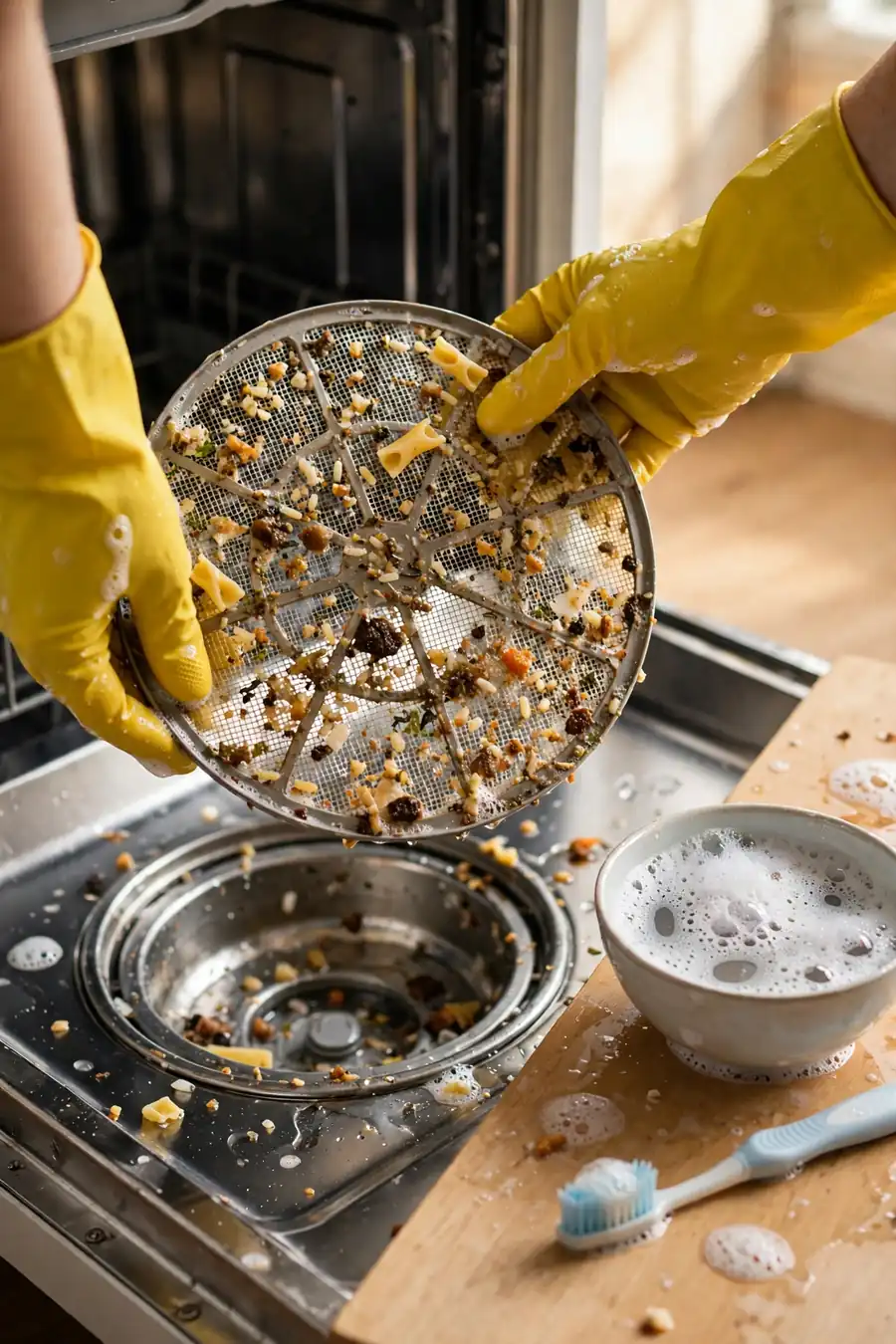
Step 2: Twist out the filter and scrub it clean. The filter sits at the bottom of the tub, near the drain. Twist or lift it free, following your manual for the direction. Rinse it under warm running water, then scrub the mesh gently with an old toothbrush and a drop of dish soap. Rinse it again and put it back. A dirty filter is the number one cause of dishwasher smell, because it turns into a small pile of old food that the wash water keeps recirculating.
Step 3: Check the spray arms. Lift the spray arms out if your manual allows it, and rinse them under the tap. Look at the little holes along each arm. If any are blocked, poke them clear with a toothpick. Food lodged in a spray arm hole is a hidden smell source, and it also stops the water reaching your dishes properly.
Step 4: Wipe the gasket and the door lip. Pull the rubber gasket open gently and wipe inside the folds with a damp cloth. Wipe the bottom edge of the door and the lip of the tub too, where grease and soap film collect. These folds stay wet whenever the door is shut, and that damp film smells musty all on its own. Wipe everything dry when you finish.
Step 5: Look at the drain, and run the disposal. Look at the tub floor. No standing water, no food sitting in the drain opening, and you are good to move on. If your dishwasher drains through the garbage disposal, run the disposal with cold water running for a few seconds before the clean, because a dirty disposal sends its smell straight back into the dishwasher. Do not open any plumbing. This step is look and sniff only.
Read this before any vinegar goes in. Never mix vinegar with bleach. The mix makes chlorine gas, which can seriously damage lungs. If bleach was used in the machine recently, run a plain hot rinse first and let it finish completely before any vinegar goes in. Check your manual too. Some makers caution that frequent vinegar use can age rubber seals and hoses, and a few advise their own cleaning products only. If your manual says no vinegar, the manual wins, especially while the machine is under warranty. One honest limit: vinegar cleans, deodorises and dissolves mineral and detergent residue. It is not a registered disinfectant, and nobody should promise you otherwise.
Level 2: Dollar-Store and Thrift, Two Cycles, Right Order
[Cost: Dollar-store level | Time: 10 minutes of your hands, then two cycles]
Level 2 is the part everyone has heard of. The vinegar cycle and the baking soda cycle. Two cycles, two jobs, never in the same water. This is where the order finally pays off, because the filter is already clean and the vinegar can reach the film instead of fighting old food.
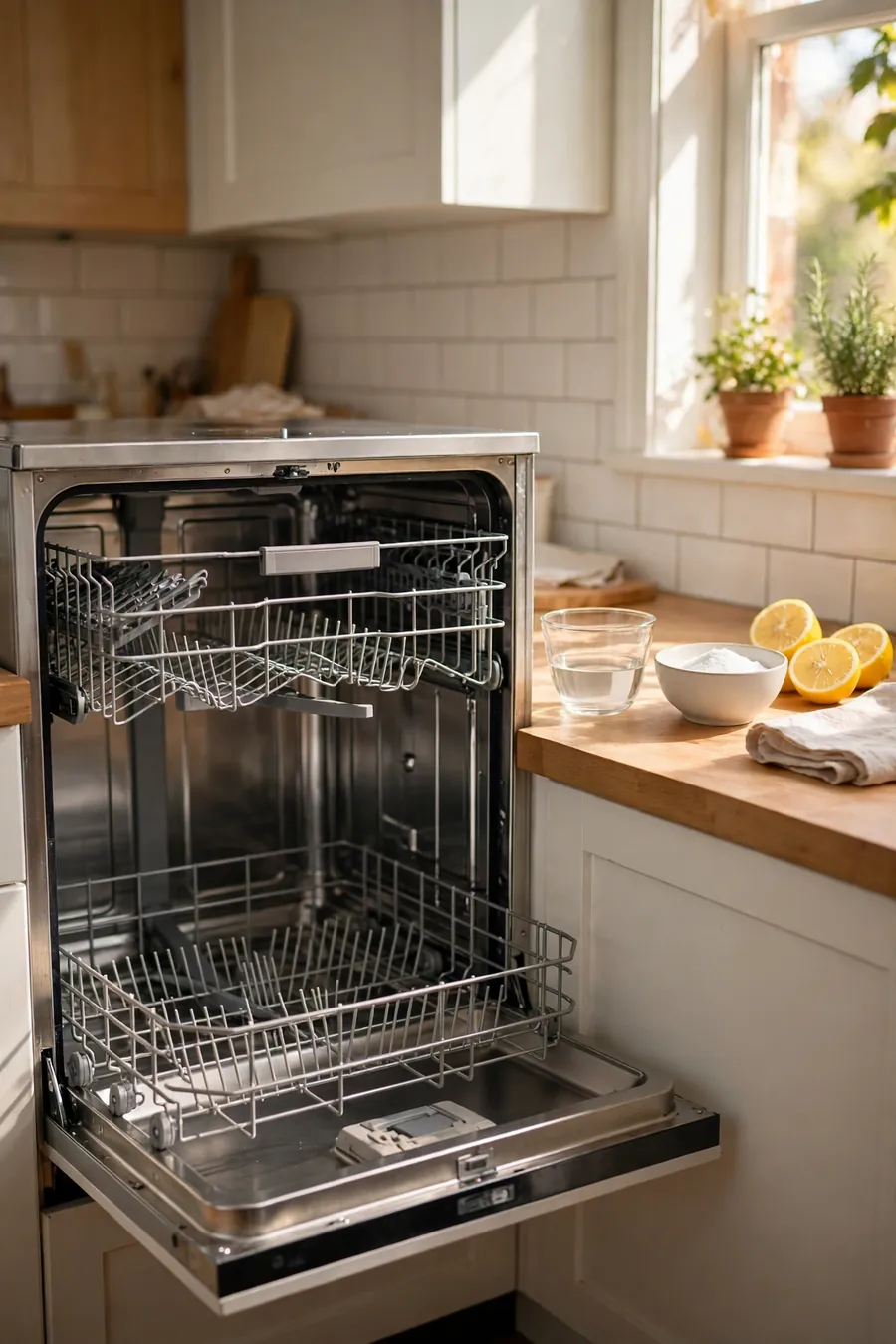
You need:
- Distilled white vinegar, the standard 5 percent kind
- Baking soda
- A dishwasher-safe bowl or cup
- A soft cloth and an old toothbrush
- A dry towel for the final wipe
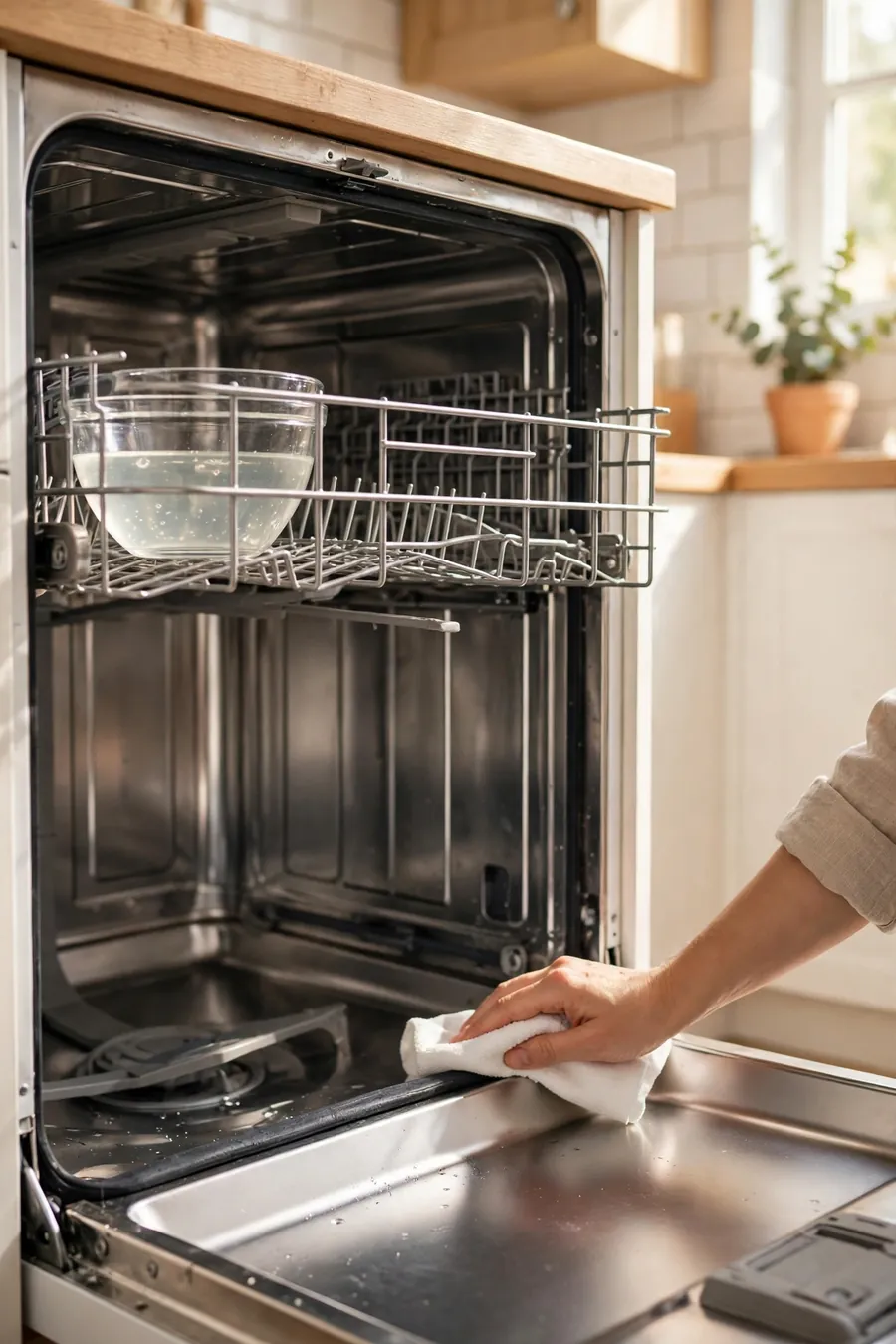
Step 1: Run the vinegar cycle. Pour 1 to 2 cups of white vinegar into the dishwasher-safe bowl and set it on the top rack of the empty machine. No detergent. Close the door and run a full hot water cycle. The vinegar circulates through the machine, dissolving mineral deposits, soap film and grease. Never pour vinegar into the detergent cup. A bowl on the top rack is the safe way to spread it through the machine.
Step 2: Run the baking soda cycle, separately. When the vinegar cycle has fully finished, sprinkle 1 cup of baking soda across the bottom of the tub. Run a short hot water cycle. Baking soda is a mild abrasive and a deodoriser, and it picks up whatever food smells the vinegar left behind. Do not pour the soda in with the vinegar to save time. The acid and the base mostly neutralise each other, and both underperform.
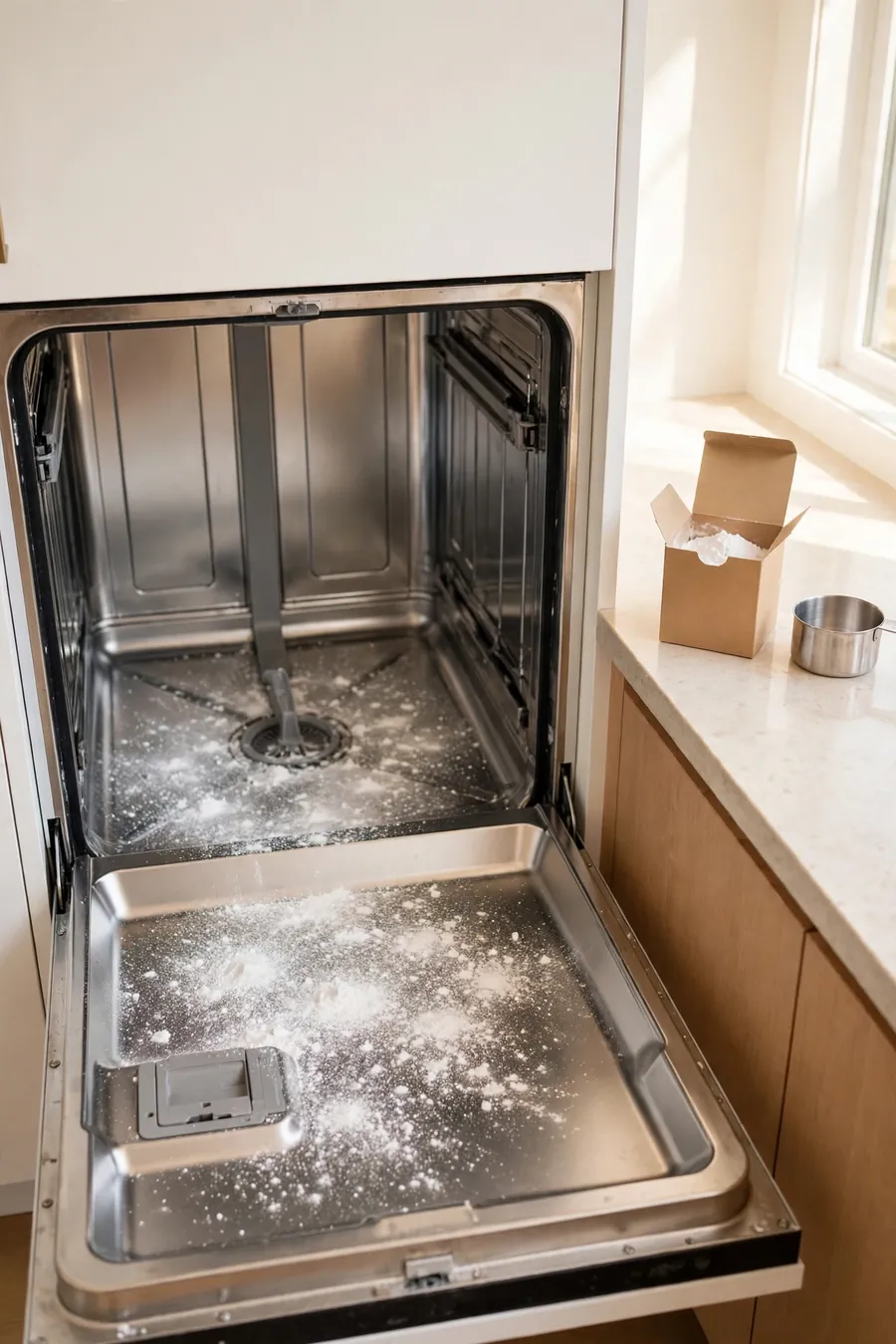
Step 3: Leave the door open to air dry. When the second cycle ends, wipe the inside dry with the towel, then leave the door open for about an hour. A dishwasher that stays shut and damp grows the same smell again. Air is part of the clean.
Run this full clean at least once a month, and sooner whenever the smell shows up again. The same vinegar-first, soda-second order works on a smelly washing machine too, with the gasket and the drawer cleaned by hand before any cycle runs.
Level 3: One Small Buy, One Box of Cleaner Tablets
[Cost: One small buy | Time: 5 minutes to buy, one cycle to run]
Level 3 is one small buy, for the machine that still smells faintly after the full clean, or the one that needs a deeper reset once or twice a year. No new appliance. Just a small box from the cleaning aisle.
Step 1: Buy one box of dishwasher cleaner tablets. Pick a citric acid based cleaner tablet, and use it exactly as its label says: one tablet, empty machine, hot cycle. This is the deep clean for mineral scale and stubborn film that vinegar only softens. Once or twice a year is enough. It is not a monthly habit.
Step 2: Check the filter for tears while you are in there. Hold the clean filter up to the light. If the mesh is torn or the frame is cracked, food passes straight through it and the smell keeps coming back no matter how many cycles you run. A replacement filter is the honest fix here. Check your manual for the right part.
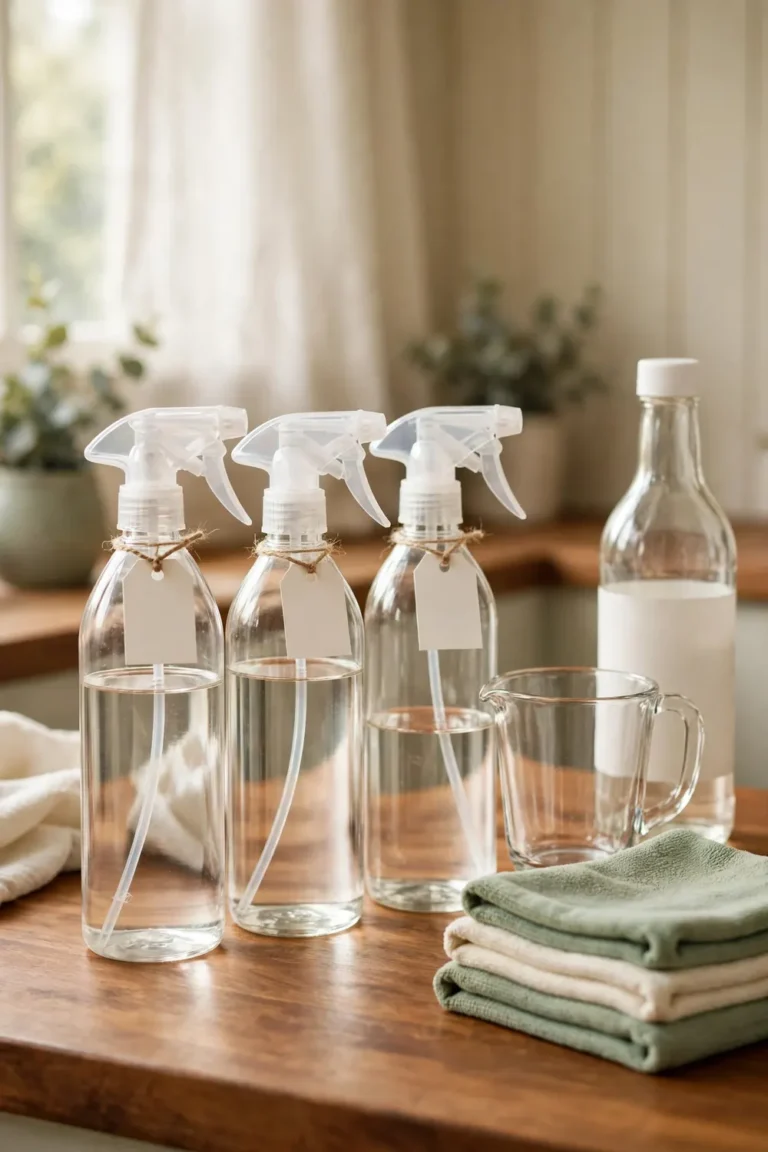
Step 3: Keep a spray bottle by the sink for between cleans. Mix white vinegar and water in equal parts in a spray bottle. Between monthly cleans, spray the door lip and the tub edges, wipe, and dry. Quick, thirty seconds, and the gasket never gets the chance to build up that musty film again. Keep the spray off the rubber folds themselves, and use it on the hard surfaces only.
Is It a Drain Problem or a Cleaning Problem?
This is the question that saves you from running vinegar cycles forever. A cleaning problem gets better after the full clean and stays better. A drain problem comes back. Here is how to tell them apart.
- Smell gone after the clean, and it stays gone: cleaning problem. The filter, spray arms or gasket were the cause. Keep the monthly routine.
- Smell back within a few cycles of a full clean: drain problem. A kinked drain hose, a blocked connection to the garbage disposal, or a weak drain pump leaves water behind, and that water turns sour.
- Water standing in the bottom of the tub after a cycle: drain problem. Clean the filter again, check the disposal, and if the water is still there, call a technician.
- The same sewage smell at the sink as well as the dishwasher: household plumbing, not the machine. That one is a plumber’s job.
- Burning or hot plastic smell: not an odour problem at all. Switch the machine off and call a technician. First check for a plastic lid or utensil that fell onto the heating element, which can cause the same smell.
The smell itself is the clue. A rotten food smell points to trapped food, a musty smell points to the gasket, and a sewage or wet dog smell points to the drain. KitchenAid’s guide to dishwasher smells lists the same clues, and the same fix order: filter first, then the drain path.
The Swap Table: Clean in the Right Order
| The expensive way | The thrifty swap, same result |
|---|---|
| A service call for a smell, before anything is checked | Clean the filter, spray arms and gasket by hand first |
| A scented dishwasher freshener every month | A monthly vinegar and baking soda clean, from the cupboard |
| Pouring vinegar and baking soda in together to save a cycle | Two separate cycles, vinegar first, baking soda second |
| A new dishwasher because the old one smells | A clean filter and a dry gasket, checked monthly |
| A strong chemical cleaner scrubbed through the whole tub | Hot water, a cloth, and a bowl of vinegar on the top rack |
| Keeping the door shut tight between loads so the smell stays in | Leaving the door ajar after the last load so the tub dries |
Dishwasher Smell Questions, Answered
Can I clean my dishwasher with vinegar and baking soda together?
No. Run them in separate cycles. Vinegar is an acid and baking soda is a base, so mixed together they mostly neutralise each other into salty water and both underperform. Run the vinegar cycle first, then the baking soda cycle on its own. The fizz looks busy but cleans less than each ingredient used on its own.
Why does my dishwasher still smell after cleaning it?
Usually the filter, spray arms or gasket were skipped, and food trapped in those places does not dissolve in vinegar. Clean all three by hand and run the two cycles again. If the smell returns within a few cycles, or water stands in the bottom of the tub after a cycle, the drain is the more likely cause, and a second vinegar cycle will not fix it.
How often should I clean my dishwasher?
At least once a month, and clean the filter as often as you can. Run the full clean sooner whenever the smell shows up again. A deep clean with a dishwasher cleaner tablet once or twice a year covers the rest.
Is vinegar safe for my dishwasher?
For an occasional clean, yes, in small amounts. Use 1 to 2 cups of white vinegar in a bowl on the top rack, never in the detergent cup or the rinse aid dispenser, and keep it to once a month at most. Frequent vinegar use can wear rubber seals and gaskets over time, so check your manual first. If your manual says no vinegar, the manual wins.
Can I use bleach to clean a smelly dishwasher?
Never mix bleach with vinegar, because the mix makes chlorine gas. Never use bleach on a dishwasher with a stainless steel interior or stainless steel parts. Vinegar handles most smells on its own. Bleach is only for severe mould in a non-stainless machine, used on its own, and only if the manual allows it.
Work Through It in Order: My Smelly Dishwasher Fix Checklist
This article comes with a free one-page printable, “My Smelly Dishwasher Fix Checklist.” It has four parts:
- The 10-second check: what the smell is, whether water stands in the tub, and when the filter was last cleaned.
- The hand clean checklist: filter, spray arms, gasket and door lip, with a box to tick each one.
- The two cycles: 1 to 2 cups of vinegar in a bowl on the top rack, full hot cycle, then 1 cup of baking soda on the tub floor, short hot cycle.
- The drain test: smell gone means a cleaning problem, smell back in a few cycles or standing water means call a technician.
Today’s One Small Job: Pull the Filter and Rinse It
Today, do only one thing. Open the dishwasher, pull out the bottom rack, and twist out the filter. Rinse it under warm water and scrub the mesh with an old toothbrush. That is the whole job. Ten minutes, and the next cycle already smells different. When the filter feels easy, the vinegar cycle is the natural next step, and the same baking soda that deodorised the dishwasher also knows how to clean an oven naturally, if the oven is next on your list.