Grocery Budget for One: A January Reset for a Table of One
January is when the grocery bill gets a hard, honest look. The holidays are over. The fridge is full of odd bits and good intentions, and whatever passed for a plan in December does not fit a quiet month of cooking for one.
Shopping for one has its own quiet trap. The packs are sized for families. The recipes serve four. And fresh food goes soft before one person can possibly finish it. So you pay for food, throw half of it away, and then, on the tired nights, pay again for takeout. It stings, because none of it is carelessness. The system was just built for a bigger table.
This article resets the system, not your appetite. A grocery budget for one works when the basket stays small, the trips match how fast fresh food actually moves, and every opened pack already has a second job before it goes in the basket. Three levels. Stop at the one that fits your January.
What Changes This Month
- Shop from your kitchen first: check the fridge, freezer and cupboard, then list only the gaps.
- A small basket, bought more often, beats one big haul of fresh food for one person.
- The half-can habit and freezer portions are what stop one-person waste.
- Bulk only helps where food freezes well or keeps a long time.
- Build the week on a short core list where each item shows up in more than one dinner.
Grocery Budget for One, in Short: Small Basket, Less Waste
A grocery budget for one works when you plan for your real week, shop a small basket more often, and give every opened pack a planned second use. Check what you have, buy fresh food in amounts you will finish in a few days, freeze single portions while food is still fresh, and keep bulk buying for dry goods and freezer food only.
The 10-Second Check: What Did You Throw Away?
Three quick questions. Answer them honestly, and you will see exactly where the money is leaking.
Check 1: What did you throw away last week? Wilted greens, half an onion, leftovers nobody claimed. That pile points at pack size, not willpower.
Check 2: How many nights do you actually cook? Count the week as it really is. If the honest count is four dinners, shop for four, not seven.
Check 3: Is your freezer a tool or a storage unit? If you can name what is in there and when it went in, it is a tool. Mystery bags mean Level 1 starts there.
Level 1: Free, Shop Your Own Kitchen First
[Cost: Free | Time: 15 minutes]
Level 1 costs nothing at all. It simply turns the food already sitting in your kitchen into week one of the reset.
Step 1: Do a full kitchen check before any list. Open the fridge, freezer and cupboards. Write down what you find and star anything that needs eating soon. Check first, so you never buy a second of anything.
Step 2: Build three dinners from what is already there. Match the starred items up: rice plus frozen vegetables plus an egg, pasta plus sauce plus canned beans, soup from odd vegetables and stock.
Step 3: Set up an eat first spot in the fridge. Clear one small shelf for everything opened or ripe: the half onion, the open yogurt, the leftover rice. Check that spot before any meal or list. Food you can see gets eaten.
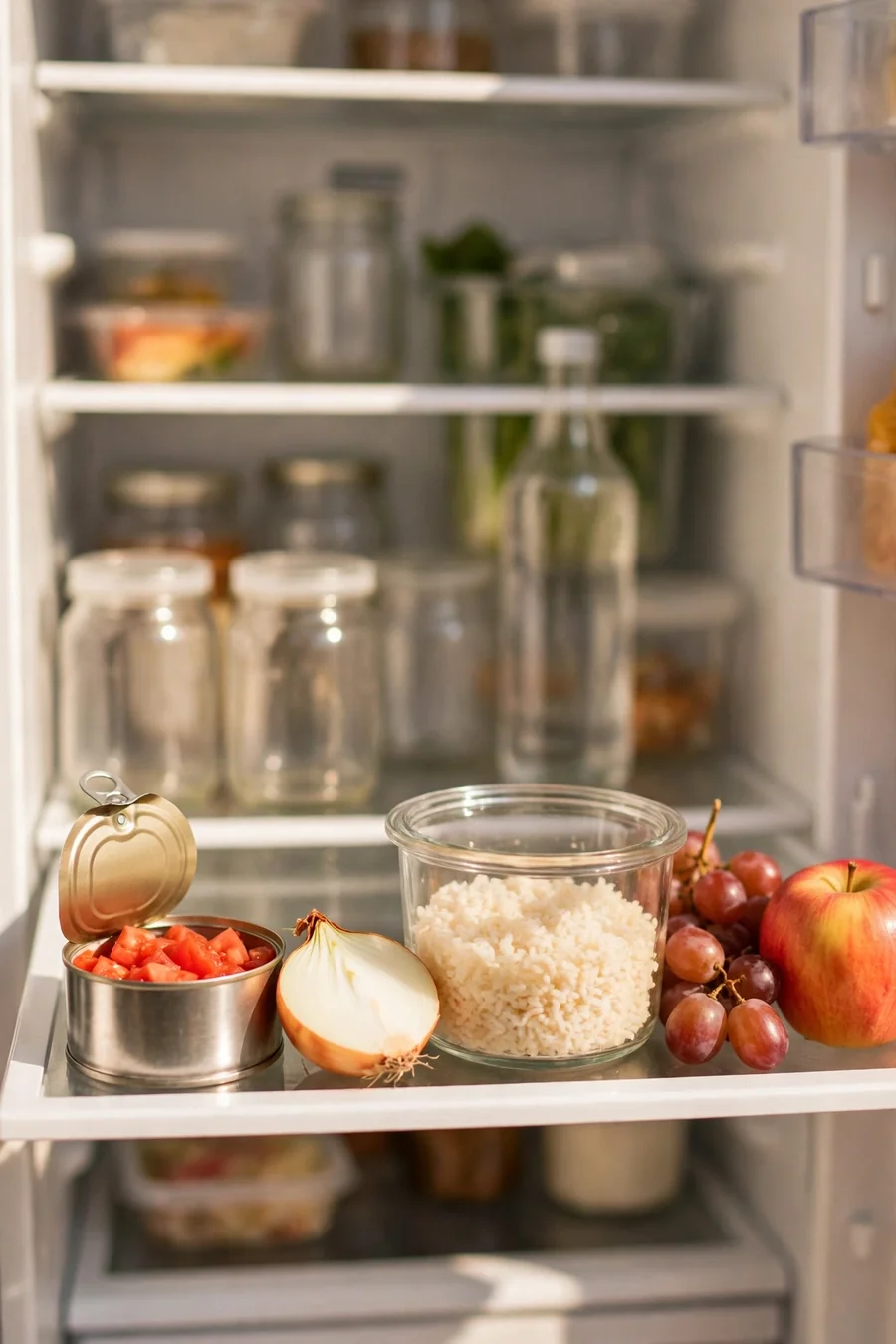
Step 4: Start the half-can habit today. When a recipe needs half a can, spoon the rest into a small labeled container and plan its second job: tomatoes into eggs or soup, beans onto rice or into a wrap. Or freeze it flat.
Step 5: Shrink the family plan, keep the discipline. The grocery budget for a family of four plans around shared packs and shared meals, which one person does not have. Keep the list habit, drop the pack sizes.
Level 2: Dollar-Store and Thrift, the Short Core List
[Cost: Dollar-store level | Time: 20 minutes for one short trip]
Level 2 fills the gaps the kitchen check found. One short trip. A list in hand. Food that keeps.
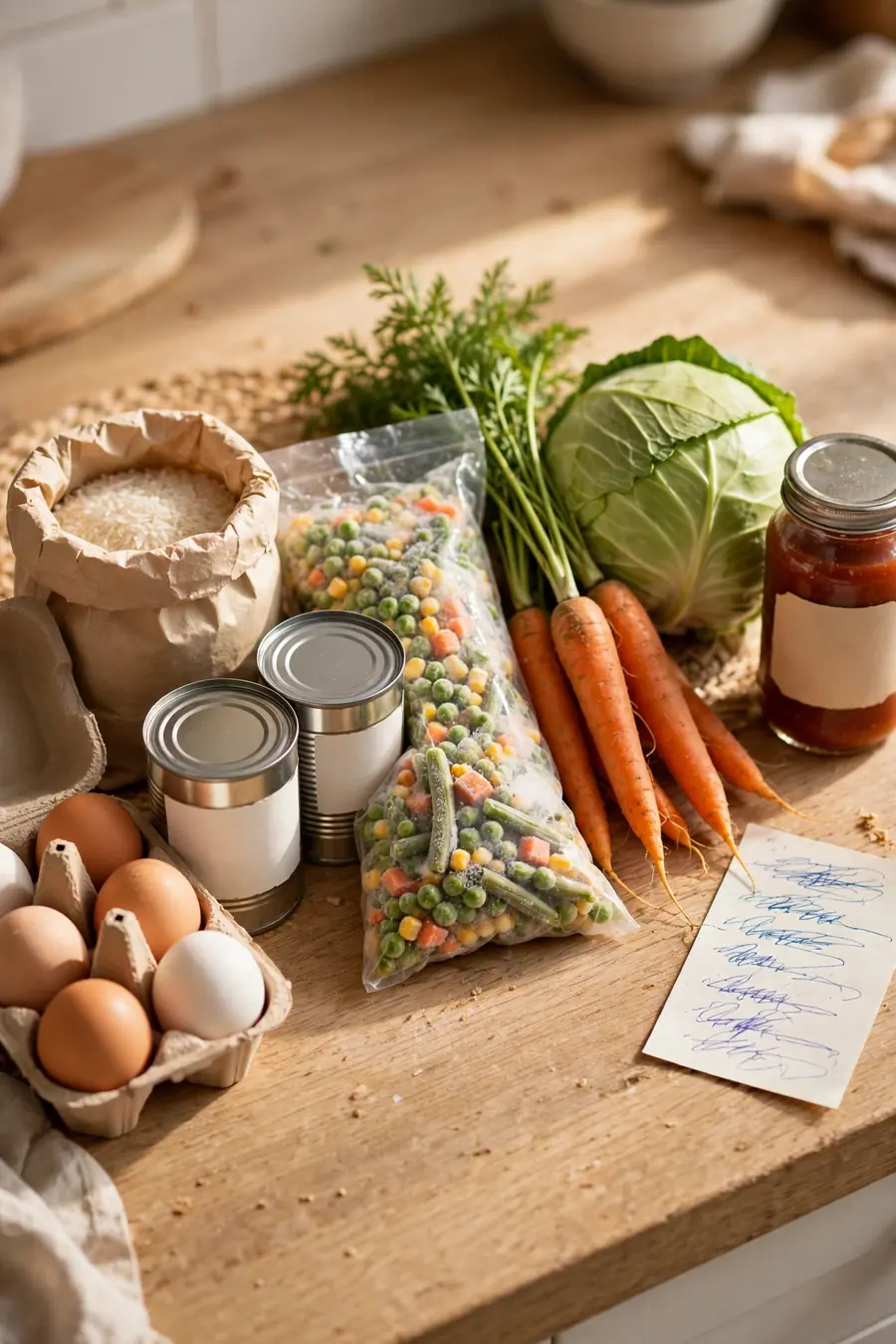
Step 1: Write the core list for one, and keep it short. This list covers a week of simple dinners:
- One protein, smallest pack that suits the week, or a bigger pack portioned and frozen the same day
- Eggs, for breakfast, fast dinners and odd vegetables
- One grain base: rice, pasta or tortillas
- Canned beans and tomatoes, for soups, wraps and skillet dinners
- Frozen mixed vegetables and one frozen green, such as peas or spinach
- Two or three fresh vegetables: one quick one, plus hardier carrots, cabbage or peppers
- One fresh fruit, in a count you will finish
- Bread or wraps you will finish, half frozen on day one if the loaf is big
- One sauce or spread you like, because plain food is where takeout creeps in
Step 2: Fill pantry gaps at the dollar store first. Cans, rice, oats, lentils, broth and spices are the same food in a plainer packet. Walk the shelf with your gap list only. The wider habits in how to save money on groceries sit behind this trip: list first, no extras.
Step 3: Shop the rhythm, not the haul. Split shopping into two trips:
- A small fresh trip, once or twice a week: greens, fruit, bread, milk or yogurt, protein for the next few days
- A keeping trip, only when the core list runs low: cans, grains, frozen vegetables, eggs and spices
That rhythm is the whole grocery budget for one in one habit.
Step 4: Use the counters where your store has them. A deli counter can sell a few slices instead of a pack, a butcher counter one piece instead of a family tray. Ask for the amount you will cook.
Level 3: One Small Buy, Containers That Portion for One
[Cost: One small buy | Time: 10 minutes at home after one shop]
Level 3 is one small buy that quietly fixes the whole system: small containers and freezer bags, bought once, that turn family packs and forgotten half cans into neat single portions.
Step 1: Portion the protein the day you buy it. If the only sensible pack is bigger than one dinner, split it before it goes away. One portion for tonight, the rest in single freezer portions, labeled with name and date. Next time, one bag moves to the fridge the night before.
Step 2: Freeze bread and extras before they turn. Half the loaf goes into the freezer on shopping day, sliced, so one slice at a time can come out. Extra rice, beans and soup go into single portions the night you cook them, while still fresh.
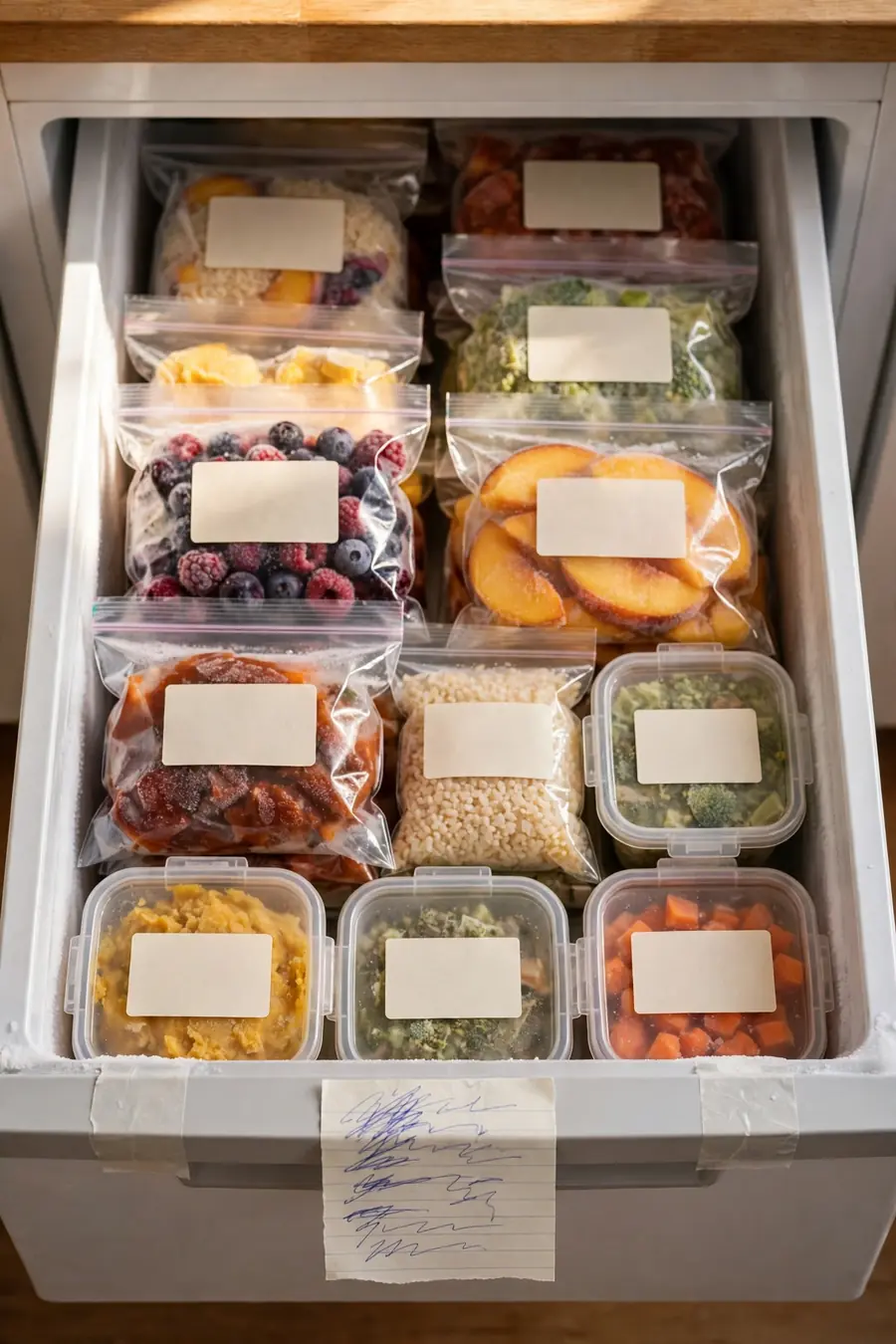
Step 3: Cook once, and end the meal twice. Cook a base for tonight plus one portion: beans, roasted vegetables, shredded chicken. Eat one as it is. Give the second a different ending, in a wrap, over rice or into soup, or freeze it.
Step 4: Keep a freezer list on the door. One line per portion: what it is, when it went in. Cross it off when you eat it. A long list means next week shops from the freezer first.
The Swap Table: Family Packs Out, Single Portions In
| The expensive way | The thrifty swap, same result |
|---|---|
| One big weekly haul of fresh food | A small fresh trip more often, a keeping trip only when the core list runs low |
| Family packs used straight from the fridge | Same pack portioned on day one, labeled in the freezer |
| Half a can forgotten in the fridge | Half-can habit: labeled container, second job planned, or frozen flat |
| Bulk buys of anything on offer | Bulk only where it freezes or keeps: rice, oats, beans, cans, frozen vegetables |
| A new ingredient set for every dinner | One core list, each item in at least two dinners |
| Takeout on the tired night | A labeled freezer portion from a cook once night |
Shopping for One: Your Questions, Answered
How much should one person spend on groceries each month?
There is no single right total. A fixed figure ignores your city, your store and how often you eat at home. Build yours from your real week: what you cook, what you throw away, and the core list that covers your dinners. Track one month of receipts and cut the waste lines first.
Is one big weekly shop or smaller trips better for one person?
Smaller trips win for fresh food. Greens, fruit, bread and dairy go off before one person finishes a big haul, so buy those for the next few days. Keeping food is the opposite: cans, grains and frozen vegetables can come in one occasional trip, because they wait.
Should I buy in bulk if I live alone?
Only where food freezes well or keeps. Rice, oats, dried beans, cans and frozen vegetables suit one person in larger amounts, because you take out just what one meal needs. A bulk fresh pack that spoils first costs more than the small pack.
How do I stop wasting food when I shop for one?
Work the three habits here. Shop your kitchen first and keep an eat first spot. Use the half-can habit, so opened food gets a labeled container and a second use. Freeze single portions while food is still fresh.
What belongs on a core grocery list for one person?
One protein in the right amount, eggs, one grain base, canned beans and tomatoes, frozen vegetables, two or three fresh vegetables, one fruit, bread or wraps, and one sauce you like. The test: every item is in at least two meals, or it freezes, or it keeps.
Plan the Week on One Page: My One-Person Weekly Grocery Planner
This article comes with a free one-page printable, “My One-Person Weekly Grocery Planner.” It has five parts:
- Kitchen check: three short columns for fridge, freezer and cupboard.
- Real week count: dinners at home this week, written down before you shop.
- Core list: the nine lines from Level 2, tick box beside each one.
- Fresh trip and keeping trip: two separate mini lists.
- Freezer log: one line per portion, name and date.
The point is a plan small enough for one person to actually finish, and kind enough to keep using.
Today’s One Small Job: Make the Eat-First Shelf
Tonight, do only one thing. Open the fridge, pull everything opened or ripe onto one shelf, and call that your eat first spot. Tomorrow’s first dinner comes from that shelf. Once it is working, the cheap meals on a budget framework turns the same core list into simple dinners all week.