10 Upcycled Home Decor Ideas From Things You Already Own
Every room in the house feels a little tired, and the shopping cart is already half full in your head. New pillows, a new vase, maybe a new lamp. Then the total appears and the whole plan quietly dies. Here is the part nobody says out loud: most homes are already stocked with decor, it is just sitting in the wrong rooms wearing the wrong jobs. Some of the best upcycled home decor ideas never involve a store at all, because the supplies are in your kitchen cabinets, your closets, and that corner of the garage you avoid.
This is the anti-shopping version of a room refresh. Ten things you already own, cleaned up and styled on purpose, with the simple rule each one teaches. If a project needs a small consumable, like a tea light or a handful of potting soil, that gets said plainly. No pretending, no hauls.
Key Takeaways
- Every project on this list uses things a normal house already has, so the decorating budget stays at zero.
- Grouping is what turns clutter into decor. A single jar is clutter; a matched row of three is a styled shelf.
- Each project teaches one styling rule: height, texture, grouping, or light. Learn the rules and every room gets easier.
- Clean first. Patina reads as vintage and full of character. Dirt just reads as neglected.
- Work one surface at a time with the restyle circuit below instead of trying to redo a whole room in a day.
Upcycled Home Decor Ideas Start With What You Own
So, what household items can you upcycle into home decor? Glass jars, hardcover books, spare picture frames, a step ladder, baskets, scarves and tablecloths, colanders and mixing bowls, old suitcases and sturdy boxes, wooden cutting boards, and spare mirrors can all become decor with cleaning and styling alone. That is the honest answer, and it is longer than most people expect.
None of these things changes what it is. A jar stays a jar. What changes is the placement, the company it keeps, and whether it looks chosen or forgotten. That difference costs nothing but attention, and each project below names the rule it teaches, so you can steal the rule even when your house holds different stuff.
Clean First: The Step That Makes Old Look Vintage
Before anything moves rooms, it gets cleaned like it is about to be sold. Labels soak off glass jars in warm soapy water. Dry, dull wood wakes up with a light oiling. Tarnished metal gets a polish, and every textile gets washed before it drapes over anything.
This step is not glamorous, and it is the whole ballgame. A dusty basket on a shelf reads as storage you forgot. The same basket, washed and hung with intention, reads as texture. Patina is welcome here. Scratches, soft wear, and faded edges are character. Dirt is not character, and your eyes can tell the difference instantly.
The 10 Projects, and the Rule Each One Teaches
1. Glass Jars Become Vases, Lanterns, and Shelf Order
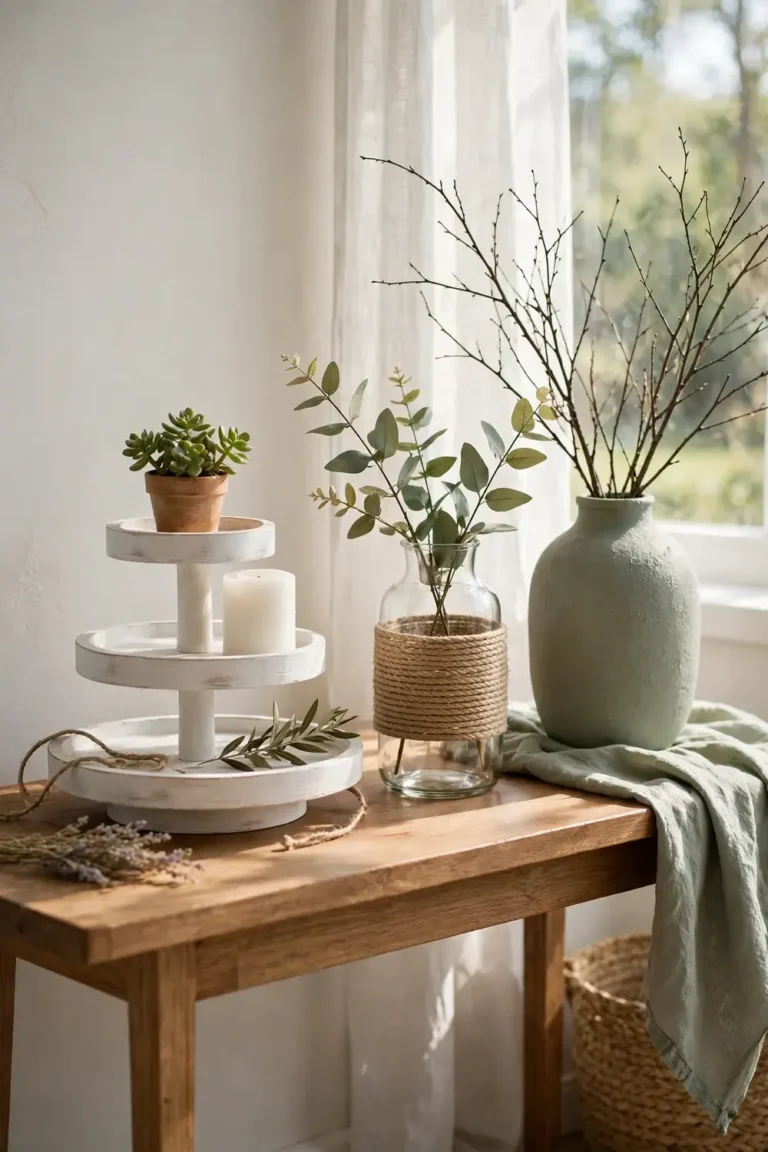
The rule: grouping. Jam jars, sauce jars, and canning jars lose their labels and turn into bud vases, candle lanterns with a tea light inside, and open-shelf storage. One jar alone on a counter looks like recycling waiting to happen. A row of matching jars, holding wooden spoons or dried stems, looks like a decision. The only consumable here is the tea light, and most homes have a few in a drawer already. Group in odd numbers and keep the heights close, and the shelf suddenly looks curated instead of crowded.
2. Hardcover Books Become Risers and a Free Side Table
The rule: height. Take the jackets off hardcover books and the cloth spines underneath look classic. Stacked flat, books become risers that lift a plant or a lamp to the height the arrangement was missing. A tall stack on the floor with a plant on top is a side table that cost nothing. Use books you own and like seeing out. Skip any book you would be upset to scuff, because a riser works for a living and the bottom book takes the wear.
3. Spare Picture Frames Become Trays and Wall Texture
The rule: layering. A frame you are not using, fitted with a backing board or a mirror inside, becomes a tray for a coffee table or dresser, the kind that corrals keys and candles into a scene. Empty frames grouped on a wall are not emptiness, they are texture, and they make a gallery ledge feel collected. This is repurposed home decor at its most forgiving, because a frame asks for nothing. No paint, no tools beyond fitting the backing, and it reverses the second you want the frame back.
4. A Step Ladder Becomes a Blanket Ladder and Plant Stand
The rule: vertical space. A wooden ladder or sturdy step ladder leaned against a wall holds throws in the living room or towels in the bathroom, and it takes up almost no floor. Lay boards across the steps of a step ladder and it becomes a plant stand with built-in tiers. Lean it securely and test the wobble before anything breakable goes up.
5. Baskets Become a Wall

The rule: texture. Baskets hung in a cluster make the basket wall that stylists reach for again and again, because woven texture warms up a flat wall faster than almost anything. On a counter, a basket lined with a clean napkin corrals bread or the daily mail. Mismatched baskets still work as a group, because the material repeats even when the shapes wander. If a basket is dusty or smells like the garage, wash it and sun it first, or let it go.
6. Scarves and Tablecloths Become Runners and Skirted Tables
The rule: softness. A pretty scarf works as a table runner or drapes over a chair back the way a throw would. A tablecloth over a tired side table hides every scratch and water ring and reads as a skirted accent table, the kind that looks sewn for the room. Leftover fabric does the same work in smaller doses. Wash everything first, press out the storage creases, and let the drape do the decorating.
7. Colanders and Mixing Bowls Become Planters and Centerpieces
The rule: function as decor. A colander is a planter with the drainage already built in, which is more than most store-bought pots can say. A cutting from a plant you already own keeps it free; potting soil is the one consumable, and only if you do not already keep a bag. Mixing bowls and enamelware hold fruit and folded linens as a centerpiece that earns its counter space. Kitchen things styled in the open stop looking like clutter the moment they are grouped on a board or tray.
8. Old Suitcases and Sturdy Boxes Become Tables With Storage
The rule: storage that shows. Two suitcases stacked make a bedside or entry table, and the storage inside is real, not decorative. A suitcase opened on a stand becomes a record station or a small bar. Check the latches and hinges before you stack, and be honest about smell: a case that still smells musty after airing out is not decor, it is a chore. When they are clean and solid, nothing else on this list gives you a table and a hiding place in one move.
9. Wooden Cutting Boards Become a Warm Kitchen Backdrop

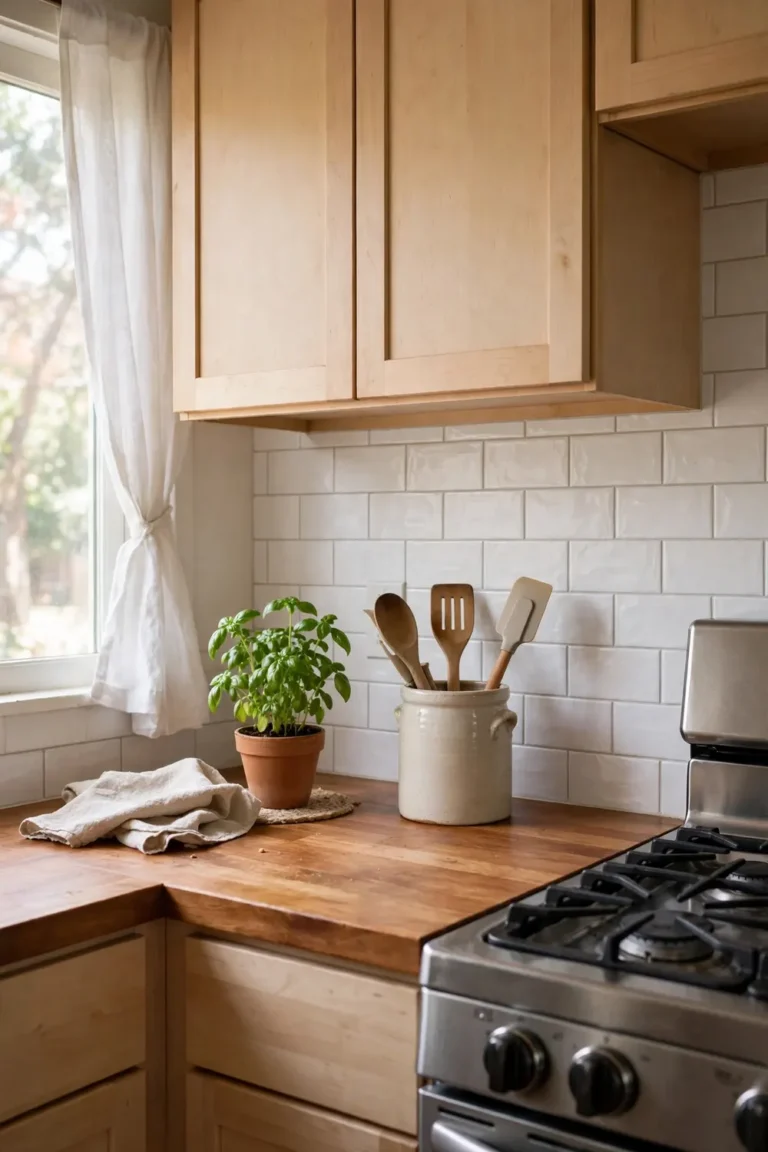
The rule: warmth. Wooden cutting boards, oiled if you have board oil and simply cleaned if you do not, lean against the kitchen backsplash in layered sizes. The layered wood warms up a cold kitchen instantly, and a board doubles as a riser under oil bottles and the soap dish. A warped board will not lean or sit flat, so warped ones are out. Keep the good ones in rotation and let the sizes overlap like shingles.
10. Spare Mirrors Become Light
The rule: light. Any spare mirror, any size, leaned rather than hung on a mantel or dresser behind a few objects, bounces light around the room and doubles the vignette in front of it. It is the single fastest styled trick on this list, the one that makes guests ask what changed. Leaning also means no holes, no level, and no commitment, which makes it the friendliest of all upcycle diy ideas for renters and chronic rearrangers alike.
The Restyle Circuit: How to Shop Your Own Home
Projects are nice, but the method is what keeps working after this list ends. Pick one surface, and only one: the entry table, the mantel, the top of the dresser.

- Pull everything off the surface and clean it.
- Walk your whole house, room by room, carrying a laundry basket. Collect candidates: jars, frames, books, boards, baskets, anything with good bones.
- Rebuild the surface using four rules: odd numbers, one tall thing, one texture, one living thing, even if the living thing is a cutting in a jar of water.
- Put back less than you took off. The leftovers go to their real homes or the donation box.
- Live with it for a day before you judge it. Morning light is the honest critic.
This routine is diy upcycled home decor at its simplest: no cart, no checkout, just a basket and twenty minutes. Most people find the first surface so satisfying that the second one happens the same weekend.
Common Mistakes and Honest Limits
The biggest mistake is scattering. One jar here and one frame there reads as stuff left out, not decor. Group, repeat, and give each arrangement a home surface.
The second mistake is skipping the clean. Dust and grease announce themselves louder than any styling rule can cover.
Then there is the honest limit: not everything deserves a second life. Warped boards, stained upholstery textiles, and anything with a lingering smell should go, and letting them go is part of the process. One safety rule matters more than the rest. Old painted items of unknown age stay decorative only, and old painted or unknown-finish pieces should never be used for serving food. The finish history is unknowable, so trays carry candles and keys, not sandwiches.
And the spend, stated plainly: the projects above are free with what a normal house holds. The only possible consumables are a tea light, a little potting soil, or board oil, and only when you do not already have them on hand.
Frequently Asked Questions
How is this different from just decluttering in reverse?
Decluttering removes things. This adds rules. The point of upcycled decor ideas is styling: the same jar is clutter standing alone on a counter and decor in a matched row of three on a shelf. Nothing new entered the house, and nothing had to leave. The arrangement did all the work.
What if my stuff is all mismatched?
Mismatched is normal, and there are three ways to unify it. Group by color, with a leftover pot of paint if pieces need to match exactly. Group by texture, keeping naturals like wood, wicker, and linen together. Or use repetition: the same kind of item appearing in more than one room makes the whole house feel intentional.
Where do I start if the whole house feels tired?
Start with one surface, the entry table or the mantel, and run the restyle circuit on it. One finished vignette changes how the whole room feels and usually motivates the next one. Whole-house overhauls stall by lunch. One surface gets done before the coffee cools.
Is it safe to serve food on old painted or thrifted pieces?
No, and this one is not worth gambling on. Paint and finishes of unknown age and history should stay decorative only. Use those pieces as trays for candles, keys, and mail, and serve food on pieces you know are food safe. The look is identical; the risk is not.
Your House Is Already the Store
The small triumph of a free makeover is real. A room feels new, the cart stays empty, and the money is still in your account for the things that actually need buying. That is the quiet promise behind the best upcycled home decor ideas: your taste was never the problem. The inventory was just waiting in the wrong rooms.
Start tonight with one surface. Pull it apart, run the circuit, and rebuild it with what you find. The itch to buy something new fades fast when the entry table suddenly looks like a magazine photo, and you know every piece in it was already yours.