
How to Save Money on Laundry: Every Load Cheaper in a Small Rental
It is nine in the evening. The hamper is full again. You stare at it the way you stare at a bill you already know is too high, and you wonder how a pile of t-shirts got this expensive. Most of us have stood exactly there. Laundry feels small. It is not. Load after load, it quietly eats money in hot water, extra detergent and dryer heat.
Here is the good news. Nothing about fixing it is hard. No new machine. Just a colder dial, a smaller pour, a fuller drum and a rack by the window.
This article cuts the cost of every load in a rental. Three levels. Stop at the one that fits your week.
Every Load, a Little Cheaper
- How to save money on laundry starts with cold water: heating the water is about 90 percent of the energy a washer uses.
- Use about one tablespoon of detergent for an average load, not a full cap. More soap does not mean cleaner clothes.
- Run full loads only. A washer uses about the same energy no matter how full it is.
- Air-dry on a line or a folding rack. The dryer uses more energy than the washer.
- Wool dryer balls replace single-use dryer sheets and cut drying time.
The Quick Answer: Cold Water, Less Soap, Full Loads
How to save money on laundry comes down to five habits. Wash in cold water for most loads, because heating the water is where almost all the energy goes. Measure about one tablespoon of detergent instead of filling the cap. Wait until the drum is full before you run it. Wear lightly worn clothes more than once. And dry clothes on a line or a folding rack instead of in the dryer, with wool dryer balls on the days you do use it.
The 10-Second Check: What Is Your Dial Set To?
Three quick questions, and you will know where your laundry money is going.
Check 1: What temperature is your dial on right now? If it sits on warm or hot out of habit, that is your biggest leak. Cold is the default from today.
Check 2: How much detergent do you pour? Be honest. If you fill the cap to the line, you are using two or three times what the load needs. One tablespoon is the new measure.
Check 3: How full is the drum when you press start? Half loads are the quiet waste. A washer uses about the same energy for a half load as for a full one. If the drum is half empty, wait a day.
Level 1: Free, the Dial, the Cap, the Hamper
[Cost: Free | Time: 5 minutes to change the habits]
Level 1 costs nothing at all. No shopping. No new gear. Just the dial, the cap and the hamper you already own, used differently from tonight. It feels too small to matter, until the next bill arrives.
- Step 1: Turn the dial to cold and leave it there. This is the one change that matters most. Heating the water takes about 90 percent of the energy a washer uses, according to ENERGY STAR guidance, and the U.S. Department of Energy says warm or cold water is generally enough to clean laundry, and that using cold water saves even more than warm. So turn the dial to cold for everyday clothes, sheets and towels. Keep hot water for the exceptions only: oily stains, filthy work clothes, and times when someone in the house is ill.
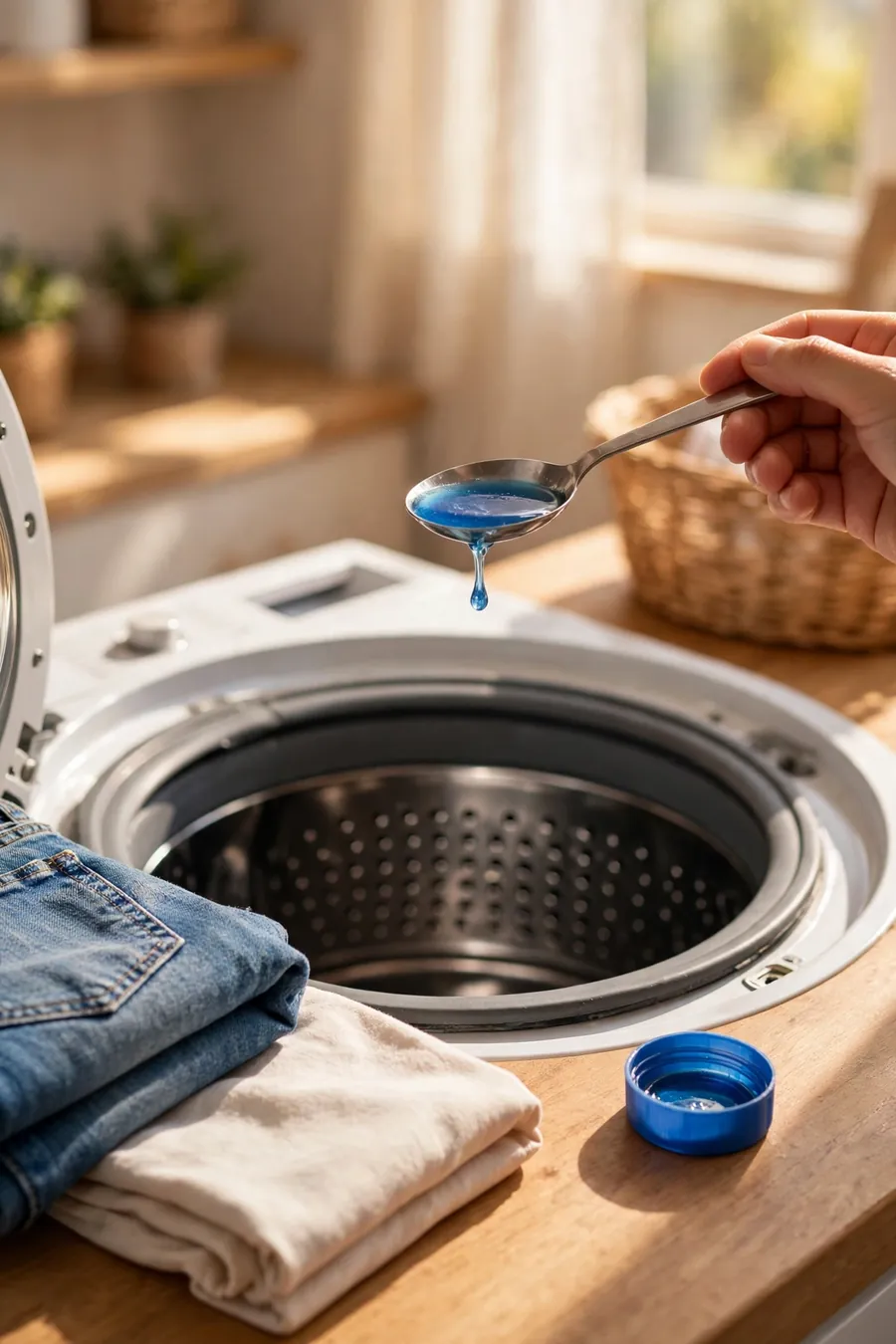
- Step 2: Measure one tablespoon of detergent, every load. Put the cap down. Take a tablespoon from the kitchen drawer and use it as your measure. About one tablespoon is enough for an average load, and about two tablespoons covers a normal load in a high-efficiency machine. A regular washer needs about a quarter cup. More detergent does not clean better. It leaves a film on clothes, and it empties the bottle twice as fast. Try it for one week.
- Step 3: Wait for a full load, every time. Look in the drum before you press start. If it is half full, close the lid and walk away. Add tomorrow’s towels, or the sheets that are due anyway, and run one full load instead of two half loads. A washer uses about the same energy no matter how full it is, so a half load is a load you paid for twice.
- Step 4: Wear it one more time. Not everything in the hamper is dirty. A shirt worn for two hours at a desk is not laundry yet. Hang it on a hook, let it air overnight, and wear it again. Jeans can go about 10 wears between washes, unless they are visibly dirty or they smell. Towels and sheets are different. Wash those on schedule. But every load you skip is a load you never pay for.
- Step 5: Clean the lint trap after every dryer load. It takes ten seconds. Pull the trap, peel the lint off, slide it back. A clogged trap makes the dryer work longer and hotter for the same load, and it is a safety habit too. Free, fast, and it shortens every drying cycle that follows.
Level 2: Dollar-Store and Thrift, a Rack, Vinegar, a Mesh Bag
[Cost: Dollar-store level | Time: 20 minutes for one short trip]
Level 2 is the cheap shelf. A rack. A bottle of vinegar. A mesh bag. Small things, all cheaper than one more month of dryer sheets and fabric softener. One short trip, and the laundry corner starts paying you back.
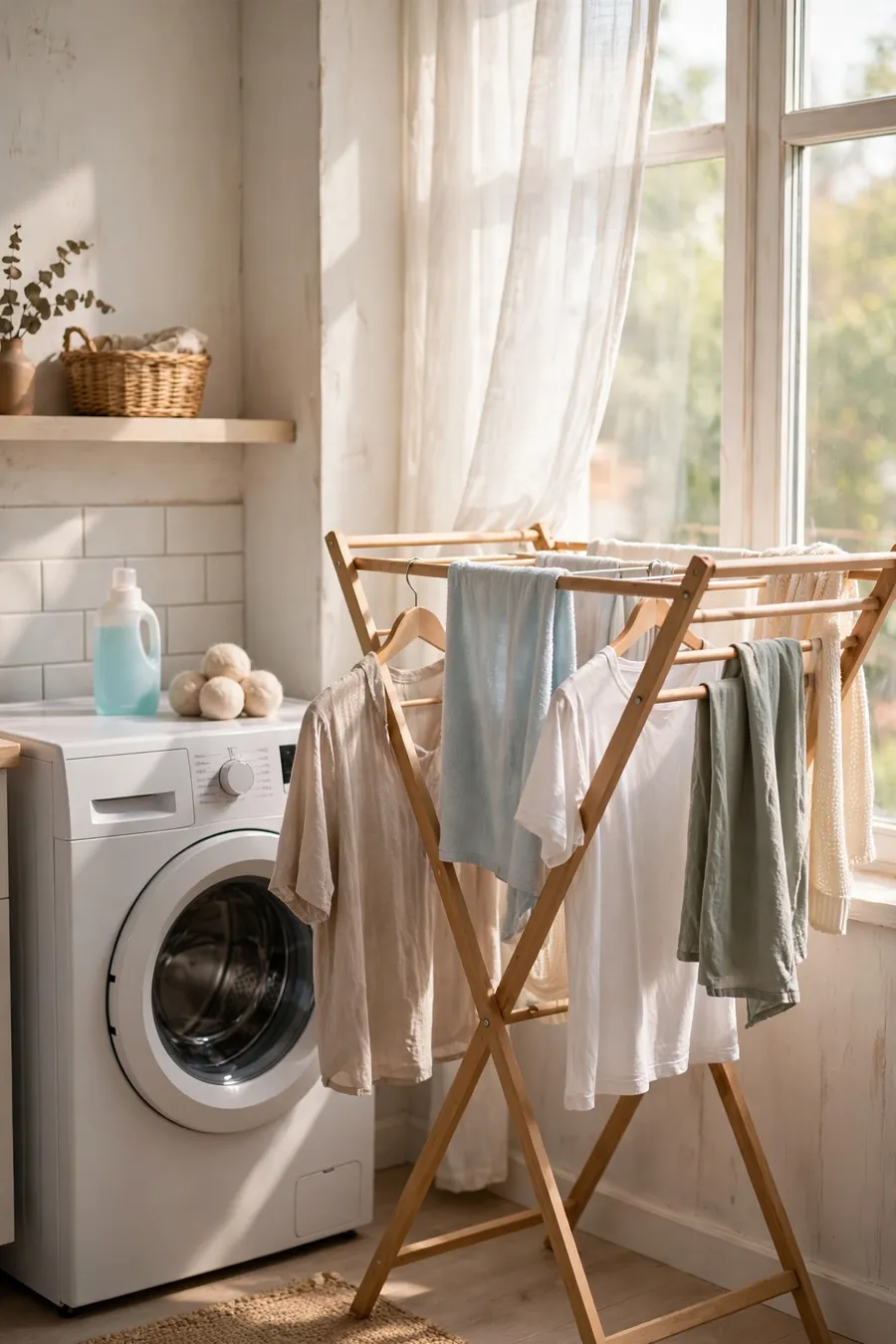
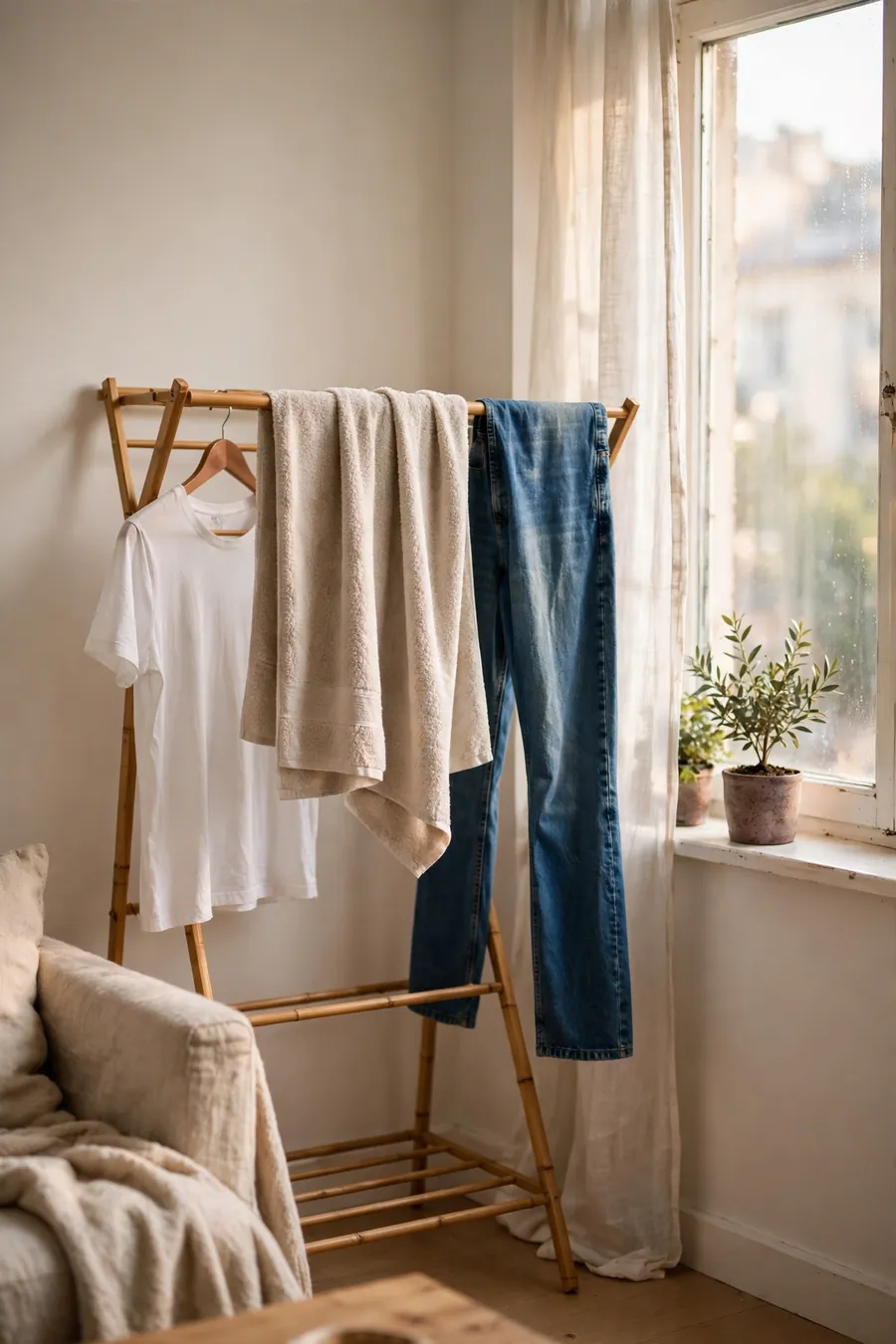
- Step 1: Buy a folding drying rack and put it by the window. This is the single best cheap buy in laundry. It stands in a corner when you need it and folds flat behind a door when you do not. Hang shirts by the hem so they dry straight, give each piece a little space, and let the air do the work. In winter, set it near a vent or a sunny window. Clothes take longer than a dryer, but they come out softer, and the drying costs nothing.
- Step 2: Swap fabric softener for plain white vinegar. Skip the softener bottle. Add a good splash of plain white vinegar to the rinse cycle instead. It softens clothes and keeps towels absorbent, which softener stops them being. One jug lasts for weeks of loads.
- Step 3: Pre-treat stains with the detergent you already own. Do not buy a separate stain remover. Dab a little liquid detergent straight onto the stain, rub it in gently, and leave it for five minutes before the wash. That is the same cleaning power, already in your cupboard, doing a second job. Greasy spots get a drop of dish soap the same way.
- Step 4: Use the high-speed spin and the quick wash. Two buttons most of us ignore. The high-speed or extended spin wrings far more water out of the clothes before drying starts, so the rack or the dryer has less work to do. The quick wash cycle is enough for lightly worn clothes, and it uses less water and less time. Use the full cycle for towels, sheets and genuinely dirty loads, and the short one for everything else.
Heating water is only part of the home energy picture. Our guide to cut utility bills covers the water heater setting and the rest of the water and gas savings that sit beside laundry day.
Level 3: One Small Buy, a Set of Wool Dryer Balls
[Cost: One small buy | Time: 10 minutes to set up, then every load after]
Level 3 is one small buy, and only one. Not a new washer. Just a set of wool dryer balls, three or four of them, tossed into the dryer with every load. They just sit in the drum and work, and one day the dryer sheet box is gone and you never bought another one.
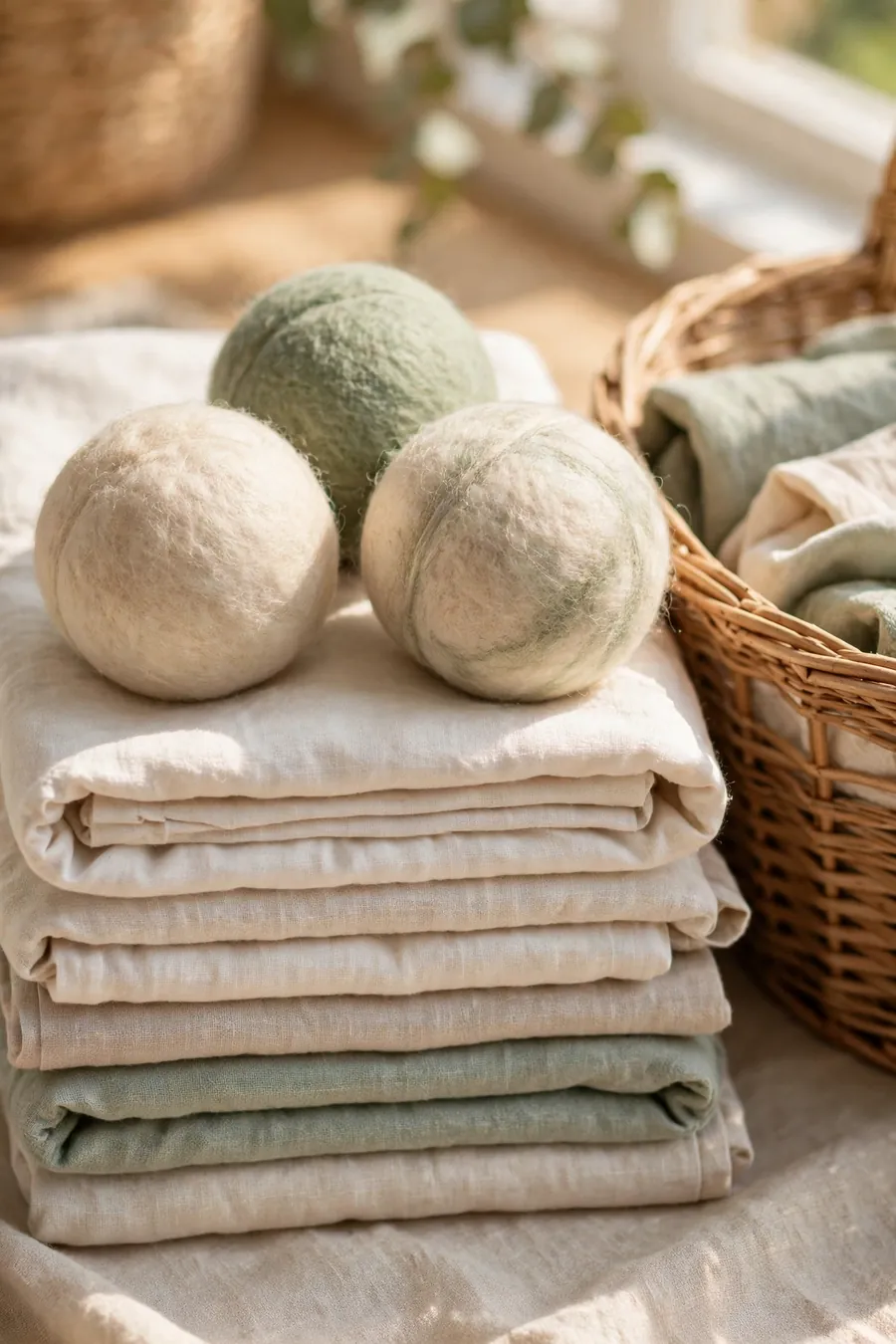
- Step 1: Buy one set of wool dryer balls and keep them in the dryer. Drop three or four balls in with every dryer load. They bounce between the clothes as the drum turns, which lets hot air reach the middle of the load instead of trapping it in a damp bundle. Clothes dry faster, come out softer, and need no sheet at all. A set lasts for many loads, so one small buy replaces box after box of single-use sheets.
- Step 2: Use the moisture sensor or the cool-down cycle, if your dryer has one. The moisture sensor stops the dryer when the clothes are dry, instead of running the full timed cycle. The cool-down cycle finishes the load with the heat that is already in the drum. Both are already on the machine. Set the sensor once, and stop paying for twenty minutes of hot air blowing over dry clothes.
- Step 3: Dry heavy and light clothes separately. Towels and heavy cottons take far longer than t-shirts. Mixed together, the light clothes finish early and keep tumbling while the towels are still damp. Split the load in two. The light load finishes fast, the heavy load gets the time it needs, and neither one over-dries.
The Swap Table: Habits That Beat New Machines
| The expensive way | The thrifty swap, same result |
|---|---|
| Hot water for every load, out of habit | Cold water for everyday loads, hot only for oily stains and heavily soiled clothes |
| Filling the detergent cap to the line | About one tablespoon per average load, measured with a kitchen tablespoon |
| Running the washer half full whenever the hamper looks full | Waiting for a full drum, and adding towels or sheets to fill it |
| Washing jeans and barely worn tops after one short wear | Air them overnight and wear them again, jeans about 10 wears between washes |
| Dryer sheets and fabric softener, bought again and again | Wool dryer balls in the drum, and plain white vinegar in the rinse |
| Full dryer cycle for every load, mixed heavy and light | Rack-dry when you can, and split heavy and light loads when you use the dryer |
Laundry Bill Questions, Answered
Does cold water actually get clothes clean?
Yes, for most everyday loads. Modern detergents are made to work in cold water, and the U.S. Department of Energy says warm or cold water is generally enough to clean laundry. Save hot water for the exceptions: oily or greasy stains, heavily soiled work clothes, and times when someone in the house is ill. Everyday shirts, jeans and sheets come out clean in cold.
How much detergent should I use?
Far less than the cap line suggests. About one tablespoon is enough for an average load, and about two tablespoons is the usual amount for a normal load in a high-efficiency machine. A regular washer needs about a quarter cup. Using more does not make clothes cleaner. It leaves residue in the fabric and in the machine, and it empties the bottle faster.
Does line drying really save money?
Yes, because the dryer is the hungriest part of laundry day. It uses more energy than the washer. A line outside, or a folding rack indoors, dries clothes for free. In a rental, a rack by a window or near a vent does the job, and clothes last longer without the heat and tumble of the dryer.
How often should I wash jeans and other clothes?
Less often than most of us think. Jeans can go about 10 wears between washes, unless they are visibly dirty or they smell. Shirts and tops worn briefly can be aired overnight and worn again. Towels and sheets need washing more often than jeans, but nothing in the pile needs a wash after one short wear.
Do wool dryer balls really work?
Yes. They bounce between the clothes as the dryer turns, which lets hot air move through the load instead of trapping it in a damp bundle. That cuts drying time, and it softens clothes without a single-use sheet. A set of wool dryer balls lasts for many loads, so one small buy replaces box after box of sheets.
Track the Savings: My Laundry Money Worksheet
This article comes with a free one-page printable, “My Laundry Money Worksheet.” It has four parts:
- The five habits: cold water, one tablespoon of detergent, full loads, wear it again, rack-dry first.
- A one-week load log: the date, the temperature, the load size, and whether it went on the rack or in the dryer.
- A detergent tracker: mark each load, and watch how much longer one bottle lasts at one tablespoon a time.
- A rack-dry plan: where the rack stands in your home, and which loads go on it first.
Today’s One Small Job: Turn the Dial to Cold
Today, do only one thing. Walk to the washer and turn the dial to cold. That is the whole job. One dial, five seconds, and the next load already costs less than the last one. Then put a tablespoon on top of the machine, ready for the next pour. Tomorrow the rack goes up. Today, the dial is enough. And when the laundry feels lighter on the bill, the next place to look is the rest of the apartment, because our guide to lower your electric bill in an apartment works the same way: small, renter-safe fixes, one at a time.