Slow Cooker Beef Stew: One Pot, Three Ways to Serve It
It is five in the afternoon and the light is already going. You are standing in the kitchen with a pack of beef in the fridge and no real plan, and the takeout menu is sitting right there on the counter, waiting. Most of us have stood exactly there. Tired. Hungry. One hand on the fridge door.
Here is the good news. That pack of beef is already dinner. Just one pot, one long slow cook, and a house that starts to smell like a Sunday dinner while you get on with your evening. It asks for twenty minutes of your hands and gives you back a full pot.
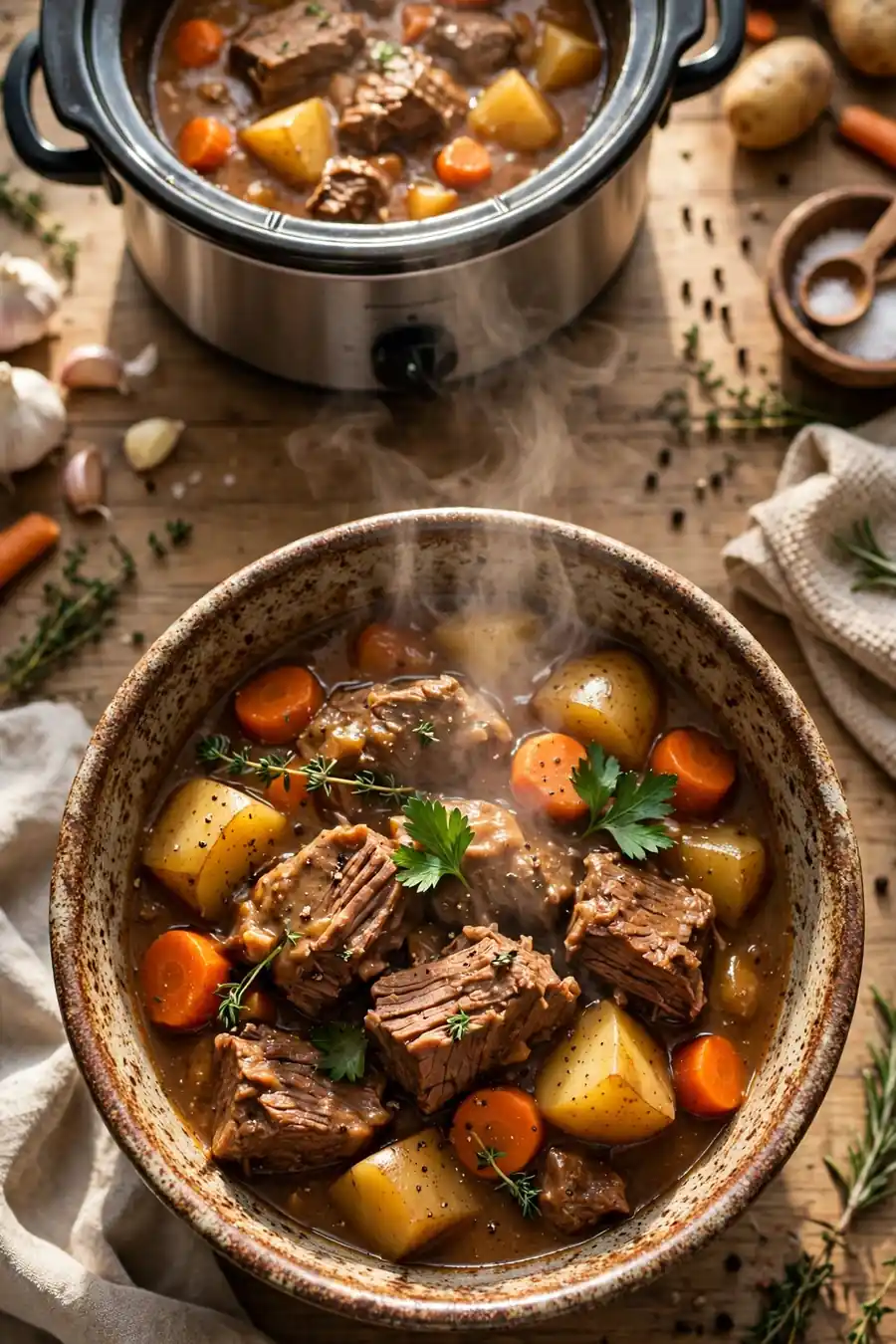
This article cooks one dish, and only one dish. Slow cooker beef stew, in full detail, served three ways from the same pot: the classic bowl with potatoes and carrots, a no-brown dump version for busy days, and a thickened stew and dumplings finish. Three levels. Stop at the one that fits your week.
Stew Night, Without the Fuss
- A slow cooker beef stew recipe starts with chuck, not a lean cut. Chuck turns tender. Lean beef dries out.
- Cook LOW for 7 to 8 hours or HIGH for 4 to 5 hours, until a fork slides into a beef cube easily. The fork test beats the clock.
- Beef is safe at 145 degrees F with a 3 minute rest, but stew beef cooks far past that for tenderness. Do not stop at the safe number.
- Use only 2 cups of broth. The pot traps steam, so more liquid means thin gravy. Thicken at the end.
- Leftovers keep 3 to 4 days in the fridge and freeze for 2 to 3 months for the best quality. Reheat them to 165 degrees F.
The Short Answer: One Pot, Three Ways to Serve It
A slow cooker beef stew recipe works best as one classic pot done properly. Cut 2 pounds of boneless beef chuck roast into 1 1/2 inch cubes, sear them if you have ten minutes, load potatoes, carrots, celery and onion into a 6 quart slow cooker with the beef, pour over 2 cups of beef broth with tomato paste, Worcestershire sauce, thyme and bay leaves, and cook on LOW for 7 to 8 hours or on HIGH for 4 to 5 hours, until the beef is fork tender. Thicken the gravy at the end and serve.
The 10-Second Check: Ten Minutes to Brown, or Not?
Three quick questions, answered honestly, and you will know exactly where tonight stands.
Check 1: Is your beef thawed, or still frozen? Hold the pack. If it is frozen solid, tonight is not stew night yet. Move it to the fridge now and the stew happens tomorrow. Frozen beef never goes into the cooker.
Check 2: Do you have ten minutes to brown the beef? Ten minutes at the stove gives you a deeper gravy and a better color. No ten minutes? Fine. The dump version below still works. This is a flavor question, not a pass or fail test.
Check 3: Are you home all day, or out the door? Home all day means LOW. A shorter window means HIGH. Both end at the same fork tender beef, so this is a schedule question, not a skill question.
Level 1: Free, Four Habits, Every Stew Easier
[Cost: Free | Time: 15 minutes]
Nothing to buy here. Just four habits that turn a slow cooker from a cupboard ornament into the thing that makes dinner while you get on with your evening. Learn them once and every stew after this one gets easier.
- Thaw the beef in the fridge overnight. Never cook it from frozen.
- Cut the chuck into even 1 1/2 inch cubes, so every piece finishes at the same time.
- Fill the cooker about two thirds full, never to the brim.
- Lid on, and leave it on. Every lift lets heat and steam escape.
Step 1: Learn the beef numbers before you learn any recipe. Beef is safe at 145 degrees F, with a 3 minute rest, according to FoodSafety.gov. But here is the part nobody tells you. Stew beef is not done at 145 degrees F. It is safe, yes, and still tough. Chuck needs hours past that number for its connective tissue to soften. So use 145 degrees F as the safety floor and the fork test as the dinner test. When a fork slides into a cube easily, it is ready.
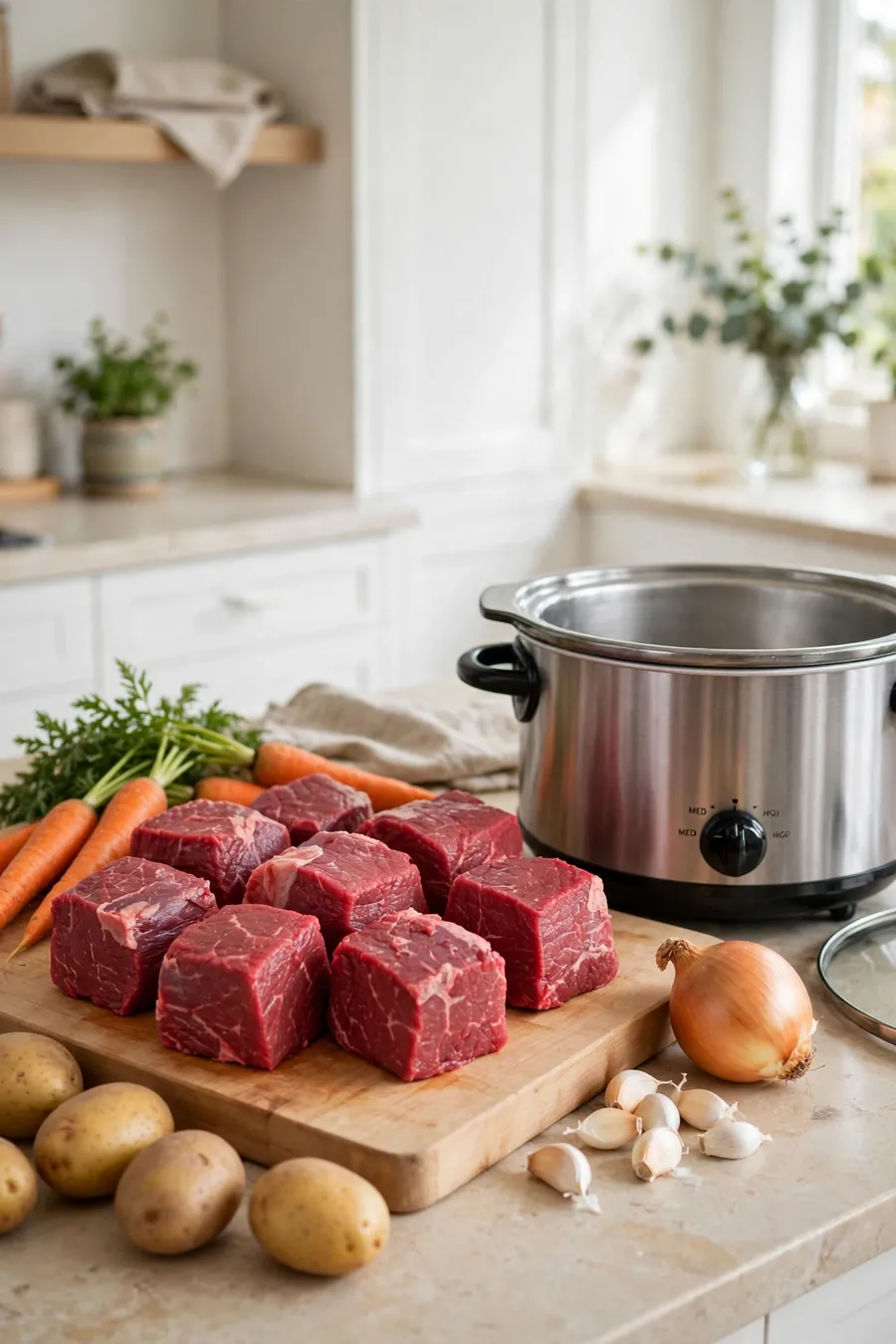
Step 2: Pick chuck, every time. This is the one rule that decides the whole dinner. Boneless beef chuck roast has marbling and connective tissue, and a long slow cook turns both into tenderness and a fuller gravy. Lean cuts have nothing to melt. They stay firm, then dry, and no gravy rescues them. Look for marbling, not leanness. Cut the roast yourself if you can. Prepackaged stew meat mixes uneven cuts, and uneven pieces cook unevenly.
Step 3: Learn the layer order. Potatoes, carrots, celery and onion go on the bottom, closest to the heat, because they need the longest time to turn soft. The beef goes on top, in one loose layer. The broth goes over everything last. This order is the whole recipe in miniature. Get it right once and every slow cooker dinner after it makes sense.
Step 4: Lid on, and leave it on. The cooker works with trapped steam, and every peek lets that heat escape. Check once near the end, when you test the beef with a fork. That is it. Trust the timer. Trust the fork. The pot knows its job.
Once these rules feel clear, the easy crockpot meals on this site stop looking like a wall of recipes and start reading like variations on a method you already know.
Level 2: Dollar-Store and Thrift, Broth, Not Water
[Cost: Dollar-store level | Time: 20 minutes for one short trip]
This level is the pantry run, and it is a short one. A few jars and packets that live in most kitchens already, plus the small ones that do not cost a second thought. The beef does the heavy work. These just give it something to say.
- Buy the cornstarch now. It thickens the gravy at the end, and one small box lasts for pot after pot.
- Check the spice shelf for dried thyme, bay leaves, salt and black pepper before you shop.
- Pick waxy potatoes, like Yukon Gold, that hold their shape in a long cook.
Step 1: Buy the broth, not the water. Water makes a thin, pale gravy. Beef broth gives the pot a base to build on, and the tomato paste and Worcestershire sauce deepen it from there. One carton covers this recipe. If the shelf only has broth cubes, dissolve them first and use the same 2 cups.
Step 2: Build the small stew shelf. One short trip covers the dry side of the Level 3 stew: tomato paste, Worcestershire sauce, dried thyme, bay leaves, and a small box of cornstarch for thickening at the end. These keep for months, so the second pot costs one fresh purchase. Buy the shelf once, eat from it all season.
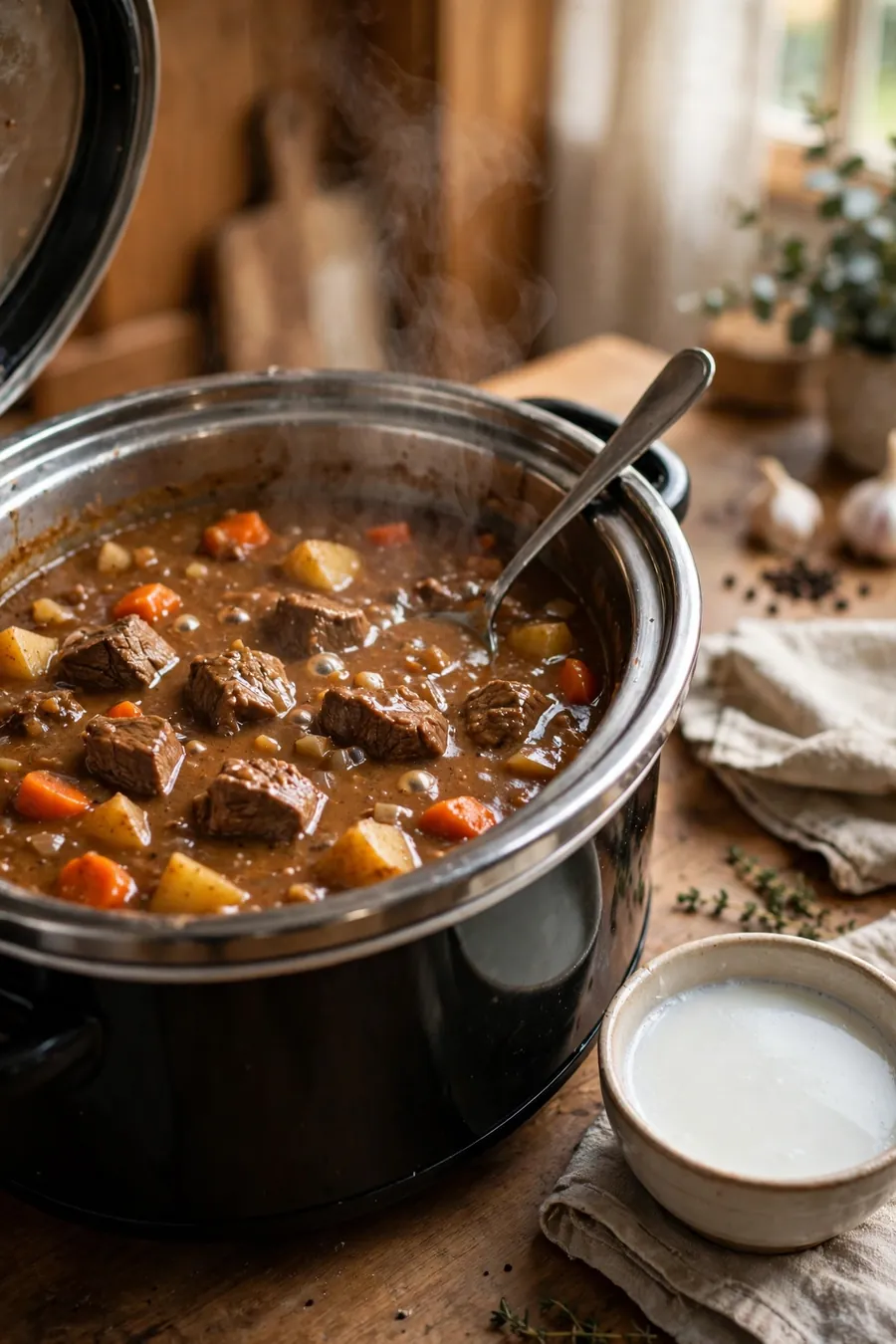
Step 3: Cut the vegetables big, on purpose. Potatoes in 1 1/2 inch chunks. Carrots in thick rounds. Small dice turns soft and crumbly long before the chuck turns tender. Big pieces hold their shape through seven hours and still come out soft enough to cut with a spoon.
Step 4: Learn the one stew mistake this level fixes. New cooks drown a stew. A slow cooker traps steam and loses almost no moisture, and the vegetables release their own juice as they cook, so the pot needs less liquid than a stovetop recipe. This stew uses 2 cups of beef broth for a full pot. More liquid does not mean more flavor. It means thin soup with beef in it.
Level 3: One Small Buy, the Chuck Roast Itself
[Cost: One small buy | Time: 25 minutes hands-on, then the pot works]
Level 3 is one small buy: the chuck roast itself, and a basic food thermometer if you do not own one yet. The roast is the dinner. The thermometer is the only honest witness in the pot.
The Base Recipe: Classic Slow Cooker Beef Stew
The only recipe in this article, written so you can cook it exactly as written. It fits a 6 quart slow cooker, filled about two thirds full. Start with thawed chuck, cut into even cubes, and the vegetables cut big enough to survive the long cook.
| Ingredient | Amount |
|---|---|
| Boneless beef chuck roast, thawed, cut into 1 1/2 inch cubes | 2 pounds |
| All-purpose flour, for coating the beef | 1/4 cup |
| Salt | 1 1/2 teaspoons |
| Black pepper | 1 teaspoon |
| Vegetable oil, for searing | 2 tablespoons |
| Yukon Gold potatoes, cut into 1 1/2 inch chunks | 1 1/2 pounds |
| Carrots, peeled and cut into thick rounds | 4 |
| Celery stalks, sliced | 2 |
| Onion, diced | 1 medium |
| Garlic, minced | 3 cloves |
| Beef broth | 2 cups |
| Tomato paste | 2 tablespoons |
| Worcestershire sauce | 1 tablespoon |
| Dried thyme | 1 teaspoon |
| Bay leaves | 2 |
| Cornstarch, mixed with cold water | 2 tablespoons plus 2 tablespoons water |
| Frozen peas, optional, stirred in at the end | 1 cup |
Method:
1. Season and coat the beef. Pat the cubes dry with paper towels, then toss them in a large bowl with the salt, black pepper and flour until every piece has a thin, dusty coat. Dry beef browns. Wet beef steams. This takes two minutes and it matters.
2. Sear them if you have ten minutes. Heat the oil in a large skillet over medium-high heat and sear the beef in batches, 2 to 3 minutes per side, until browned all over. Do not crowd the pan. A crowded pan steams the meat instead of browning it. This step is optional. It adds flavor and a darker gravy. Skip it on a rushed morning. The beef still cooks through.
3. Load the pot in order. Spread the potatoes, carrots, celery, onion and garlic across the bottom of the slow cooker. Lay the beef on top in one loose layer. The vegetables sit closest to the heat, exactly where they need to be.
4. Mix and pour the sauce. Whisk together the beef broth, tomato paste, Worcestershire sauce and thyme in a small bowl until the tomato paste loosens. Pour it over the beef and vegetables. Tuck the bay leaves in. Do not stir. The layers are the point.
5. Lid on, dial set, walk away. Cook on LOW for 7 to 8 hours or on HIGH for 4 to 5 hours. Leave the lid alone the whole time. Start checking at the short end of the range, because beef and cookers both vary.
6. Fork test, then thicken. Push a fork into a beef cube. If it slides in easily, the stew is ready. If it resists, lid back on, another 30 to 60 minutes, then test again. Tough beef needs more time, not less. Once it is tender, take out the bay leaves. Whisk the cornstarch with the cold water until smooth, stir it into the stew, and cook on HIGH for 15 to 20 minutes, until the gravy turns glossy and coats a spoon. Stir in the peas now if you are using them.
7. Taste, rest, and serve. Taste the gravy and add salt if it needs it. Turn the cooker off and let the stew rest for 10 minutes so the gravy settles and the flavors come together. Ladle it into bowls, with plenty of gravy over each serving. Leftovers go into shallow containers, into the fridge within 2 hours, and get eaten within 3 to 4 days.
Variation 1: the no-brown dump version for busy days. Same pot, same beef, no skillet at all. Skip Steps 1 and 2. Tip the thawed beef cubes into the cooker over the vegetables, with the salt and pepper sprinkled over the top. Skip the flour coating too. Pour the broth mixture over everything and cook for the same LOW 7 to 8 hours or HIGH 4 to 5 hours. Thicken at the end exactly as in Step 6. The stew tastes a little lighter and the gravy a little paler, and honestly, on a morning when you are already late, that trade is worth it.
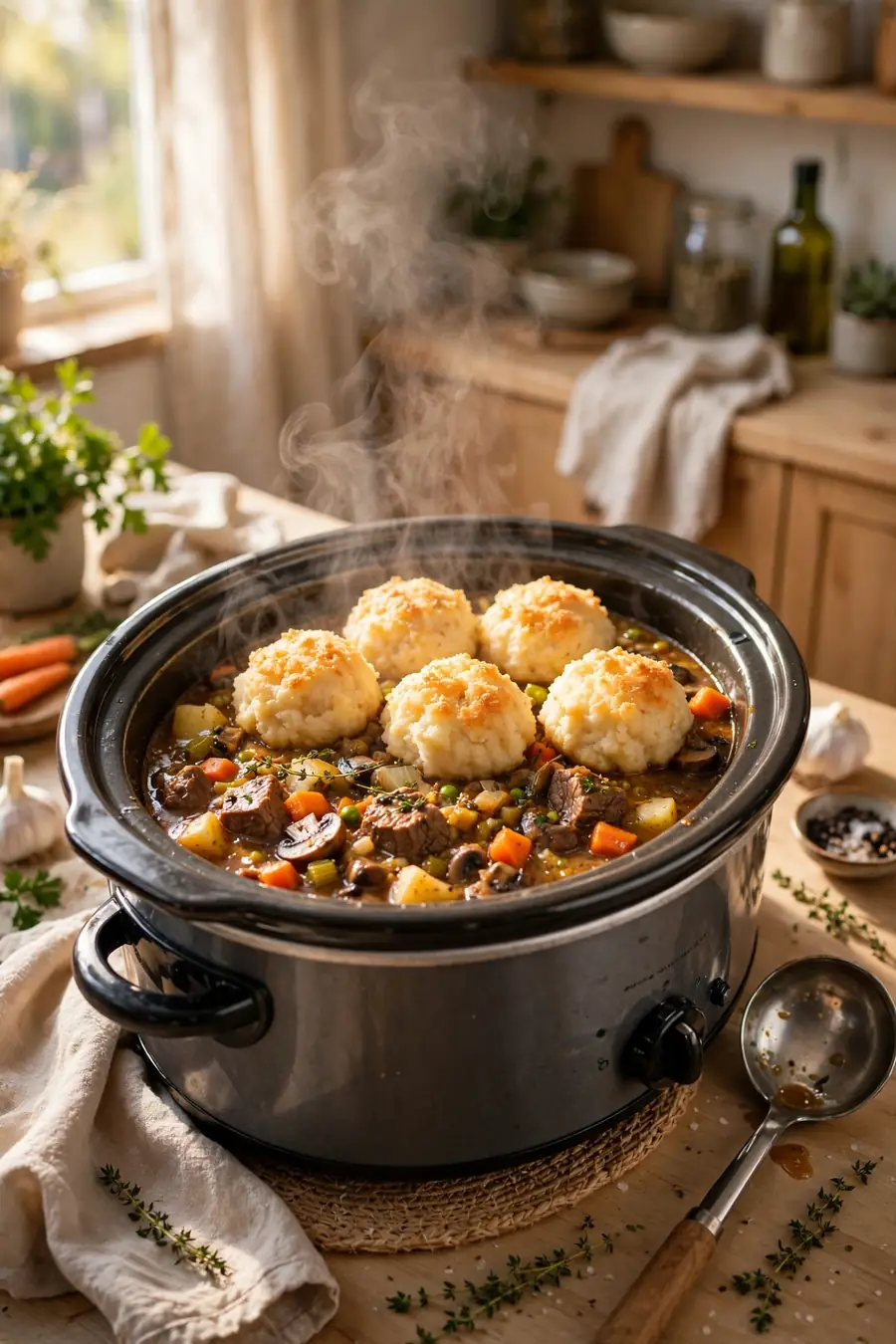
Variation 2: the thickened stew-and-dumplings finish. Same pot, same stew, one extra bowl and one more hour. Cook the base recipe exactly as written, including the thickening in Step 6. While the gravy thickens, whisk 1 1/2 cups of all-purpose flour with 2 teaspoons of baking powder and 1/2 teaspoon of salt in a medium bowl. Cut in 1/2 cup of cold butter until the pieces are pea size, then stir in 1/2 cup of milk only until a soft, shaggy dough forms. Do not overmix it. Overworked dough makes heavy dumplings. Set the cooker to HIGH, drop the dough in 8 even mounds over the hot stew, and put the lid straight back on. Cook for 45 to 60 minutes without lifting the lid, until the dumplings are puffed and cooked through with no wet dough in the centers. Serve straight from the pot, one or two dumplings per bowl, with plenty of gravy.
How to freeze the leftovers. Let the stew cool, then pack it in meal size portions in airtight containers or freezer bags, leaving a little room at the top for expansion. Label each one with the date. Freeze for 2 to 3 months for the best quality. Thaw overnight in the fridge and reheat gently to 165 degrees F. The potatoes may turn a little grainy after thawing. For the best texture, freeze the stew without the potatoes and add freshly boiled ones when you reheat it. Do not freeze the dumpling version. Freeze the stew, and make fresh dumplings when you reheat it.
The Swap Table: Classic, Dump, or Dumplings
| The expensive way | The thrifty swap, same result |
|---|---|
| A stew dinner out, because the evening feels cold and long | One chuck roast, potatoes, carrots, and a pot that cooks itself |
| A new slow cooker bought for winter cooking | Your 6 quart pot, already on the shelf |
| Prepackaged stew meat, mixed cuts at a higher price | One chuck roast, cut yourself into even cubes |
| Guessing doneness by color or time | One fork test, and one thermometer check at 145 degrees F for safety |
| A stovetop amount of broth, just in case | 2 cups of broth, because the pot keeps its moisture |
| Thin gravy, served anyway | A cornstarch slurry at the end, glossy in 15 to 20 minutes |
Beef Stew Questions, Answered
How long does beef stew take in a slow cooker?
Cook it on LOW for 7 to 8 hours or on HIGH for 4 to 5 hours, until the beef is fork tender and the vegetables are soft. The fork test decides it, not the clock. If a cube still resists the fork, keep cooking, covered, and check again in 30 minutes. Slow cookers vary, so start checking at the short end of the range.
What is the best cut of beef for slow cooker beef stew?
Boneless beef chuck roast. Its marbling and connective tissue soften during the long cook and turn into tender beef and a fuller gravy. Cut it yourself into 1 1/2 inch cubes so the pieces cook evenly. Skip prepackaged stew meat when you can, because it mixes uneven cuts that cook at different speeds. Lean cuts like sirloin and round stay firmer and dry out in a long cook.
Can I use frozen beef in the slow cooker?
No. Thaw the beef completely in the fridge first, overnight if you can. Frozen meat stays too long warming through in a slow cooker, and it will not brown properly either. Thawed beef browns, seasons, and cooks evenly. Plan the thaw the night before, and the morning cook takes ten minutes.
Why is my slow cooker beef stew tough?
Tough chuck is almost always undercooked, not overcooked. The connective tissue needs the full cook to soften, and it passes through a tough, springy stage first. If the beef resists a fork at the end of the time, it needs more time, not less. Keep the lid on, cook for another 30 to 60 minutes, and test again. Once the fork slides in easily, it is done.
Can I freeze beef stew?
Yes. Cool it within 2 hours, pack it in meal size portions in airtight containers or freezer bags, label them with the date, and freeze for 2 to 3 months for the best quality. Thaw overnight in the fridge and reheat leftovers to 165 degrees F. The beef and gravy hold up well. The potatoes may turn a little grainy or soft after thawing, so for the best texture freeze the stew without potatoes and add fresh ones when you reheat it.
Stew Day, Sorted: My Slow Cooker Beef Stew Planner
This article comes with a free one-page printable, “My Slow Cooker Beef Stew Planner.” It has four parts:
- The stew rules: chuck only, thaw first, vegetables on the bottom, lid on, fork test.
- The stew shopping list: chuck roast, potatoes, carrots, celery, onion, garlic, broth, tomato paste, Worcestershire sauce, thyme, bay leaves, cornstarch, peas.
- A cook log: the date, the setting, the hours, and the fork test result, so your second pot starts from notes, not memory.
- A finishes box: the no-brown dump version and the dumplings finish, with the changes for each, plus the freezing steps.
Today’s One Small Job: Check the Beef (or List the Roast)
Today, do only one thing. Open the fridge and check the beef, or add a chuck roast to the shopping list for the next trip. That is the whole job. When the roast is home, cut it into cubes, load the vegetables first, pour the broth over, and let the pot cook itself. And when the stew feels easy, the natural second pot is a slow cooker chili, because it runs on the same fill rule and lid discipline.