Cheap Easy Meals on a Budget for One: One Pan, One Plate, No Leftovers
You get home. The kitchen is quiet. One plate, one fork, one hungry person, and every recipe you find starts with the words “serves four.” So you halve everything in your head, you guess at the spices, and dinner still comes out wrong. Cooking for one is not hard because the cooking is hard. It is hard because the recipes were never written for you.
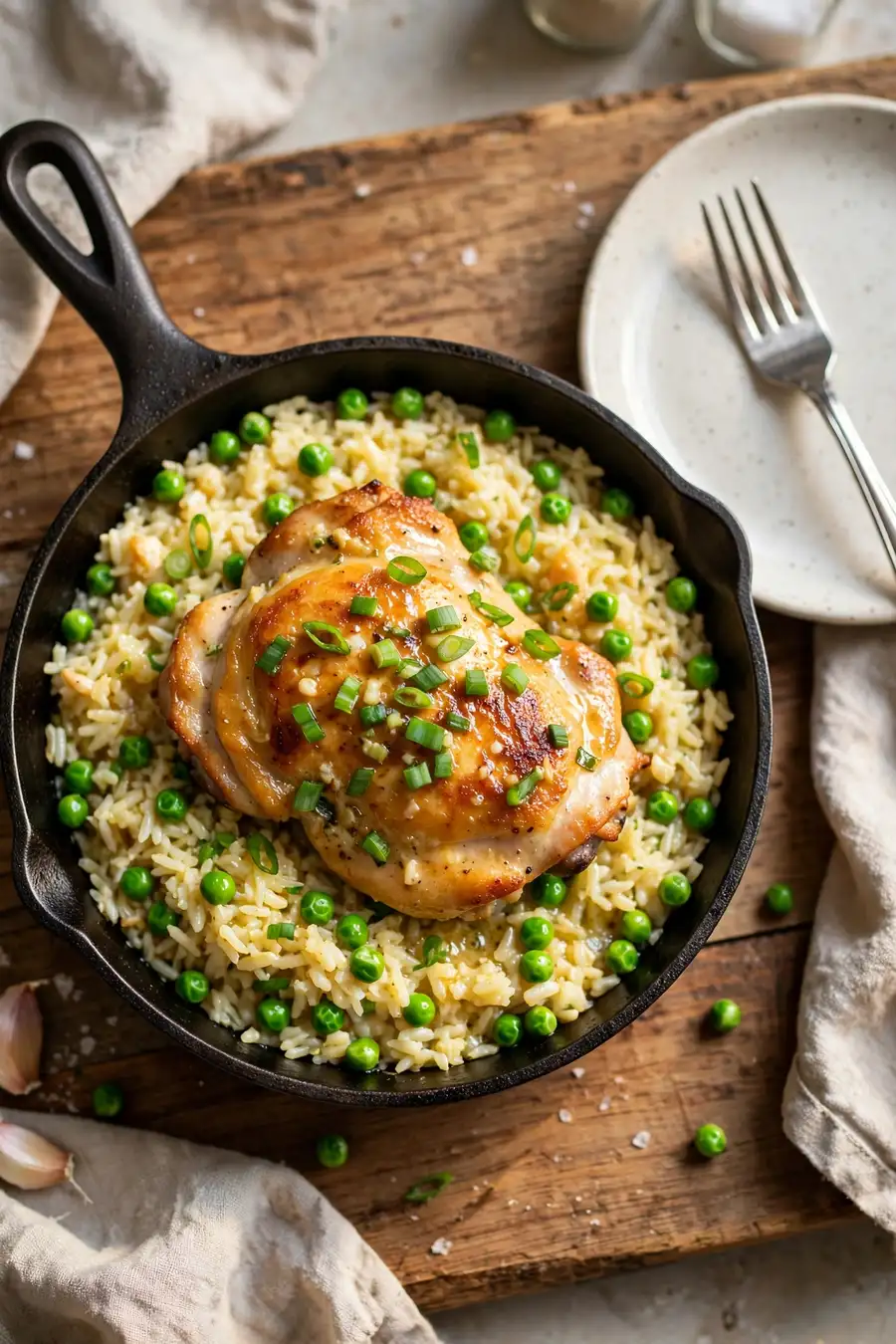
Here is the truth nobody puts on a recipe card. Cooking for one is mostly a shopping problem and a pan problem. Buy the right amounts, use the right size pan, and dinner is easy. This article teaches you that method through one dish only: a one-pan garlic butter chicken and rice, made for one plate, in one small skillet, in about half an hour. No slow cooker. Three levels. Stop at the one that fits your week.
The One-Plate Idea, Up Front
- Cheap easy meals on a budget for one start with one protein, one carb and one vegetable, cooked in one small pan.
- To scale a recipe down, divide the ingredients by the servings, but use a little less spice than the maths says.
- A small pan matters. If the food barely covers the bottom, the pan is too big.
- A half can is not waste. Refrigerate it labeled, or freeze it, and use it in the next dinner.
- Chicken is done at 165 degrees F. Check with a thermometer, not by the clock.
- Leftovers go in the fridge within 2 hours and get eaten within 3 to 4 days.
The Short Answer: Quarter the Recipe, Keep the Dinner
Cheap easy meals on a budget for one work when you cook one plate at a time. Use a small 8-inch skillet, one chicken thigh, half a cup of rice and one cup of broth, and cook a one-pan garlic butter chicken and rice in about 30 minutes. Scale any family recipe down by dividing the ingredients, season lightly, and check doneness a few minutes sooner than the original time. That is the whole method, one level at a time below.
The 10-Second Check: How Small Is Your Smallest Pan?
Three quick questions show where your for-one cooking stands.
Check 1: What size is your smallest pan? An 8-inch skillet is the one-person pan. If your smallest pan is a big 12-inch family skillet, dinner will spread thin and dry out at the edges.
Check 2: Do you know how to shrink a recipe? A family recipe that serves four becomes one plate when you divide every ingredient by four. If that sentence made you nervous, Level 1 is for you.
Check 3: What is already in your kitchen? Rice, one chicken thigh in the freezer, butter, garlic, frozen peas. If most of that is already home, you are one short trip from dinner.
Level 1: Free, Learn the Quarter Rule
[Cost: Free | Time: 15 minutes]
Level 1 costs nothing. It is the thinking part, and honestly, it is the part most for-one cooks skip. Then they wonder why dinner feels like a chore.
Step 1: Learn the quarter rule, and learn where it breaks. A recipe that serves four becomes one serving when you multiply every ingredient by one quarter. Meat, vegetables, grains and beans divide cleanly. But salt, garlic, chilli and strong spices do not divide the same way. They season the dish, they do not portion it. So use a little less spice than the maths says, taste, and add more if you need it. The N.C. Cooperative Extension cooking for one guide says the same thing in plainer words: season gradually, and check a halved recipe for doneness 5 to 10 minutes sooner than the original time.
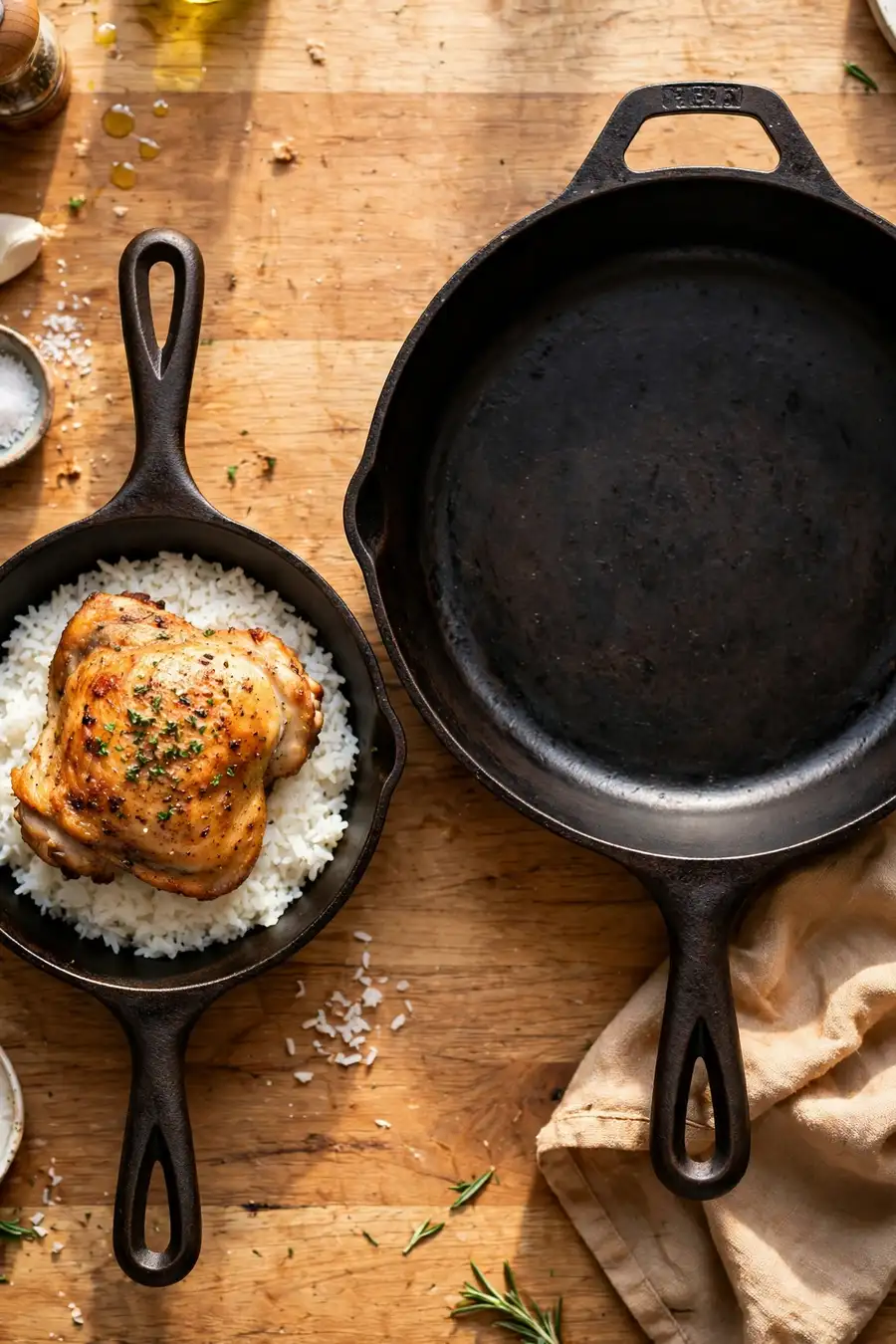
Step 2: Shrink the pan before you shrink the recipe. This is the mistake that ruins more single dinners than any other. One chicken thigh in a big 12-inch skillet spreads out, the liquid evaporates too fast, and the edges overcook while the middle is still catching up. The rule is simple: if the food barely covers the bottom of the pan, the pan is too big. One plate of food wants an 8-inch pan.
Step 3: Make a half-can plan before you open anything. Small cooking means half cans. Half a can of tomatoes, half a can of beans, half a can of broth. The other half is not waste unless you let it become waste. Use what you need, then move the rest into a small container, label it with the contents and the date, and put it in the fridge for the next dinner, or freeze it.
Step 4: Decide tonight or tonight plus lunch. Some nights you want one plate and nothing left over. Other nights, cooking two plates on purpose is the smart move: dinner tonight, lunch tomorrow. The wrong move is cooking four plates by accident and eating the same dinner until Friday. The crockpot meals for one on this site make the same choice with a slow cooker, if some nights you would rather let a pot do the work.
Level 2: Dollar-Store and Thrift, One Basket, Four Dinners
[Cost: Dollar-store level | Time: 20 minutes for one short trip]
Level 2 is for the cook whose pan is right but whose cupboard is thin. One short trip, and the next four dinners are already half planned.
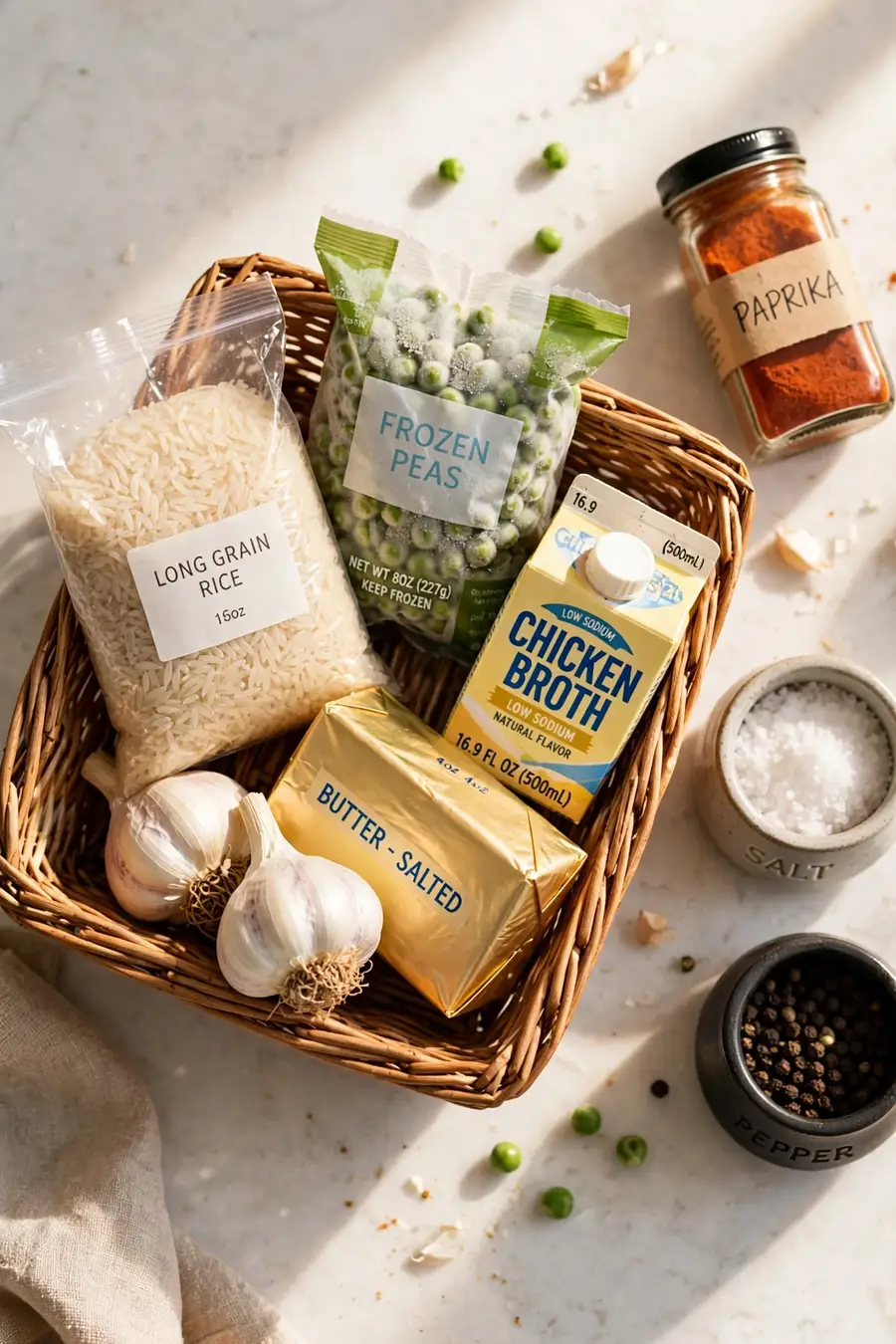
Step 1: Build one small for-one basket. Long grain rice, one small bag of frozen peas, garlic, butter, one onion, chicken broth, paprika, salt and black pepper. That basket is the whole Level 2 recipe, and the rice, broth and spices keep for months. Buy the chicken thigh fresh, or pull one from the freezer the night before.
Step 2: Check the thrift shelf for the small skillet. An 8-inch skillet is one of the easiest thrift finds there is, because families trade up to bigger pans. Check three things: the handle is tight, the surface is flat with no wobble, and there is no deep scratch through the coating. Wash it, dry it, and it is your one-person pan from tonight onward.
Step 3: Start a use-it-up shelf in the fridge. One small shelf, or one small box, where the half cans and the opened bags live. Half a can of tomatoes becomes tomorrow’s soup. The last of the broth becomes tonight’s rice. The cheap meals on a budget framework on this site runs on the same idea at family size: one shelf of staples, and dinner stops being a daily emergency.
Level 3: One Small Buy, a Single Chicken Thigh
[Cost: One small buy | Time: 10 minutes hands-on, then the pan works]
Level 3 is one small buy: a single chicken thigh, if your freezer is empty. Everything else is already in the basket from Level 2.
The Base Recipe: One-Pan Garlic Butter Chicken and Rice for One
The only recipe in this article, written so you can cook it exactly as written.
| Ingredient | Amount |
|---|---|
| Boneless, skinless chicken thigh | 1, about 5 ounces |
| Long grain rice | 1/2 cup |
| Water or chicken broth | 1 cup |
| Butter | 1 tablespoon |
| Garlic, minced | 2 cloves |
| Frozen peas | 1/2 cup |
| Paprika | 1/2 teaspoon |
| Salt | 1/4 teaspoon |
| Black pepper | 1/4 teaspoon |
| Green onion, sliced | 1 |
Method:
1. Season the thigh. Pat the chicken thigh dry with a paper towel. Sprinkle the paprika, salt and black pepper over both sides. Dry chicken browns. Wet chicken steams.
2. Sear it in the small skillet. Melt the butter in an 8-inch skillet over medium heat. Lay the thigh in, flat side down, and leave it alone for 4 to 5 minutes until the underside is golden. Flip it once and cook 3 to 4 minutes more, then lift it out onto a plate. It does not need to be cooked through yet.
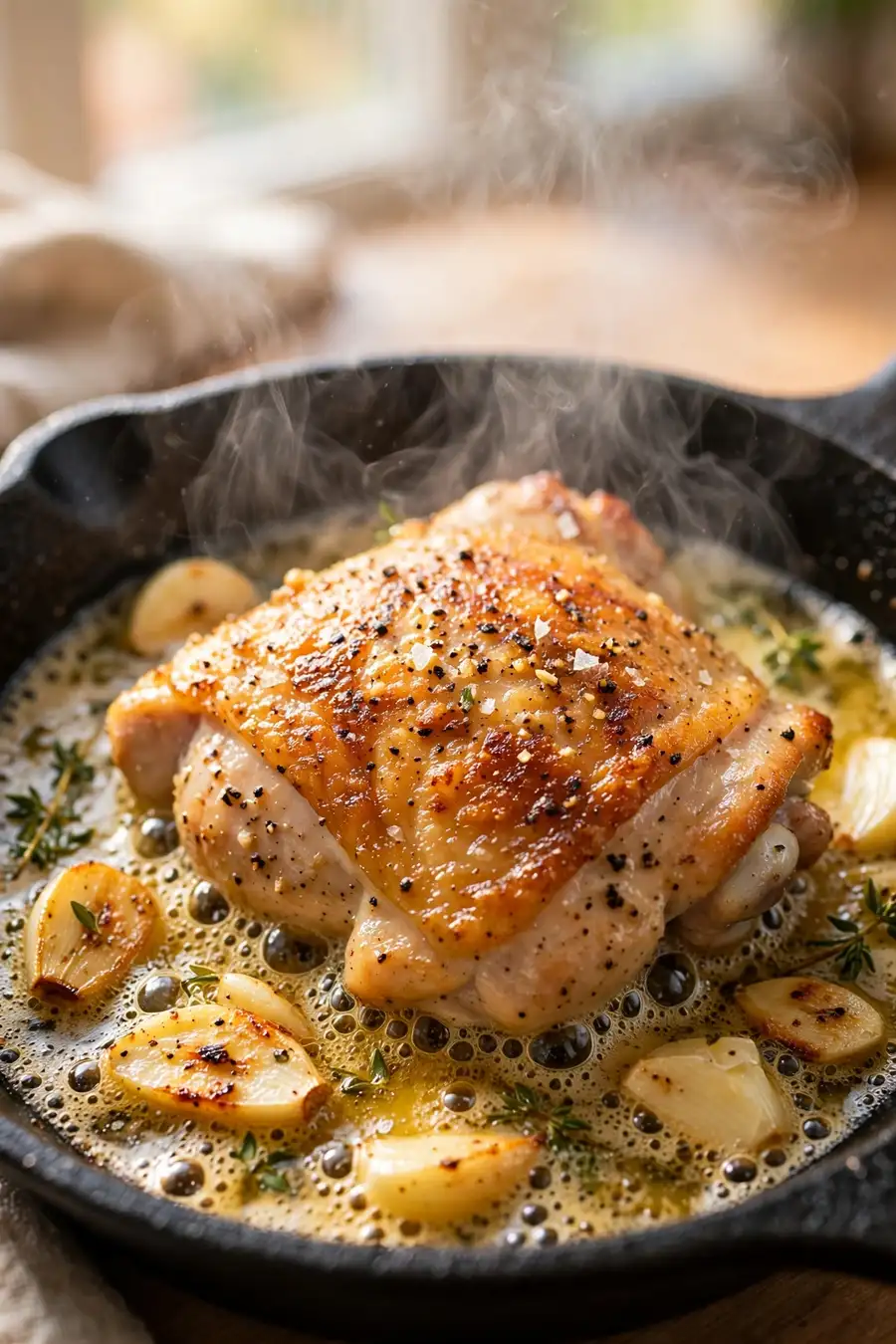
3. Soften the garlic. Turn the heat to medium low. Add the garlic to the butter left in the pan and stir for 30 seconds, just until it smells fragrant. Garlic burns fast, so do not walk away here.
4. Add the rice and the liquid. Pour in the rice and stir it once so every grain is coated in the garlic butter. Pour in the water or broth and scrape the bottom of the pan once with a wooden spoon to lift the browned bits up.
5. Nest the chicken back in and simmer. Set the thigh back into the pan, on top of the rice. Put the lid on, turn the heat to low, and simmer for 18 minutes. Do not lift the lid. The rice needs the steam, and every peek lets it out.
6. Add the peas and rest. After 18 minutes, lift the lid once, scatter the frozen peas over the rice, and put the lid straight back on for 5 minutes. Then take the pan off the heat and rest it, lid on, for 5 minutes.
7. Check the number and serve. Push a thermometer into the thickest part of the thigh. It must read 165 degrees F. If it reads lower, lid back on, another 5 minutes on low, then check again. Scatter the green onion over the top and eat it straight from the pan or on a plate. One pan to wash.
Variation 1: the lemon herb finish. Same dish, same pan, one swap and one late addition. Swap the paprika for 1 teaspoon of dried Italian seasoning when you season the thigh in Step 1. At the end, squeeze 1 tablespoon of lemon juice over the rice and stir in the green onion.
Variation 2: the spicy finish. Same dish, same pan, two swaps. Swap the paprika for 1/2 teaspoon of smoked paprika plus 1/4 teaspoon of red pepper flakes when you season the thigh. Stir 2 tablespoons of salsa in with the peas in Step 6.
The Swap Table: One Plate, Nothing Wasted
| The expensive way | The thrifty swap, same result |
|---|---|
| Takeout for one, several nights a week | Tonight’s pan: one thigh, half a cup of rice, one plate |
| A family recipe cooked whole, eaten all week | The quarter rule: divide by four, season lightly |
| A big 12-inch skillet for one portion | An 8-inch skillet, thrift shelf if you need one |
| Throwing away the other half of the can | A labeled container in the fridge, or the freezer |
| Buying a full spice rack at once | Paprika, salt and pepper only, then one spice per dish |
| Guessing when chicken is done | One thermometer check at 165 degrees F |
Cooking for One: Questions, Answered
What are the cheapest meals to cook for one person?
The cheapest meals for one are one-pan dinners built on rice, eggs, beans, one piece of chicken and frozen vegetables. One protein, one carb and one vegetable, cooked in a small pan, with ingredients that repeat across the week so nothing is wasted. The garlic butter chicken and rice in this article is one example.
How do I scale a recipe down for one person?
Divide every ingredient by the number of servings in the original recipe, then multiply by one. For a recipe that serves four, that means one quarter of everything. But use a little less salt, garlic and chilli than the maths says, because strong flavours hit harder in a small batch. Check doneness 5 to 10 minutes sooner than the original time, and cook in a smaller pan.
What do I do with the other half of a can?
Use what you need, then move the rest into a small container, label it with the contents and the date, and refrigerate it for the next dinner or freeze it. Half a can of tomatoes goes into tomorrow’s soup, half a can of beans goes into a quesadilla. Label it, because an unmarked container gets thrown away and a marked one gets used.
Can I cook for one in a big pan?
You can, but dinner will suffer for it. A small amount of food in a big pan spreads out too thin, dries out and overcooks at the edges, and the liquid evaporates too fast. Use an 8-inch skillet for one serving. If the food barely covers the bottom of the pan, the pan is too big.
How long do leftovers last when you cook for one?
Move leftovers into a container and into the fridge within 2 hours, and eat them within 3 to 4 days. Reheat until steaming hot, to 165 degrees F. If you cooked one plate on purpose, there should be nothing left to store.
Your Solo Dinner Plan: My One-Plate Dinner Plan
This article comes with a free one-page printable, “My One-Plate Dinner Plan.” It has four parts:
- The quarter rule in short form: divide by the servings, season lightly, check 5 to 10 minutes sooner.
- A pan check: your smallest skillet size.
- Four dinner slots, each with a line for the protein, the carb and the vegetable.
- A half-can log: what went in the container, the date, and the dinner it is saved for.
Today’s One Small Job: One Thigh Out of the Freezer
Tonight, do only one thing. Take one chicken thigh out of the freezer and put it in the fridge on a plate, so it thaws overnight. Tomorrow, the thigh goes in the pan, the rice goes in after it, the lid goes on, and dinner is one plate, one pan, done. For the same thinking across a whole week, the grocery budget for one on this site shows how one short list carries seven dinners.