
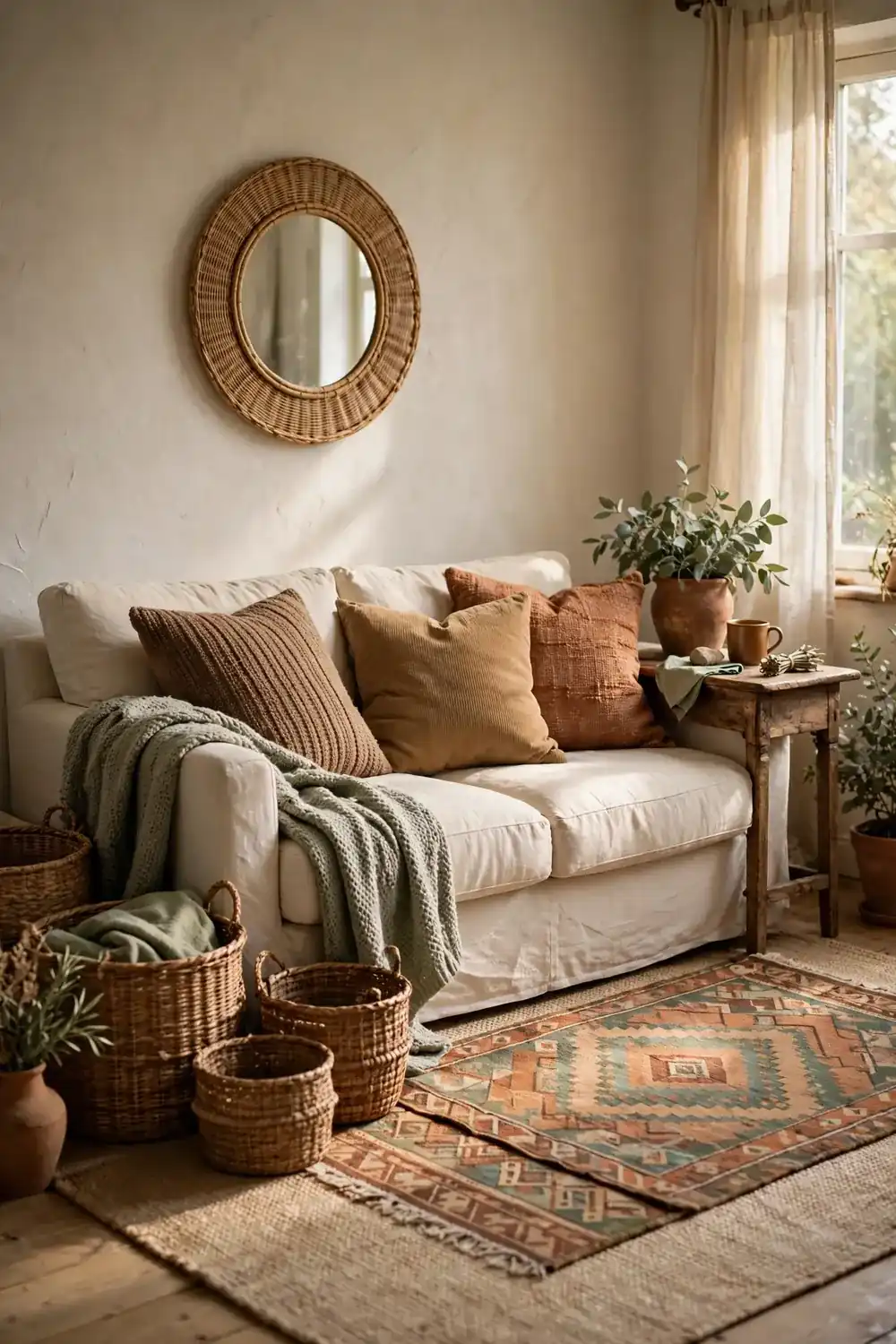
Copy It, Copy the Feeling, or Skip It: Living Room Refresh Ideas 2026
Every January, the internet redecorates your living room for you. The trend lists land all at once, full of beautiful rooms, and nearly every one of them quietly assumes two things: a decorating budget you do not have, and a house you own outright. If you rent, or if your refresh money is whatever is left after groceries, most living room redo ideas read like they were written for somebody else.
So this list works as a filter instead. In their 2026 forecasts, designer roundups like Homes & Gardens and ELLE Decor keep circling the same story: warmth is back, and rooms should look lived in. That is good news for a budget, because warmth is the cheapest direction a room can move in. Every major trend below is sorted into copy it, copy the feeling, or skip it, with the cheap route in and the honest catch for each one.
Key Takeaways
- Warmth is the whole 2026 story: warm neutrals in coffee tones and heavy texture, and both are copied with textiles and thrift finds, not furniture.
- The cheapest trends are strategies, not purchases. Texture layering and the collected look cost little or nothing.
- A conversation-first layout is completely free. Rearranging beats buying, every single time.
- Copy feelings, not items: deep color and dramatic lighting both translate into curtains, pillows, and one good thrifted lamp.
- Skip anything whose ticket in is new furniture or a full matching set. That is where trend lists quietly get expensive.
What Living Room Trends Are Worth Copying on a Budget in 2026?
The living room refresh ideas worth copying in 2026 are warm coffee-toned neutrals, texture layering, patterned rugs, the collected secondhand look, conversation-first layouts, and curves copied small, because every one of them can be done with textiles, thrift finds, a little paint, or simple rearranging. Copy the feeling of deep saturated walls and statement lighting rather than the items themselves. Skip the trends that start with new furniture or matching sets, like modular designer sofas and whole-room palette kits, and skip the farmhouse signage look that designer coverage is calling done.
How This Filter Works
Each trend below gets a verdict. Copy it means a cheap route exists and the look is genuinely worth having. Copy the feeling means the expensive version is out of reach, but the mood it creates is not. Skip it means the honest answer is to leave it in the store.
The cheap routes here are the same four tools, over and over: thrift and secondhand finds, paint where you are allowed to use it, textiles, and light. On renters: everything in the copy it list is textiles, layout, or secondhand furniture, so the whole list is renter-executable. The only exceptions are the paint variants, flagged where they appear. If money runs out halfway, do the free trends first. They carry more change than the shopping does.
Copy It: Six Trends With a Cheap Route In
1. Warm coffee neutrals instead of cool gray
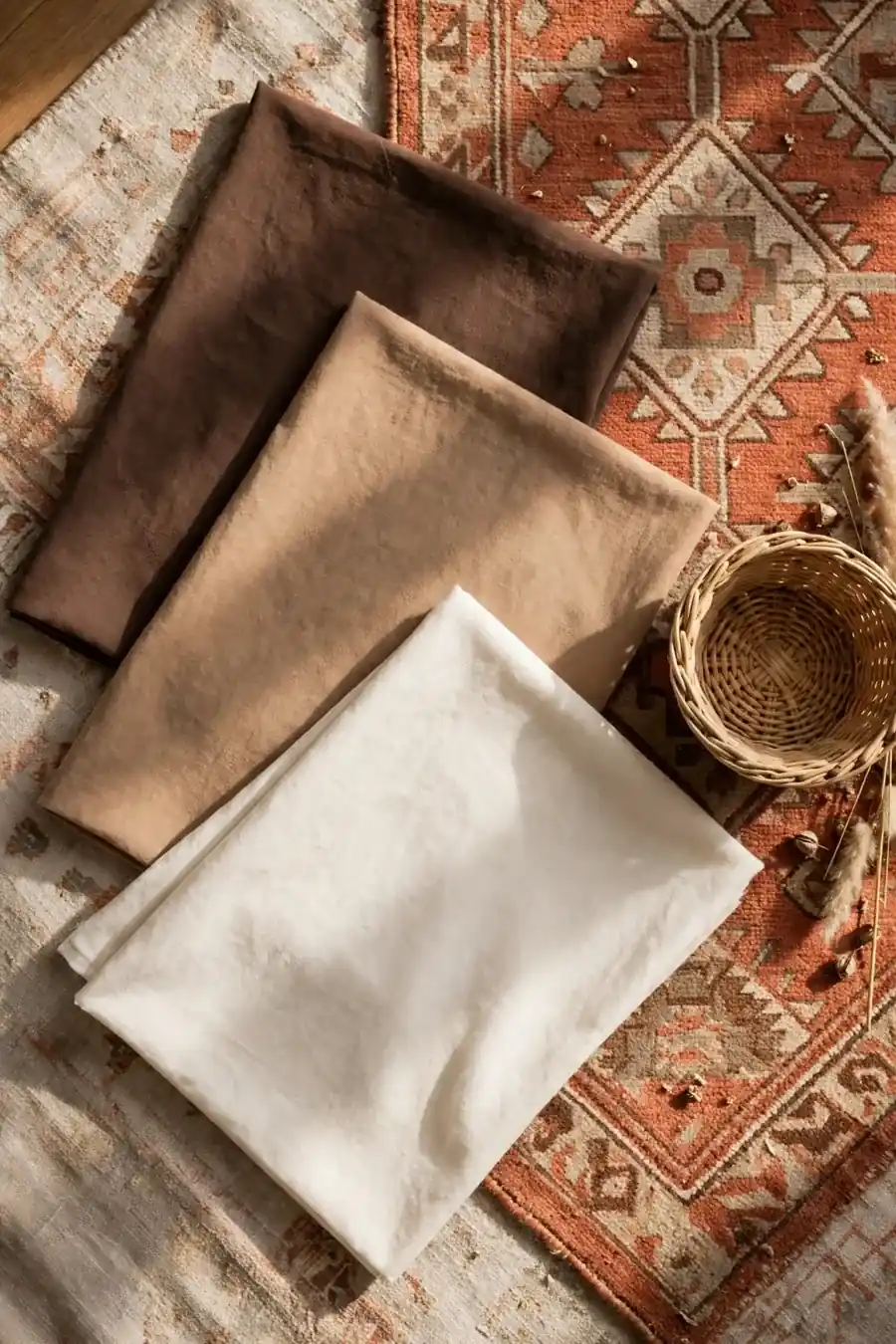
Designers are calling this the year’s dominant color story: mocha, cappuccino, camel, and warm off-white replacing the cool grays that ruled the last decade. The cheap route is a textile swap. Pillow covers, a throw, and curtains in the new warm neutrals, set against the furniture you already own, change the temperature of the whole room. If your lease allows paint, one wall in warm white does the rest.
The honest limit: a palette is not a product line. You need a handful of pieces in the family, not a roomful, and if every piece lands at exactly the same tone the room goes flat. Texture, which is the next trend, is what keeps warm neutrals interesting.
2. Texture-maxxing
Layered weaves, bouclé-look fabrics, chunky knits, woven baskets, matte ceramics: if it has a surface you want to touch, it is in. This might be the thriftiest trend alive, because thrift stores are simply full of texture. Woven, wooden, and ceramic pieces are what secondhand shelves do best. At home, layer one plush rug with a smaller patterned one over it and mix your materials on every surface.

The honest limit: texture piled up in a single material reads as clutter, not depth. Spread it around. Something woven, something wooden, something ceramic, something soft.
3. Patterned rugs and heritage prints
Pattern is back on floors and upholstery, in stripes, checks, and botanicals, after years of plain everything. The cheap route is layering: a smaller patterned rug over the plain base rug you already own gives you a statement rug without statement rug money. The same logic works upstairs, so to speak, with one patterned cushion sitting among solids.
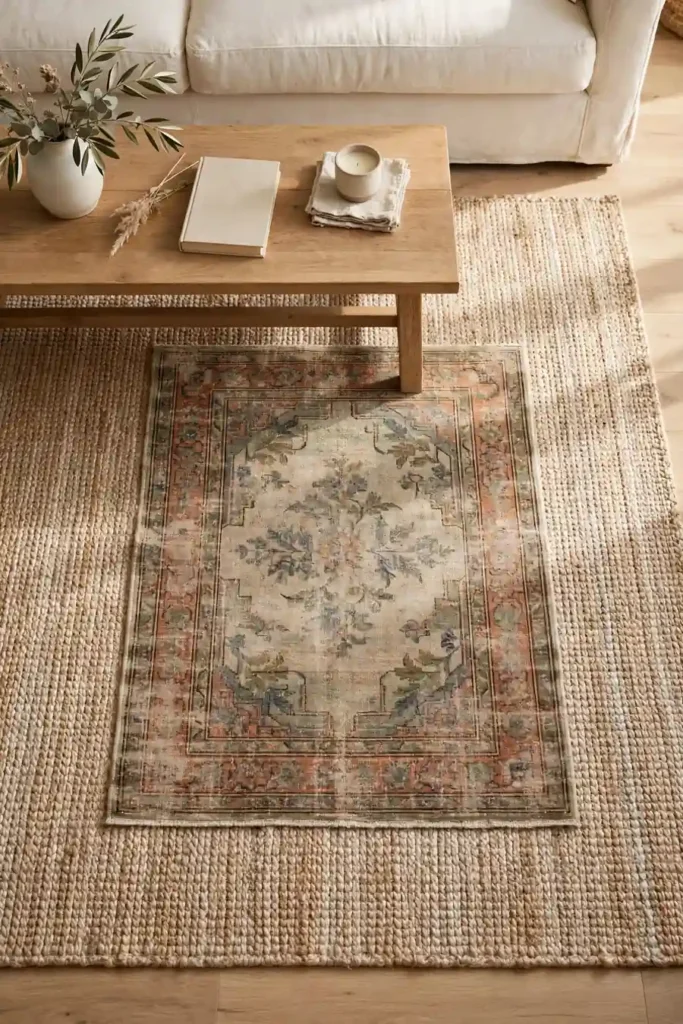
The honest limit: one pattern gets to be the hero at a time. A loud rug and loud curtains in the same eyeline will fight, and the room loses. Pick the floor or the windows, not both.
4. Collected, not coordinated
Mixed eras, mixed materials, matching furniture sets officially out. This is the vintage revival in everyday clothes, and it is a gift to anyone on a budget, because the cheap route is literally a thrift strategy: inherited or secondhand wood next to one modern piece, a lamp from one decade and a table from another. Here is the rare case where the budget version is not a copy of the real thing. It is the real thing.
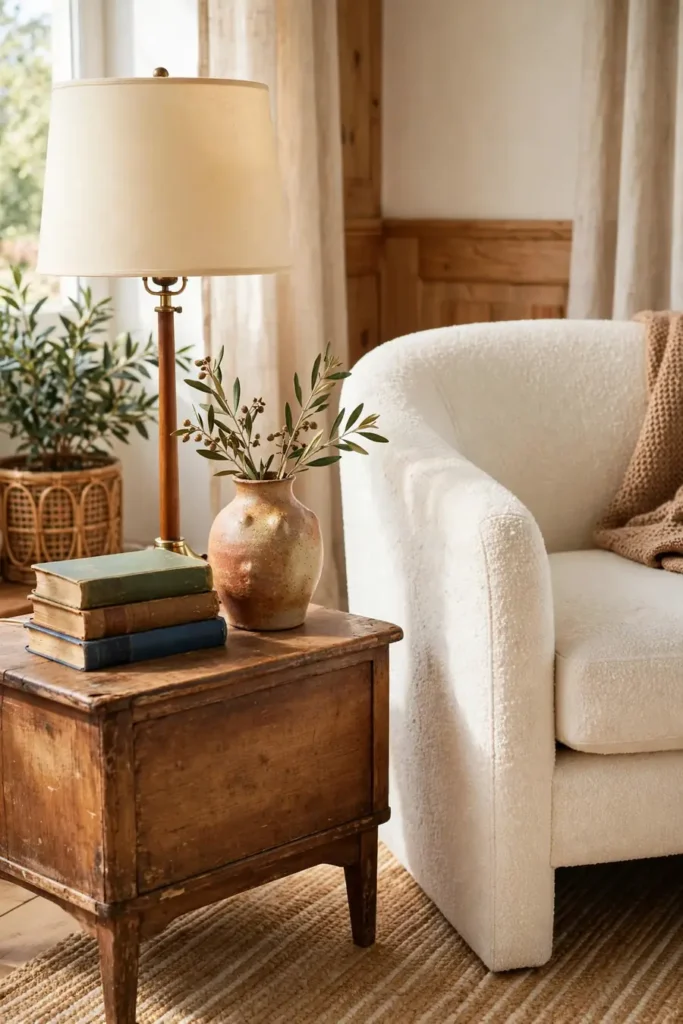
The honest limit: collected still needs one thread holding it together, or it reads as random. Repeat a color or a wood tone two or three times across the room and the mix looks chosen.
5. Conversation-first layouts

Face-to-face seating, deep cushions, rooms arranged for people rather than for photographs. Designers are calling this the comfort correction, and the cheap route costs nothing at all. Rearrange what you own so chairs and sofa actually face each other over the coffee table, add the throws and pillows already in your closets, and let the room look used and loved instead of staged.
The honest limit: keep your walkways. A chair angled for conversation that blocks the door swing or sits on the heating vent is a daily annoyance wearing a trend’s clothes.
6. Curves, copied small

Curved furniture is the big furniture story of the year, all rounded sofas and arched everything. Do not buy the curved sofa. Copy the shape small and secondhand instead: one round mirror, an oval tray, a drum side table, a round cushion. Round pieces are common on the secondhand market precisely because they were common before, so they turn up cheap and often.
The honest limit: one round anchor is enough. A room where everything curves loses the contrast that makes the shape noticeable in the first place.
Copy the Feeling, Not the Item
7. Deep saturated walls
Color-washed rooms in deep green, clay, and ink are everywhere in designer coverage right now, and the full version means paint, which means money or a landlord’s permission. Owners can take the feeling from one wall, or from the inside of a bookcase, which gives the depth without the full commitment. Renters saturate the textiles instead: curtains and pillows in the deep tone, against pale walls, deliver most of the mood and leave with you at move-out.
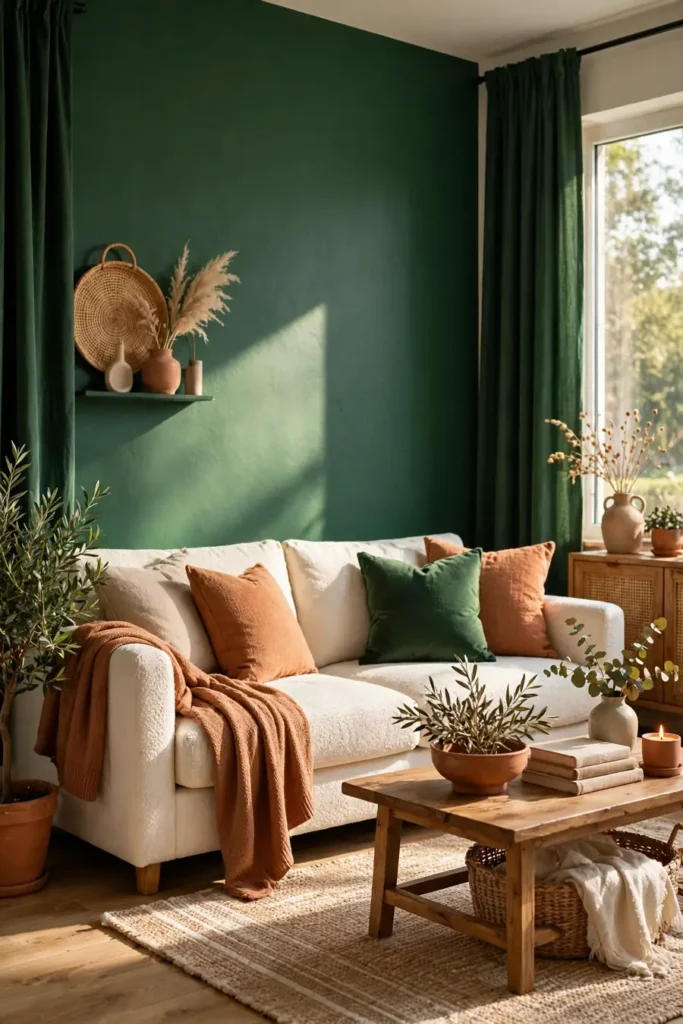
The honest limit: deep color drinks light. In a room that is already dark, put the saturation where daylight lands, or the cozy quickly turns cave-like.
8. Statement lighting and ceiling moments
Sculptural pendants and dressed-up ceilings are the other half of the designer story. The cheap route is a thrifted lamp carrying a dramatic shade, or a plug-in pendant hung from a removable hook with the cord managed neatly. Nothing hardwired, ever, in a rental. Or skip the pendant idea and give your biggest existing lamp the biggest shade it can carry. Layered lighting, a lamp at sofa height and one across the room, does more for the mood than any single hero fixture.
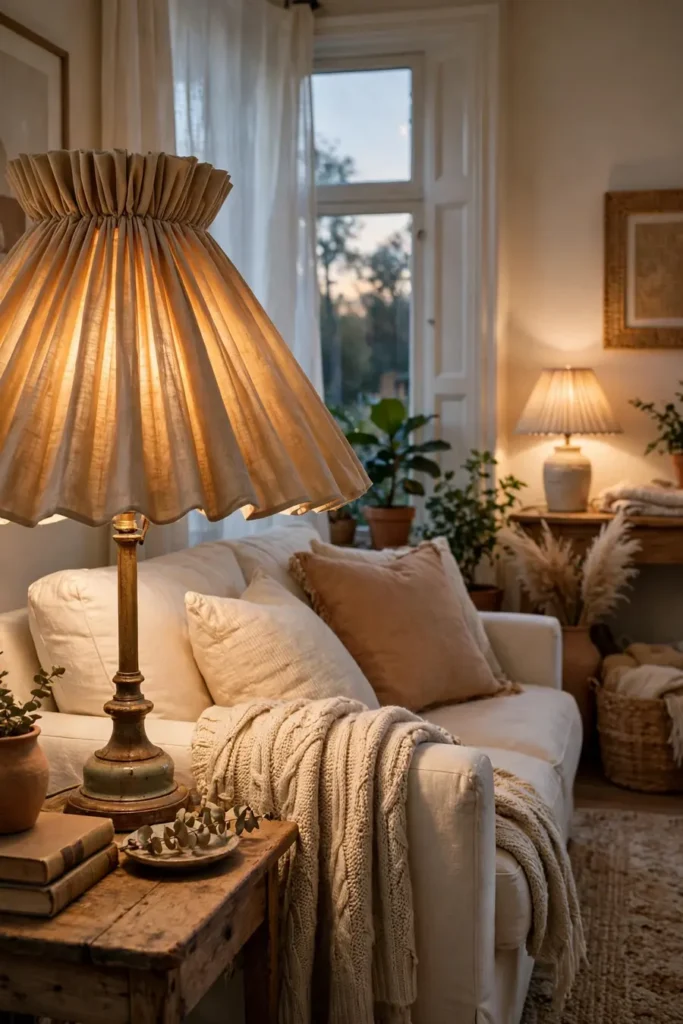
The honest limit: check the shade against the lamp’s base before you fall for it. A top-heavy thrifted pairing that wobbles every time the table gets bumped is not a statement worth making.
Skip It: Where the Trend Lists Get Expensive
Skip the modular designer sofa sold as a refresh
A furniture replacement is not a refresh, whatever the ads call it this spring. Modular sofa systems will be sold back to you at refresh prices all year, and the flexibility they promise is the same flexibility your layout change in trend 5 already gives you for free.
Skip the coffee palette as a new decor set
The palette is the point, not the products. Buying a dozen new beige objects to chase warm neutrals manufactures exactly the staged, bought-in-one-afternoon look this trend is reacting against. Three or four textile pieces in the family get you the feeling. The set gets you a receipt.
Skip farmhouse signage and cliché pieces
Designer coverage is actively calling the mass-market farmhouse look done. Word art, faux-rustic props, and slogan signs are the fastest-dating purchases in the store right now, which makes them the worst possible buy on a budget. A piece that dates quickly is expensive no matter what it cost.
Skip all-white blank box minimalism
Even the soft-white color-of-the-year coverage comes with designers pushing back on sterile white rooms. On a budget, the look reads empty rather than serene, because the expensive version secretly relies on rich texture and good architecture to stay interesting. Plain rooms without either just look unfinished, and you will keep buying things to fix a feeling the trend itself caused.
Frequently Asked Questions
What is the biggest living room trend for 2026?
Warmth. Coffee-toned palettes, heavy texture, and rooms that look genuinely lived in. Multiple designer roundups converge on that overall feeling over any single item, which is why the cheapest trends on this list are also the most central ones.
Which 2026 trend is cheapest to copy?
Texture layering and the collected look, because both are thrift store and rearrange-what-you-own strategies rather than purchases. The conversation-first layout is cheaper still, at exactly zero, since it asks for furniture you already have and a free afternoon.
Which trends should I skip on a budget?
Anything whose entry ticket is new furniture or a full matching set, and the fading mass-market farmhouse look. If a trend cannot be copied with textiles, secondhand finds, or rearranging, it is not a refresh. It is a renovation wearing a friendlier name.
The Bottom Line
Of all the updated living room ideas floating around this year, the ones worth your money share a trait: they were never really purchases. Warmth, texture, pattern in one place, furniture that faces your favorite people, one round shape in a straight-lined room. Start with the free layout change, thrift the texture, swap the pillow covers, and let the skip list do what it does best, which is keep your money in your pocket. A warm room that looks loved will outlast every trend cycle the internet schedules for it.


