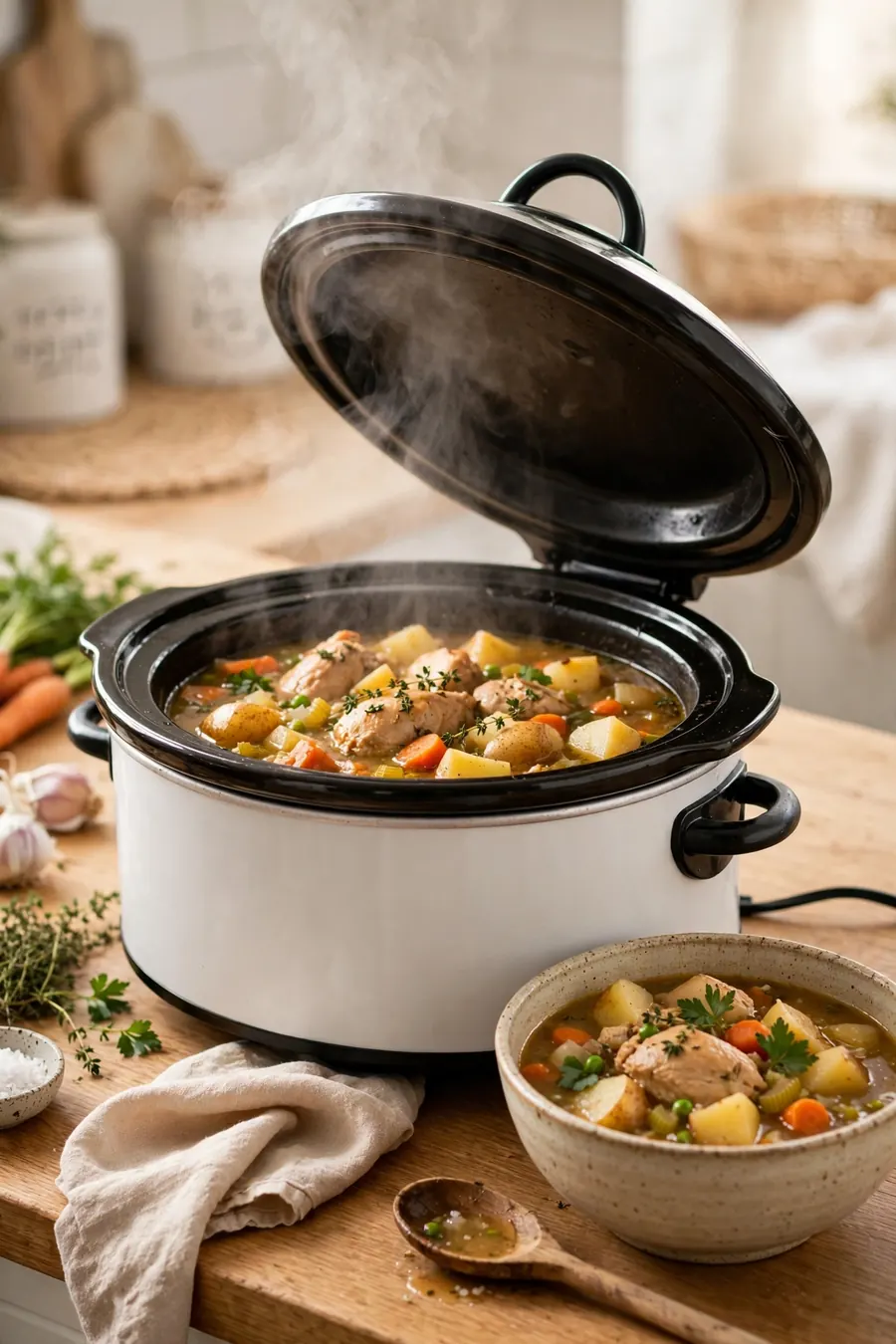
Crockpot Meals for Beginners: Your First Chicken Stew, Done Right
A new slow cooker looks like the easiest thing in the world. A pot, a lid, a dial. Then you actually stand there with raw chicken in one hand, and the questions start arguing with each other. How full? Low or High? Can it go in frozen? If you have stood in that kitchen, lid in hand, half hopeful and half convinced you were about to ruin dinner, you are in good company. Most of us started exactly there.
So we are not going to drown you in recipes. One dish. A plain chicken and vegetable stew, the classic first crockpot dinner, and you will learn the fill rule and Low versus High by actually cooking it. Then the same pot gets two different finishes, so your second try does not feel like leftovers wearing a costume. Three levels. Stop at the one that fits your week, honestly.
New Cook? Start With These
- Crockpot meals for beginners start with one forgiving dish, not a list of recipes: a chicken and vegetable stew.
- Fill the pot one-half to two-thirds full. Less cooks too fast, more heats unevenly.
- Low and High reach the same gentle simmer. High just gets there faster, roughly 1 hour on High for every 2 hours on Low.
- Never put frozen meat in a slow cooker. Thaw it first, in the fridge, in cold water, or in the microwave.
- Chicken is done at 165 degrees F. Check the thickest piece with a thermometer, not by color or by the clock.
The Short Answer: Five Rules, One First Stew
Crockpot meals for beginners work when you learn five rules on one easy dish. Pick a 4 to 6 quart cooker, fill it one-half to two-thirds full, put the vegetables on the bottom and the thawed chicken on top, keep the lid on, and cook a chicken and vegetable stew on Low for 6 to 7 hours, until the chicken reads 165 degrees F. That is the whole method, one level at a time below.
The 10-Second Check: Do You Own a Cooker?
Answer three quick questions honestly, and you will know exactly where your first cook stands.
Check 1: Do you own a cooker, and what size is it? Check the capacity stamped on the base or the box. A 4 to 6 quart cooker is the size most beginner recipes are written for, and the size the Level 3 stew fits. A smaller or bigger pot still works, as long as the fill rule in Level 1 holds.
Check 2: Is your chicken thawed, or still in the freezer? If it is frozen solid, tonight is not stew night yet. Move it to the fridge now and the stew happens tomorrow. Frozen meat never goes into the cooker, for the reason in Level 1.
Check 3: Are you home for a long stretch, or out the door? Home all afternoon means Low. A shorter window means High. Both end at the same simmer, so this is a schedule question, not a skill question.
Level 1: Free, Learn the Five Rules First
[Cost: Free | Time: 15 minutes]
Level 1 costs nothing at all. Just the five rules, learned on the cooker already sitting in your kitchen, the one that has been quietly waiting for you to trust it.
Step 1: Learn the fill rule before you learn any recipe. A slow cooker works best filled one-half to two-thirds full. Below half, food cooks too fast and can scorch or dry out. Above two-thirds, the pot heats unevenly and can bubble over as the vegetables release their juice. Picture those two lines on your pot. Every recipe you make in it lives between them.
Step 2: Put the lid on, and leave it on. The cooker works with trapped steam, and every peek lets that heat escape. One lift can add 20 to 30 minutes to the cooking time. Check once near the end, when you take the temperature.
Step 3: Thaw the meat. This one is not optional. Frozen meat warms so slowly that the middle can sit for hours at the temperature where bacteria grow fast. FoodSafety.gov is clear that meat and poultry must be thawed before slow cooking, in the fridge overnight, in cold water, or in the microwave, never on the counter. Read it at FoodSafety.gov.
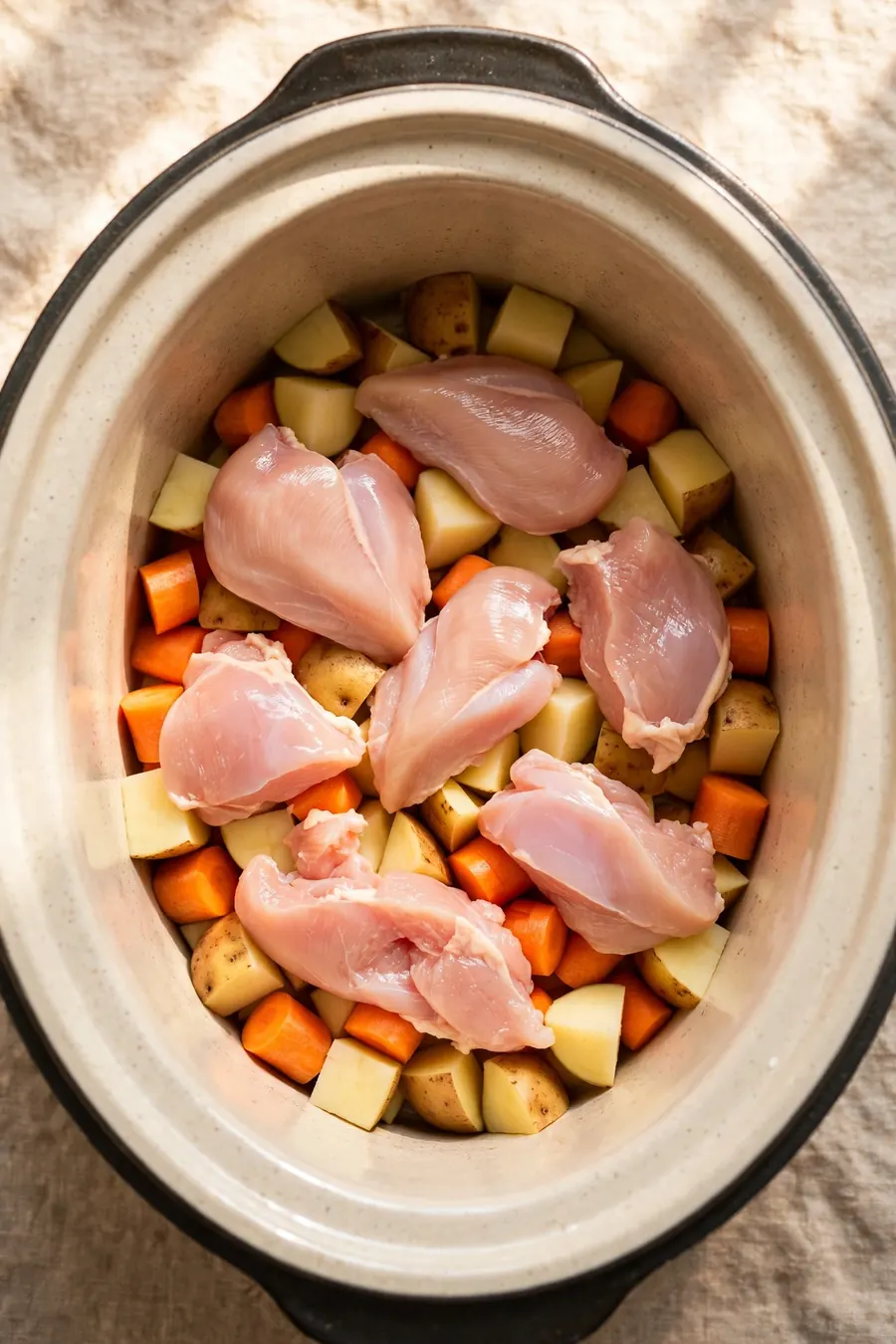
Step 4: Learn the layer order. Dense vegetables go on the bottom, closest to the heat, because potatoes and carrots cook more slowly than meat. The meat goes on top, and the liquid goes over everything last. You will use this exact order in the Level 3 stew.
Step 5: Pick your setting by your day, not by habit. Low and High both end at a gentle simmer. High simply climbs there faster. The working swap: 1 hour on High is roughly 2 hours on Low, so a stew that takes 6 to 7 hours on Low takes about 3 to 4 hours on High. The right setting is the one that matches your hours.
Once these rules feel clear, the easy crockpot meals on this site stop looking like a wall of recipes and start reading like variations on a method you already know.
Level 2: Dollar-Store and Thrift, a Thrift-Shelf Cooker and Staples
[Cost: Dollar-store level | Time: 20 minutes for one short trip]
Level 2 fills the small gaps. A cooker, if you do not own one yet. And the humble shelf staples this stew is built on.
Step 1: If you have no cooker, check the thrift shelf before you buy new. Slow cookers are one of the most common things on a thrift shelf, because families outgrow them. Check three things before you pay: the lid sits flat with no chips on the rim, the stoneware has no cracks, and the cord is undamaged. At home, wash it, fill it with water, and run it on Low for an hour to confirm it heats.
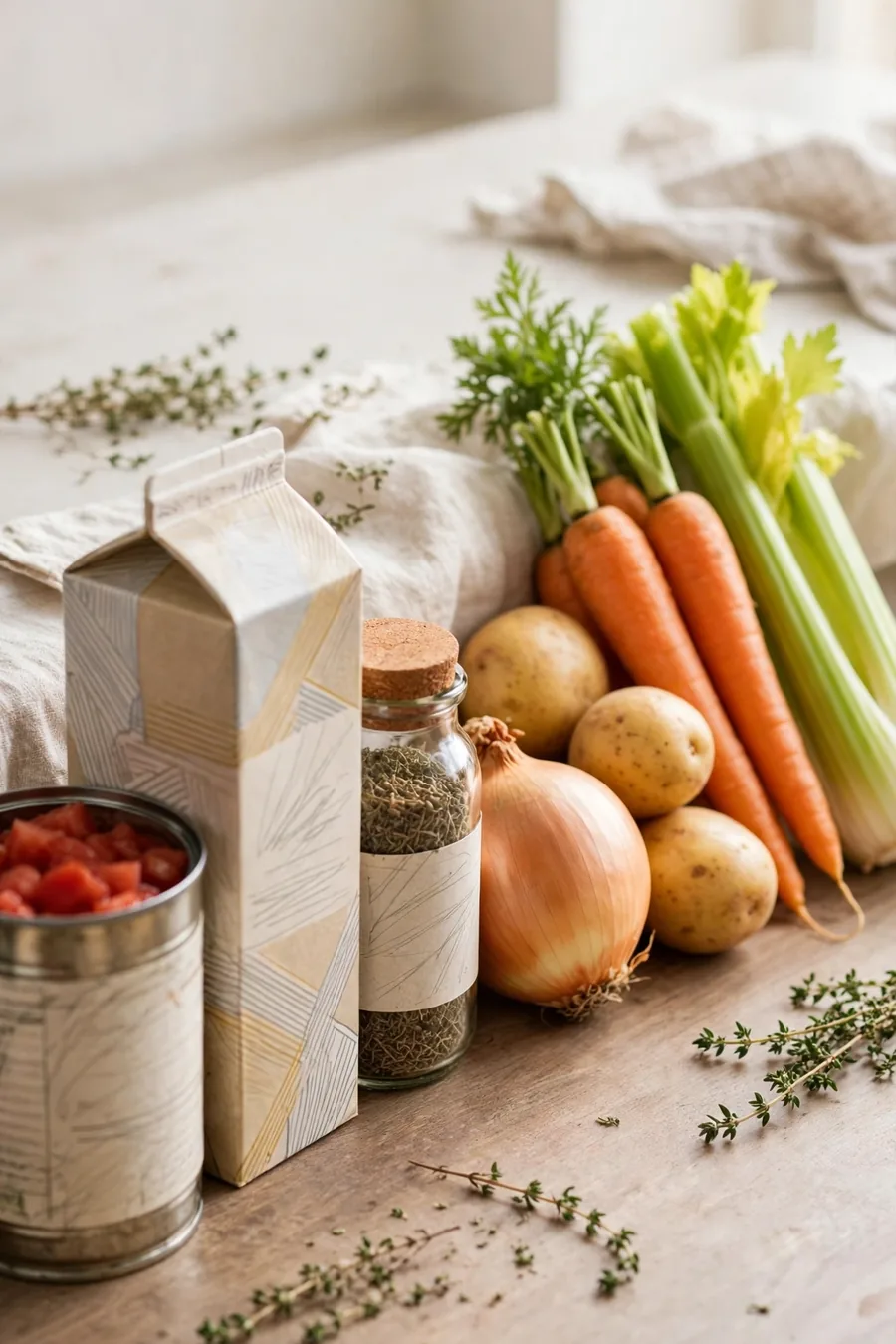
Step 2: Build the small stew shelf. One short trip covers the canned and dry side of the Level 3 stew: one can of diced tomatoes, a carton of chicken broth, dried thyme, salt, and black pepper. Add potatoes, carrots, celery, and an onion, and the only fresh thing left to buy is the chicken. These staples keep for months, so the second stew costs one fresh purchase.
Step 3: Learn the one beginner mistake this level fixes. New cooks drown a stew. A slow cooker traps steam and loses almost no moisture, and the chicken and vegetables release their own juice as they cook, so the pot needs less liquid than a stovetop stew. The stew below uses 2 cups of broth for a full pot, and it still finishes with plenty of sauce.
Step 4: Practice the no-prep habit. The stew needs no browning and no first step on the stove. That style has a name, and the dump and go meals on this site are built on it: raw ingredients in, in the right order, lid on, walk away.
Level 3: One Small Buy, Fresh Chicken and a Thermometer
[Cost: One small buy | Time: 20 minutes hands-on, then the pot works]
Level 3 is one small buy: the fresh chicken for the stew, and a basic food thermometer if you do not own one yet. That little thermometer matters more than anything else in this article. It turns “I think it is done” into “I know it is done,” and that is a lovely feeling at the end of a long day.
The Base Recipe: Chicken and Vegetable Stew
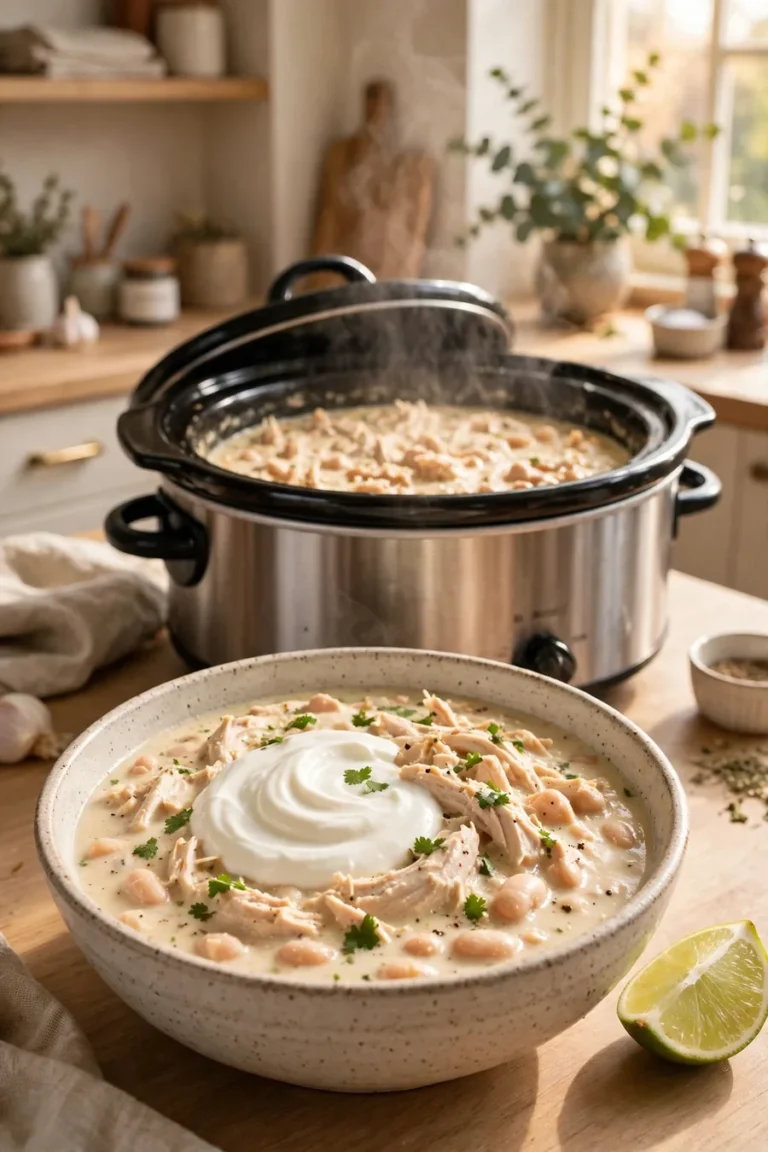
The only recipe in this article, written so you can cook it exactly as written. It fits a 4 to 6 quart slow cooker, filled about two-thirds full. Start with chicken thighs: they stay tender through a long cook where breast can dry out if it runs long.
| Ingredient | Amount |
|---|---|
| Boneless, skinless chicken thighs, thawed, cut into 1 inch pieces | 1.5 pounds |
| Potatoes, cut into 1 inch chunks | 4 medium, about 1.5 pounds |
| Carrots, peeled and sliced into 1/2 inch rounds | 3 |
| Celery stalks, sliced | 2 |
| Onion, chopped | 1 medium |
| Garlic, minced | 2 cloves |
| Diced tomatoes, with their juice | 1 can (14.5 ounces) |
| Chicken broth | 2 cups |
| Dried thyme | 1 teaspoon |
| Salt | 1 teaspoon |
| Black pepper | 1/2 teaspoon |
| Bay leaf | 1 |
Method:
1. Thaw and cut the chicken. The thighs should be fully thawed from the fridge, never frozen. Cut them into 1 inch pieces, and wash your hands and the board with hot soapy water when you finish.
2. Load the pot in order. Potatoes, carrots, celery, and onion go in first, spread across the bottom. The garlic goes over them. The chicken goes on top, in one loose layer: the slow vegetables sit closest to the heat.
3. Add the liquid and the seasoning. Pour the tomatoes, with their juice, and the 2 cups of broth over everything. Sprinkle the thyme, salt, and black pepper across the top, and tuck the bay leaf into the liquid. Do not stir. The layers are the point.
4. Lid on, dial set, walk away. Cook on Low for 6 to 7 hours, or on High for 3 to 4 hours. Leave the lid alone the whole time. The stew is ready to check when the potatoes give easily to a fork.
5. Take the temperature. Push the thermometer into the thickest chicken piece, near the middle of the pot. It must read 165 degrees F. If it reads lower, lid back on, another 30 minutes on Low, then check again. This one check makes the meal safe, and it takes ten seconds.
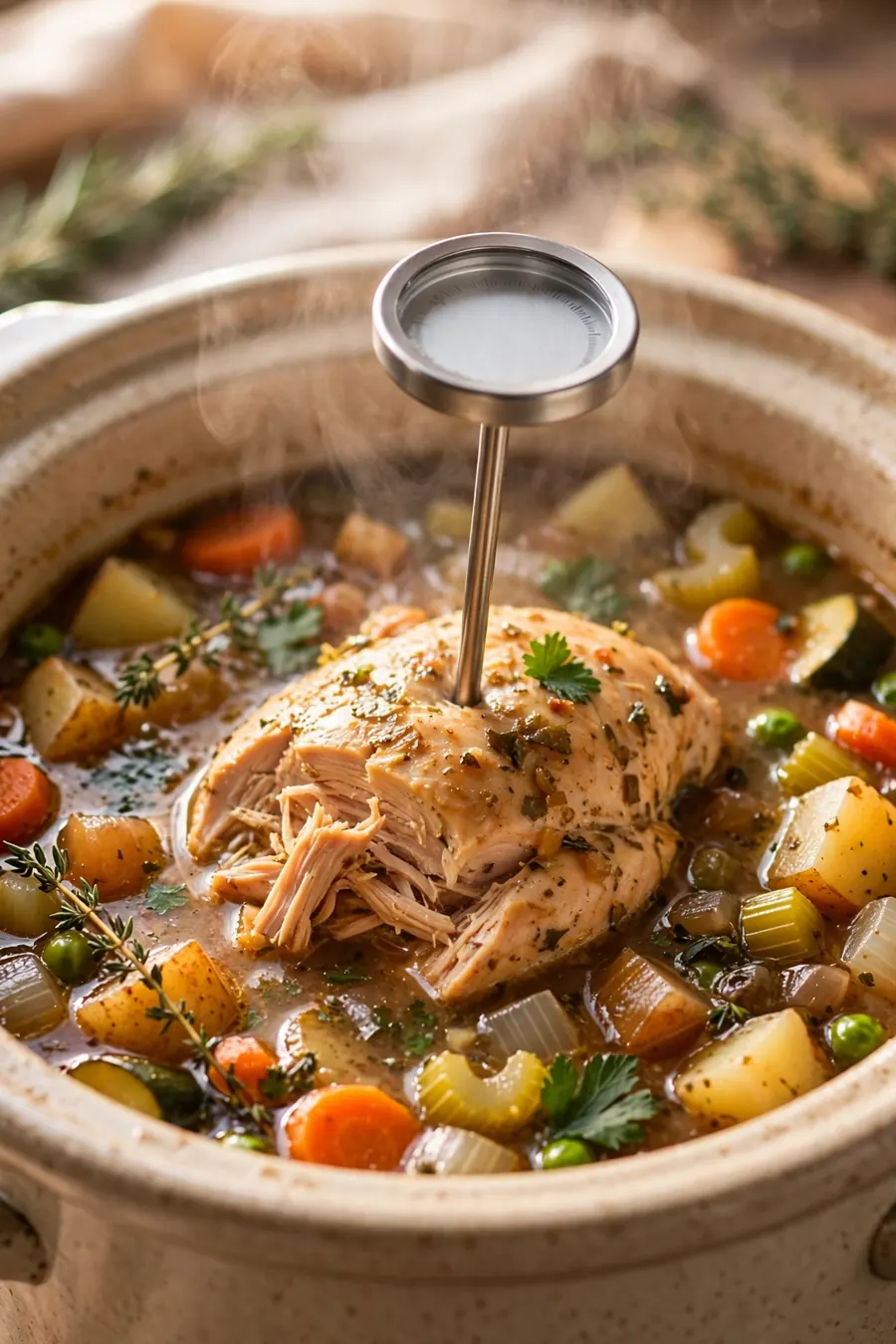
6. Finish and serve. Fish out the bay leaf and throw it away. Stir once, gently, and taste the broth. Serve in bowls as it is. Leftovers go into shallow containers, into the fridge within 2 hours, and get eaten within 3 to 4 days.
Variation 1: the tomato and herb finish. Same pot, same stew, one swap and one late addition. Swap the thyme for 2 teaspoons of Italian seasoning at Step 3. In the last 30 minutes, lift the lid once, stir in 1 cup of frozen peas, and put the lid straight back on. Peas are delicate, so they go in late instead of cooking for hours. Serve with grated Parmesan if you have it, and nobody will call it a repeat.
Variation 2: the curry finish. Same pot, same stew, two swaps. At Step 3, swap the thyme for 2 teaspoons of curry powder and 1/2 teaspoon of ground ginger, and pour in only 1 cup of the broth. In the last 30 minutes, stir in 1 cup of canned coconut milk and let it heat through with the lid back on. Coconut milk goes in late so it stays smooth instead of splitting over a long cook. Serve over rice: a different dinner from the same five rules.
The Swap Table: Beginner Stew, Smarter Shortcuts
| The expensive way | The thrifty swap, same result |
|---|---|
| A brand new slow cooker, bought first | A thrift shelf cooker, checked for cracks, a tight lid, and a sound cord |
| A recipe book of starter recipes | One stew, learned properly, with two finishes of the same pot |
| Guessing doneness by color or time | One thermometer check at 165 degrees F |
| A stovetop amount of broth, just in case | 2 cups, because the pot keeps its moisture |
| Frozen chicken straight into the pot | Chicken moved to the fridge the night before |
| Browning every ingredient first | Raw ingredients in, in the right order, lid on |
Questions Every First-Time Cook Asks
Can you put frozen meat in a crockpot?
No. Frozen meat warms so slowly that the center can spend hours at the temperature where bacteria grow fast. Always thaw first, in the fridge, in cold water, or in the microwave, and never on the counter.
Should I cook on Low or High?
Both settings reach the same gentle simmer, and High just gets there faster. The working swap is 1 hour on High for roughly every 2 hours on Low. Choose by your day: Low while you are out, High when dinner needs a shorter window.
How full should a crockpot be?
Fill it one-half to two-thirds full. Less than half and the food cooks too fast and can dry out or scorch. More than two-thirds and the pot heats unevenly and can bubble over.
Do I need to brown meat first?
No. Browning is optional. It adds flavor and is worth learning later, but it is not needed for safety or for a good first stew. The chicken here goes in raw, over the vegetables, and cooks through in the sauce.
How long do crockpot leftovers last?
Move leftovers into shallow containers and into the fridge within 2 hours, and eat them within 3 to 4 days. Reheat on the stove, in the microwave, or in the oven until they reach 165 degrees F, not in the slow cooker, which warms too slowly.
Your First-Stew Checklist: My First Crockpot Stew Checklist
This article comes with a free one-page printable, “My First Crockpot Stew Checklist.” It has four parts:
- The five rules: fill line, lid on, thaw first, vegetables on the bottom, thermometer at 165 degrees F.
- The stew shopping list: chicken, potatoes, carrots, celery, onion, garlic, tomatoes, broth, thyme, salt, pepper, bay leaf.
- A cook log: the date, the setting, the hours, and the temperature you read, so your second cook starts from notes, not memory.
- A finishes box: the tomato and herb finish and the curry finish, with the swaps for each.
Today’s One Small Job: Tonight, the Chicken Moves to the Fridge
Tonight, do only one thing. Take the chicken out of the freezer and put it in the fridge on a plate, so it thaws overnight. Tomorrow, the vegetables go in first, the chicken goes on top, the lid goes on, and your first stew cooks itself. When that stew feels easy, the natural second dish is a slow cooker chili, because it runs on the same five rules with a different pot of ingredients.